
Ondo Government Clears ₦12 Billion Gratuity Backlog, Commends Local Councils for Grassroots Development The Ondo State Government on Friday announced that it has paid over ₦12 billion in gratuities to local government retirees whose entitlements had been left unattended for more than a decade. The payment, which covers retirees between 2010 and 2013, marks a
Ondo Government Clears ₦12 Billion Gratuity Backlog, Commends Local Councils for Grassroots Development
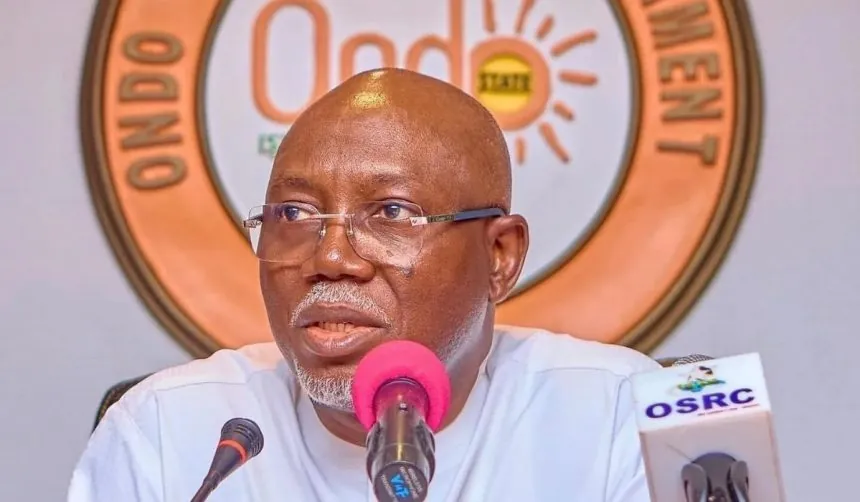
The Ondo State Government on Friday announced that it has paid over ₦12 billion in gratuities to local government retirees whose entitlements had been left unattended for more than a decade. The payment, which covers retirees between 2010 and 2013, marks a major step in addressing one of the most persistent challenges facing former public servants in the state.
Commissioner for Local Government and Chieftaincy Affairs, Alhaji Amidu Takuro, made the disclosure in Akure while briefing journalists on the outcome of an inspection tour across the 18 local government areas of the state. According to him, Governor Lucky Aiyedatiwa approved the release of the funds to ease the plight of retirees who had served Ondo State faithfully but were denied their benefits by successive administrations.
“On gratuities alone, we have spent almost ₦12 billion to pay local government retirees between 2010 and 2013. These people had retired for ten to fifteen years without receiving their entitlements. Though the backlog was not caused by this administration, government is a continuum, and Mr Governor directed us to save money specifically to clear it. By next week, we will also begin payment for the 2014 retirees,” Takuro stated.
I Thought Boko Haram Would Hand Over Their Guns To Buhari – Goodluck Jonathan
Tackling a Decade of Neglect
For years, many of the retirees endured severe hardship as their gratuities remained unpaid. Takuro recalled how desperate pensioners often besieged his office when he assumed duty, with some offering to forfeit part of their entitlements if it would speed up their payments. “I felt sorry for them and told them they didn’t need to know me personally before receiving their gratuities. That was why we made proper arrangements with the local government chairmen and started saving. We have done this successfully on several occasions, and today the results are visible,” he explained.
The commissioner attributed the success to a consistent savings framework established through the Joint Allocation Account Committee (JAAC), where local government chairmen collectively agreed to set aside funds for retirees. He stressed that without such foresight, it would have been difficult to dedicate significant funds to pensions given other pressing demands on government resources.
Grassroots Development in Focus
Takuro praised the 18 local government chairmen for their dedication to grassroots development within their relatively short time in office. He highlighted several initiatives undertaken at the council level, including the construction of markets, installation of solar-powered streetlights, provision of potable water, rehabilitation of rural roads, and the building of small bridges.
He noted that many councils had also engaged youths in agricultural projects, thereby creating employment opportunities, boosting food security, and reducing rural-urban migration. “We are glad that the local governments are alert to their responsibilities. They have taken development closer to the people while also working to improve the economy of their communities,” he said.
According to him, these initiatives align with the broader vision of President Bola Ahmed Tinubu and Governor Aiyedatiwa, both of whom emphasize grassroots empowerment as the foundation of national growth. “If we make rural dwellers uncomfortable, there will be problems. They are the ones who provide food for us. Neglecting them will only worsen rural-to-urban migration and increase pressure on city centres. That is why Governor Aiyedatiwa has keyed into President Tinubu’s vision of grassroots empowerment,” he stressed.
Collective Savings for Long-Term Projects
The commissioner further revealed that local councils in Ondo State had collectively saved ₦15 billion in a joint account dedicated to financing capital projects. This, he said, demonstrated a shift from short-term recurrent spending to long-term development planning. By pooling resources together, the councils are now better positioned to execute large-scale projects that will have lasting impacts on their communities.
Takuro described the savings initiative as proof that local governments were not only managing funds prudently but also preparing for the future. He emphasized that capital projects financed through this joint savings would create infrastructure that would serve rural communities for decades to come.
Transparency and Accountability as Cornerstones
Recognizing the risks of financial mismanagement, the Ondo State Government has partnered with the Economic and Financial Crimes Commission (EFCC), the Independent Corrupt Practices Commission (ICPC), and the state’s own anti-graft agency to train local government chairmen and senior officials on transparency and accountability in public financial management.
According to Takuro, the trainings are aimed at equipping officials with the knowledge and ethical standards required to manage public funds responsibly. “The trainings were designed to ensure that council officials handle public funds with the highest standards of transparency and accountability. This is to guarantee that savings and allocations are used for the good of the people,” he said.
A Government of Continuity and Compassion
The commissioner reiterated Governor Aiyedatiwa’s commitment to prioritizing both the welfare of retirees and the development of grassroots communities. He emphasized that while the backlog of unpaid gratuities was inherited, the governor had chosen to take responsibility and provide relief for pensioners who had suffered neglect for years.
“Government is a continuum. Even though these problems were not created by this administration, we cannot fold our arms while people who gave their best years to the service of the state continue to languish in poverty. This is why Mr Governor directed us to act, and today we are seeing the results,” Takuro affirmed.
The payment of over ₦12 billion in gratuities to retirees who have waited for more than a decade marks a turning point in Ondo State’s approach to governance. By addressing inherited liabilities, saving collectively for the future, and committing to grassroots development, the administration of Governor Lucky Aiyedatiwa is setting a new standard of accountability and compassion in public service.
The combination of financial prudence, transparency training, and grassroots-oriented policies suggests that Ondo State is not only paying off old debts but also laying the foundation for sustainable development. For retirees, the long wait for justice is finally ending, while for local communities, the promise of growth and empowerment appears stronger than ever.











Leave a Comment
Your email address will not be published. Required fields are marked with *