
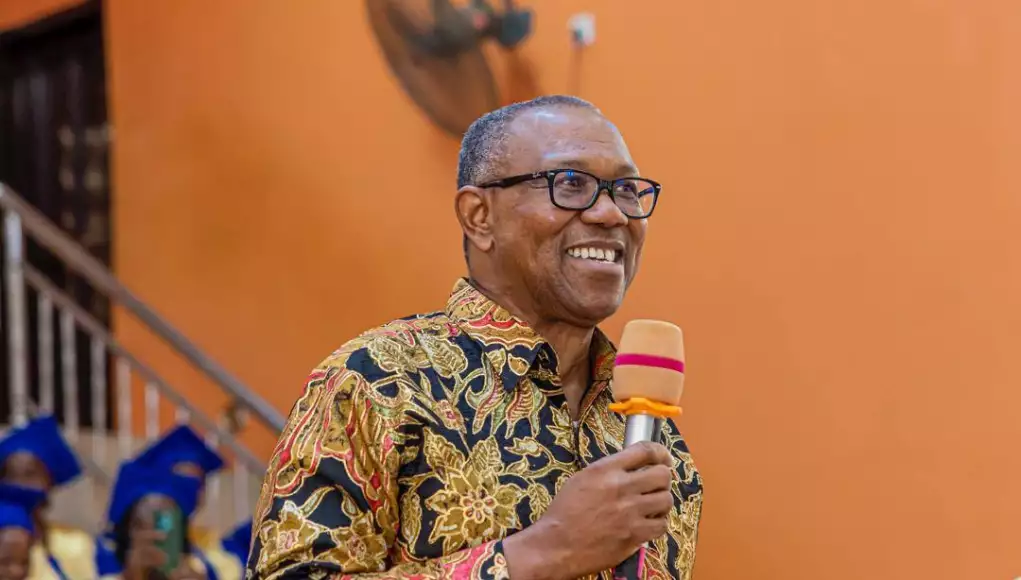
Peter Obi Clarifies Remarks to Olubadan Amid Backlash The 2023 presidential candidate of the Labour Party (LP), Peter Obi, has issued a clarification following the controversy surrounding his congratulatory message to the newly crowned Olubadan of Ibadanland, Oba Rashidi Adewolu Ladoja. Obi’s message, in which he referred to the Yoruba monarch as “my dear brother,”
Peter Obi Clarifies Remarks to Olubadan Amid Backlash
 The 2023 presidential candidate of the Labour Party (LP), Peter Obi, has issued a clarification following the controversy surrounding his congratulatory message to the newly crowned Olubadan of Ibadanland, Oba Rashidi Adewolu Ladoja. Obi’s message, in which he referred to the Yoruba monarch as “my dear brother,” drew sharp criticism online from individuals who interpreted the phrase as a sign of disrespect toward the highly revered traditional ruler.
Oba Ladoja, a former governor of Oyo State, was officially installed as the 44th Olubadan of Ibadanland during a historic coronation ceremony held on Friday, September 26, 2025. The event was widely celebrated across Yorubaland, drawing political leaders, traditional rulers, and dignitaries from across Nigeria. However, Obi’s congratulatory message, which was intended to honor the new monarch, quickly became a subject of public debate.
PENGASSAN Declares Nationwide Strike Over Dangote Refinery Sackings
In a statement released via his official X account on Sunday, Obi expressed regret that his choice of words had been misunderstood. He emphasized that his congratulatory note was made with goodwill and deep respect for the traditional institution. According to him, the expression “my dear brother” was not meant to diminish the stature of the Olubadan but rather reflected his personal style of addressing people with whom he shares mutual respect and admiration.
“Certainly, no disrespect was intended in my goodwill message to His Royal Majesty,” Obi wrote. “I felicitated with my dear elder brother, the newly crowned, His Royal Majesty, Oba Rashidi Adewolu Ladoja. I have read the concerns of those aggrieved by what they considered improper addressing. I respect protocol and authority, and I try, as much as possible, to adhere to them.”
The former Anambra governor further explained that he has often used similar expressions in addressing other respected figures, including His Royal Majesty Igwe Alfred Achebe, the Obi of Onitsha, whom he consistently refers to as “my very dear elder brother.” He said this choice of phrasing stems from a combination of cultural endearment and personal affection, not an attempt to undermine the office or prestige of traditional rulers.
By emphasizing the importance of motive, Obi appealed to Nigerians to consider the context in which he made the remarks. “In matters of wrongdoing, motive is important,” he said. “I assure all that my words were borne out of untrammelled goodwill.”
The clarification comes against the backdrop of rising sensitivity around cultural protocols and respect for traditional institutions in Nigeria. The Olubadan, as the paramount ruler of Ibadanland, holds a significant position in Yoruba tradition. Any perceived slight or improper address toward the office is often viewed as a breach of respect, not just to the monarch but to the entire community. This explains why Obi’s statement quickly attracted reactions across social media platforms, with some critics accusing him of failing to recognize the weight of the Olubadan’s new status.
However, political analysts note that Obi’s swift clarification underscores his awareness of Nigeria’s cultural diversity and the need for careful communication in a nation where traditions and protocols vary across regions. While his choice of words may have been misinterpreted, his explanation has been received by many as a demonstration of humility and a willingness to correct misunderstandings.
Supporters of Obi argue that his style of addressing leaders in familial terms reflects his character as a politician who values personal connections and emotional warmth in communication. They contend that such expressions, far from being disrespectful, are meant to convey genuine affection and recognition of personal bonds that transcend official titles.
On the other hand, some commentators insist that while Obi’s intentions may have been noble, public figures must always be cautious when addressing traditional rulers to avoid controversies that could overshadow the goodwill behind their messages. They argue that respect for cultural institutions demands precision in language, especially in a diverse society where misinterpretations can easily arise.
The controversy has also sparked a wider discussion about the balance between cultural norms and personal styles of communication in public life. For many Nigerians, the issue is less about Obi’s intent and more about how the nuances of language can be interpreted differently depending on cultural context. The debate highlights the challenges faced by national political figures in navigating the sensitivities of Nigeria’s multi-ethnic and multi-cultural society.
Despite the backlash, Obi’s clarification is expected to ease tensions, particularly among those who felt slighted by the original statement. His emphasis on respect for protocol and his consistent record of showing deference to traditional rulers across the country serve as a reminder of his broader approach to leadership — one that seeks to unify rather than divide.
As Oba Rashidi Ladoja begins his reign as the 44th Olubadan of Ibadanland, the episode serves as a lesson on the importance of cultural sensitivity in national politics. For Peter Obi, it is also a reminder of the scrutiny that comes with being a national figure whose words and actions are constantly weighed in the public arena. While his use of “my dear brother” was meant as an affectionate acknowledgment, its reception demonstrates the delicate balance between personal expression and cultural expectation in Nigeria’s sociopolitical space.








Leave a Comment
Your email address will not be published. Required fields are marked with *