
Peter Obi Questions the Silence of Past Protesters Amid Nigeria’s Current Economic Crisis Labour Party (LP) 2023 presidential candidate, Peter Obi, has delivered a scathing critique of Nigeria’s current political and economic realities, questioning the conspicuous silence of former activists and protesters who once mobilized against the administration of ex-President Goodluck Jonathan. Speaking at the
Peter Obi Questions the Silence of Past Protesters Amid Nigeria’s Current Economic Crisis
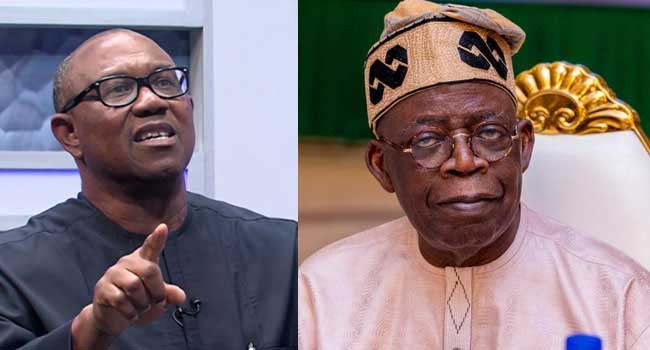
Labour Party (LP) 2023 presidential candidate, Peter Obi, has delivered a scathing critique of Nigeria’s current political and economic realities, questioning the conspicuous silence of former activists and protesters who once mobilized against the administration of ex-President Goodluck Jonathan. Speaking at the memorial lecture for the late elder statesman, Pa Edwin Clark, in Abuja, Obi pointedly challenged the legacy of protest and activism in Nigeria, wondering if those voices that once championed public interest have now vanished or chosen complicity.
Skaters Push Back Against Osun Assembly’s Plan To Sanction Road Skating
Obi recalled the Occupy Nigeria movement of 2012, which erupted after Jonathan increased petrol prices from ₦87 to ₦120. The protests saw widespread mobilization across cities and vocal condemnation from influential figures including Nobel laureate Wole Soyinka, Pastor Enoch Adeboye, and opposition leaders from the defunct Action Congress of Nigeria (ACN), many of whom are now part of the ruling All Progressives Congress (APC).
Contrasting that era with the current situation, Obi noted that fuel prices have skyrocketed to ₦900, yet those same voices have gone mute. Similarly, he pointed out that while Nigerians once protested the dollar’s rise to ₦180, there is now eerie silence even as the naira trades at around ₦1,500 to the dollar.
“Are those protesters dead?” Obi asked rhetorically. “So why are we saying the labours of our heroes past should not be in vain?”
The former Anambra State Governor argued that the sacrifices of Nigeria’s founding fathers and democracy advocates have effectively been wasted, given the deteriorating state of governance and economy in the country. He lamented the depth of poverty, citing a recent World Bank report that states 75% of Nigerians in rural areas live below the poverty line. He also referenced UNICEF’s alarming revelation that Nigeria now has over 2 million malnourished children, the second-highest in the world, questioning whether such grim statistics amount to “demarketing” the country or simply reflecting its stark reality.
In his emotionally charged speech, Obi emphasized that the country is no longer operating as a democracy. He criticized recent electoral practices, particularly in Edo State, claiming the real winners of elections are often not declared due to systemic manipulation.
“We are not a democratic country, let’s tell ourselves the truth,” he said. “Everybody knows who won that generation. So why are we keeping it and saying let their work not be in vain?”
The politician stressed the need to “start picking up the pieces” from the ruins of a system dominated by corruption and lawlessness. According to him, the failure to speak out in these trying times is a betrayal of the democratic ideals once fought for. He urged Nigerians, especially leaders and influencers, to reclaim their voice and act against the decline of values, transparency, and accountability.
Peter Obi paid tribute to Pa Edwin Clark, describing him as a symbol of courage, justice, and selfless service. He lamented that the values Clark lived for—integrity, equity, and fearless advocacy—are being eroded by a political class that has strayed far from these principles.
“He lived a courageous life,” Obi said. “May God grant us the courage to look into what a father lived for and start picking up our pieces.”
His speech served as both a call to action and a reflection on the nation’s troubled journey. By invoking the silence of former protesters, Obi not only reignited the debate on selective activism but also called attention to a broader issue: the growing public apathy and the waning culture of accountability in Nigerian governance.
As the nation grapples with inflation, currency devaluation, and rising poverty, the Labour Party flag bearer’s remarks raise a critical question—has Nigeria’s conscience gone silent in the face of worsening hardship?











Leave a Comment
Your email address will not be published. Required fields are marked with *