
Petrol Price Tumbles as NNPCL Slashes Pump Rate by ₦20 Amid Market Competition In a significant move shaking the Nigerian downstream petroleum sector, the Nigerian National Petroleum Company Limited (NNPCL) has reduced its retail price for Premium Motor Spirit (PMS), widely known as petrol or fuel. This reduction, reported to be ₦20 per litre, marks
Petrol Price Tumbles as NNPCL Slashes Pump Rate by ₦20 Amid Market Competition
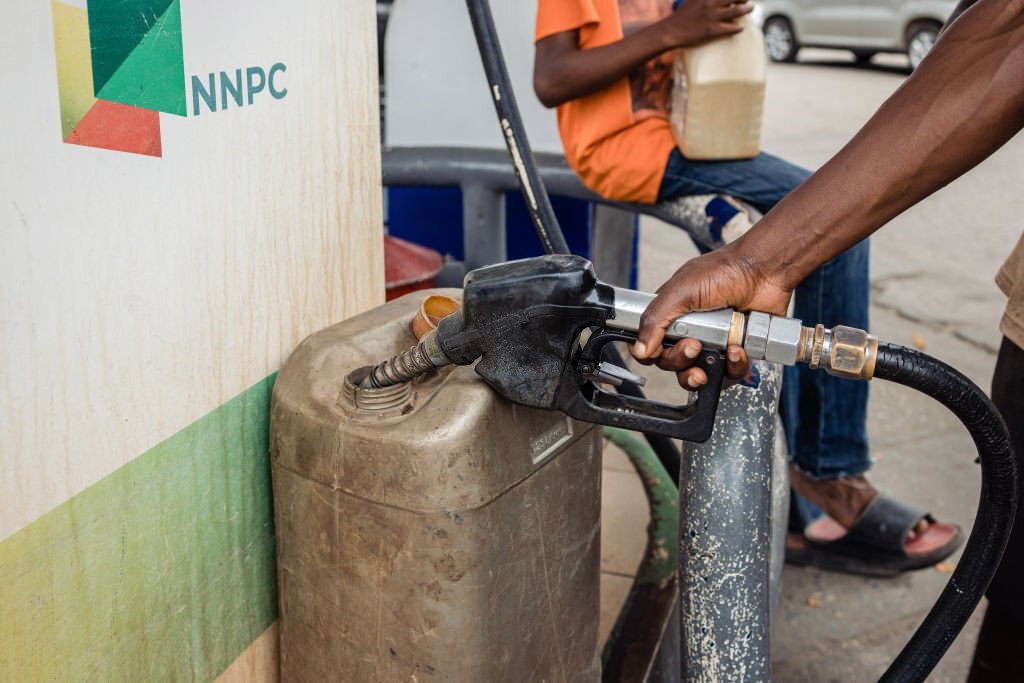
In a significant move shaking the Nigerian downstream petroleum sector, the Nigerian National Petroleum Company Limited (NNPCL) has reduced its retail price for Premium Motor Spirit (PMS), widely known as petrol or fuel. This reduction, reported to be ₦20 per litre, marks a strategic response to increasing market competition among key players in the sector, including the newly active Dangote Refinery and its retail partners.
As of Saturday, motorists have been observed queuing in large numbers at various NNPCL-operated filling stations across Nigeria to take advantage of the new rate. This surge in activity follows the state-owned oil giant’s decision to adjust its fuel retail price downward to ₦935 per litre on April 20, 2025. The adjustment underscores the dynamic changes unfolding within Nigeria’s fuel pricing landscape and points to a broader pricing realignment driven by local refining capabilities and supply chain shifts.
Outrage As DSS Detains Activist Kola Edokpayi Over Pro-Traoré Solidarity Rally
Petrol Pricing Reforms Drive Competitive Trends
The central keyword in this latest development is “Petrol,” which sits at the heart of growing reforms and competitive pricing strategies emerging within Nigeria’s petroleum sector. The price cut introduced by NNPCL aligns closely with recent price movements by major players linked to Dangote Refinery — Africa’s largest single-train refinery, with a refining capacity of 650,000 barrels per day.
Journalists from Daily Post who visited several petrol stations in Lagos and Abuja confirmed that MRS and other partners of the Dangote Refinery, such as Ardova (AP), Heyden Petroleum, Optima Energy, Hyde, and Techno Oil, have begun offering PMS at rates between ₦890 and ₦920 per litre. The ex-depot price, as set by Dangote Refinery, stands at ₦835 per litre — a notable markdown intended to stimulate competitive pricing and broaden distribution.
This cascading impact of Dangote’s ex-depot pricing is not only driving retail price reductions but also challenging traditional pricing mechanisms long dominated by import-dependent supply chains. By cutting its price, NNPCL is positioning itself to remain relevant and competitive amid new domestic refining entrants who now play a significant role in Nigeria’s energy distribution landscape.
Price Gaps Reflect Regional and Supplier Variability
Despite NNPCL’s price reduction, the petroleum market remains volatile, with noticeable differences in pump prices across various locations and vendors. Reports indicate that while NNPCL sells petrol at ₦935 per litre, some independent and third-party marketers in parts of the country are retailing fuel at significantly higher rates — ranging from ₦930 to ₦950 per litre.
These discrepancies are largely influenced by logistics costs, depot pricing variations, and supplier-specific markups. Consumers in more remote or underserved regions continue to pay higher prices, even as urban centres like Lagos and Abuja begin to see downward trends in pump costs. The market response to these pricing adjustments suggests that competition is intensifying, and the presence of domestically refined petrol is beginning to reshape long-standing fuel economics in Nigeria.
It is worth noting that the introduction of Dangote’s refined products into the local market has been hailed as a potential game-changer. For years, Nigeria — Africa’s largest crude oil producer — has ironically relied on imported petrol due to insufficient domestic refining capacity. The operationalization of Dangote Refinery in early 2025 has since begun to reverse that narrative, promising reduced import bills and more stable supply chains.
Implications for Consumers and the Economy
The immediate impact of NNPCL’s price reduction has been consumer-driven. Filling stations operated by the company have witnessed heavy traffic as price-sensitive motorists seek cheaper alternatives. For an economy grappling with inflation, currency volatility, and fluctuating global oil prices, any relief in fuel costs is a welcome development for Nigerian consumers.
Moreover, the move signals a shift toward a more liberalized and competitive downstream sector — a long-standing policy goal of successive administrations. If sustained, these price cuts could ease transportation costs, reduce pressure on household incomes, and gradually stabilize inflationary trends tied to energy prices.
Still, experts caution that consistent supply and regulatory oversight will be crucial in maintaining downward price pressures. They also urge the government to support infrastructure improvements and market monitoring to prevent price manipulation and regional disparities.
As it stands, the reduction in NNPCL’s pump price marks a turning point in Nigeria’s fuel market — a sign that the era of high, uniform fuel pricing might be giving way to a more market-responsive and locally driven pricing model.




















Leave a Comment
Your email address will not be published. Required fields are marked with *