
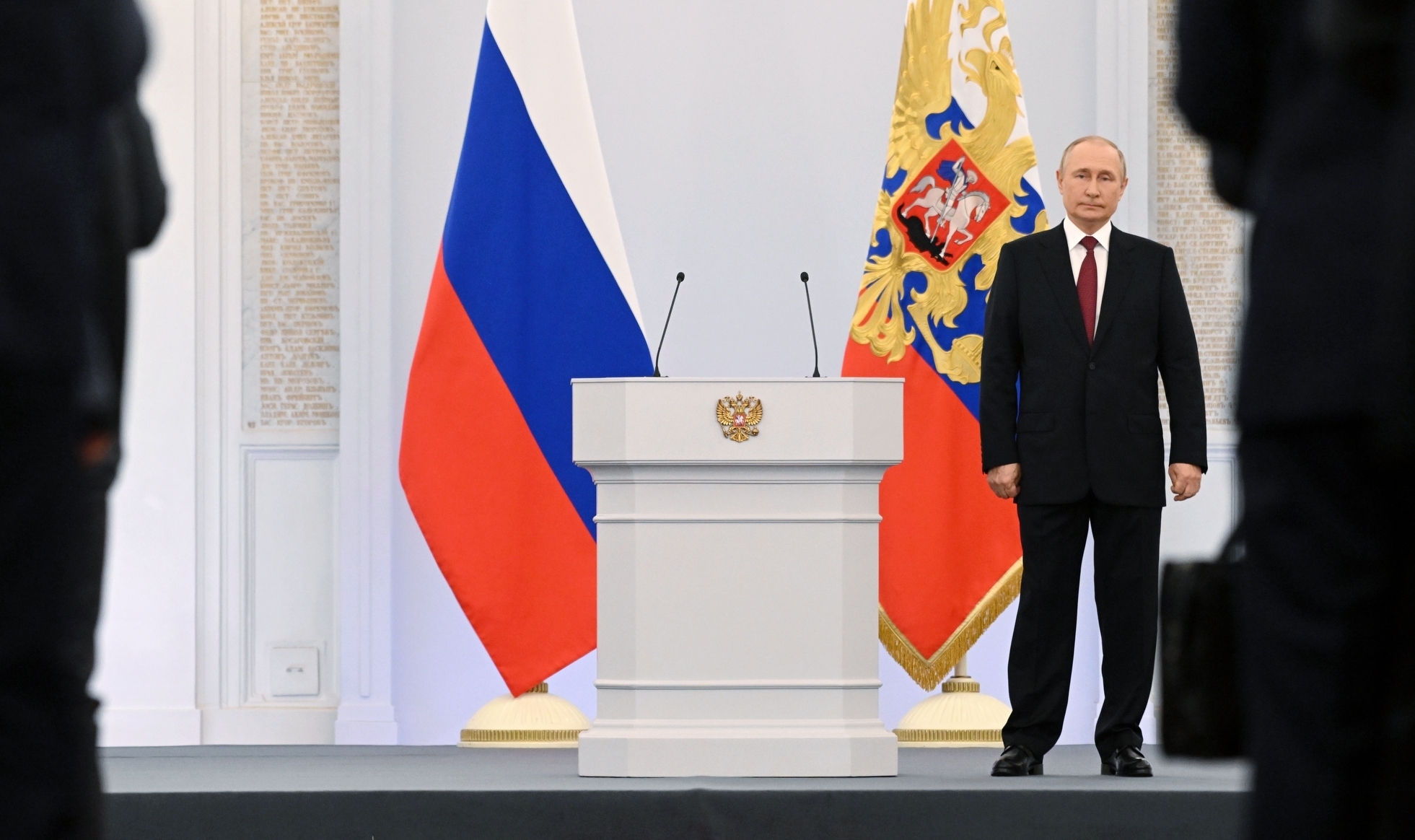
German political scientist Carlo Masala has issued a stark warning that Russia’s strategic objectives may stretch far beyond Ukraine, cautioning European leaders against what he views as dangerous complacency. In his internationally discussed book If Russia Wins: A Scenario, Masala challenges the assumption that a negotiated territorial compromise would permanently stabilize relations with Moscow.
German political scientist Carlo Masala has issued a stark warning that Russia’s strategic objectives may stretch far beyond Ukraine, cautioning European leaders against what he views as dangerous complacency.
In his internationally discussed book If Russia Wins: A Scenario, Masala challenges the assumption that a negotiated territorial compromise would permanently stabilize relations with Moscow.
According to Masala, too many policymakers still believe that accommodating certain Russian demands could restore a sense of normalcy in Europe.
He argues that such thinking underestimates the broader geopolitical ambitions of Russian President Vladimir Putin.
Speaking from his office at the University of the Bundeswehr in Munich, Masala explained that his aim was to disrupt conventional wisdom surrounding the war in Ukraine.
He maintains that even a formal peace deal would not resolve the deeper strategic tensions shaping Europe’s security landscape.
Masala’s analysis draws on academic research, consultations with military experts, and participation in high-level simulation exercises.
These tabletop wargames explore potential outcomes should Russia secure favorable terms in Ukraine.
Tinubu Summons Aiyedatiwa Over Deadly APC Congress Violence
In Masala’s scenario, a peace agreement would require Ukraine to cede roughly 20 percent of its territory and abandon aspirations to join NATO.
In return, Kyiv would receive promises of reconstruction funding from institutions such as the World Bank and the deployment of an international monitoring force.
However, Masala suggests that such arrangements might offer only superficial stability.
Repeated ceasefire violations, he argues, would likely be documented and debated at the United Nations without triggering decisive military responses from Western powers.
Under this framework, Russia could consolidate control over occupied territories in the Donbas while intensifying internal repression.
Meanwhile, the remainder of Ukraine might face mounting economic hardship, potentially leading to renewed political instability.
Masala envisions a scenario in which domestic strains compel Ukrainian President Volodymyr Zelensky to call elections in a bid to reinforce legitimacy, only to confront unexpected political setbacks.
The broader implication, according to Masala, is that Europe would remain exposed to further strategic pressure.
He contends that if Russia achieves its objectives in Ukraine without encountering firm resistance, it could interpret that outcome as validation of a more expansive geopolitical agenda.
For Masala, the central question is how Europe can defend itself independently should American security guarantees diminish.
His work urges European governments to invest more heavily in defense capabilities, deepen cooperation, and prepare for contingencies that extend beyond Ukraine’s borders.
While his scenario is hypothetical, it has resonated widely amid ongoing debates about Europe’s strategic autonomy.
Supporters argue that planning for worst-case outcomes strengthens deterrence.
Critics caution against overstating the inevitability of broader conflict.
Nevertheless, Masala’s warning underscores a growing concern among security analysts: that the war in Ukraine may represent only one chapter in a larger contest over Europe’s future stability.
As diplomatic efforts continue and military realities evolve, the debate over Europe’s preparedness remains central to policy discussions across the continent.









Leave a Comment
Your email address will not be published. Required fields are marked with *