
Supreme Court Overturns N22tn Judgment Against Union Bank in Two-Decade Commercial Dispute In a major legal victory for Union Bank, the Supreme Court of Nigeria has set aside a judgment by the Federal High Court that had awarded over N22 trillion against the bank and other parties in a protracted commercial dispute. The
Supreme Court Overturns N22tn Judgment Against Union Bank in Two-Decade Commercial Dispute
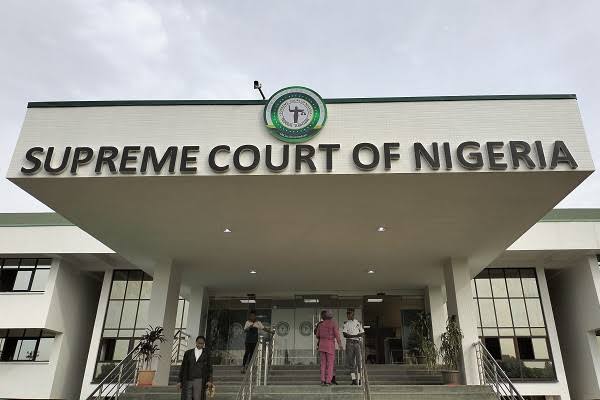
In a major legal victory for Union Bank, the Supreme Court of Nigeria has set aside a judgment by the Federal High Court that had awarded over N22 trillion against the bank and other parties in a protracted commercial dispute. The unanimous ruling, delivered on Friday, April 25, 2025, marks the conclusion of a legal saga that has stretched for more than 25 years.
Justice Stephen Adah, who delivered the lead judgment, was joined by four other justices in finding that the lower courts had erred in law by disregarding established judicial precedents. The Supreme Court’s intervention has been hailed as a necessary correction to what was widely viewed as a potentially destabilizing outcome for Nigeria’s financial sector.
JAMB Counters Peter Obi’s Criticism On Early Exam Timing, Clarifies UTME Process
Longstanding Dispute and Questionable Judgment
The focus keyword here is “Judgment,” highlighting the Supreme Court’s critical review and ultimate reversal of the lower courts’ decisions.
The case began in 1993 when Visana Nigeria Limited filed a suit against Union Bank, seeking to recover an alleged debt of approximately $8 million. The debt was linked to Metalloplastica Nigeria Limited, a company that had financial dealings involving multiple banks, including Union Bank’s predecessor, Universal Trust Bank, and Continental Merchant Bank.
Central to the dispute was a 1989 Deed of Debenture, under which Continental Merchant Bank appointed Chief R.U. Uche as receiver/manager over Metalloplastica. Visana challenged this appointment, arguing that it violated the original terms of the debenture, which required written consent from Universal Trust Bank.
In 2014, the Federal High Court ruled in favor of Visana, awarding $7,616,188.94 or its equivalent in naira, with compounded interest of 4.25 percent per month starting from January 26, 2000. The judgment allowed for an additional 10 percent interest annually until full payment was made, causing the debt to escalate over time to an astronomical N22 trillion.
Appeals and Final Ruling
Union Bank challenged the 2014 ruling, and the Court of Appeal in 2021 marginally reduced the judgment sum to $365,605.32, applying simple interest at 4.25 percent monthly from December 31, 1993, to December 16, 2014, and 10 percent annually thereafter. Despite the adjustment, Union Bank remained dissatisfied and pursued the matter to the Supreme Court.
On April 25, 2025, the apex court decisively ruled in favor of Union Bank. Justice Adah criticized the lower courts for allowing the case to linger and for failing to apply settled principles of law, which could have resolved the matter much earlier.
“This litigation has lingered far too long,” Justice Adah stated. “The two lower courts missed the opportunity to apply clear legal principles, thereby creating unnecessary complications.”
The Supreme Court’s judgment has effectively quashed the N22 trillion liability, providing significant relief to Union Bank and easing concerns among the financial community.
Wider Implications for Financial Stability
The Supreme Court’s ruling is expected to have a stabilizing effect on Nigeria’s financial sector. Prior to the judgment, the Central Bank of Nigeria, Union Bank’s auditors, financial regulators, and rating agencies had expressed serious concerns about the potential systemic risks posed by the massive judgment sum.
Had the lower court’s ruling been upheld, Union Bank’s financial standing could have been severely compromised, with wider ripple effects across the banking industry.
Financial analysts have praised the Supreme Court’s decision, describing it as a reaffirmation of judicial prudence and a safeguard against unintended consequences that could have imperiled Nigeria’s economic stability.
“This judgment restores confidence not only in the legal system but also in the resilience of Nigeria’s banking sector,” said an industry expert who spoke under anonymity.
The Supreme Court’s reversal of the N22 trillion judgment against Union Bank closes a tumultuous chapter in Nigeria’s commercial legal history. It stands as a reminder of the judiciary’s critical role in upholding the rule of law and ensuring that justice is administered in a manner that supports both fairness and economic stability.
As Union Bank moves forward from this long-standing litigation, the decision is likely to bolster investor confidence and affirm the importance of timely and correct judicial interventions in commercial disputes.




















Leave a Comment
Your email address will not be published. Required fields are marked with *