

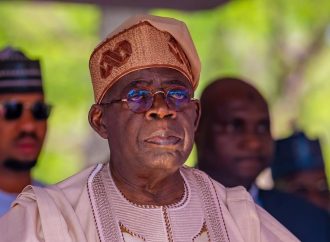
President Bola Ahmed Tinubu has formally transmitted the 2026–2028 Medium-Term Expenditure Framework (MTEF) and Fiscal Strategy Paper (FSP) to the Senate, seeking immediate legislative approval to support the Federal Government’s medium-term economic plan. The framework projects a N34 trillion revenue target for the 2026 fiscal year, reflecting the administration’s confidence in ongoing fiscal reforms and
President Bola Ahmed Tinubu has formally transmitted the 2026–2028 Medium-Term Expenditure Framework (MTEF) and Fiscal Strategy Paper (FSP) to the Senate, seeking immediate legislative approval to support the Federal Government’s medium-term economic plan. The framework projects a N34 trillion revenue target for the 2026 fiscal year, reflecting the administration’s confidence in ongoing fiscal reforms and anticipated improvements in oil and non-oil earnings.
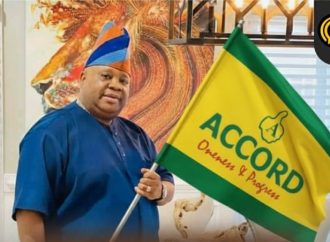
Osun 2026: Adeleke Emerges Accord Candidate, Lists Key Achievements In Office
The request, contained in a letter read on the Senate floor during Wednesday’s plenary by Senate President Godswill Akpabio, underscores the administration’s commitment to implementing a more predictable and sustainable budgeting system. The MTEF, a key prerequisite for the preparation of the 2026 budget, outlines revenue benchmarks, expenditure plans, deficit projections, and macroeconomic assumptions for the three-year period.
Focus on Revenue Expansion and Fiscal Discipline
In the document, the Tinubu administration set a N34 trillion revenue projection for 2026, hinging on accelerated tax reforms, improved crude oil production, reduced leakages in government-owned enterprises, and expanded non-oil revenue streams. According to sources familiar with the framework, the Federal Government expects oil production to average 1.8 million barrels per day, buoyed by investments in modular refineries, improved security in the Niger Delta, and renewed international confidence in Nigeria’s upstream sector.
Non-oil revenue is expected to be driven by strengthened operations of the Federal Inland Revenue Service (FIRS), Customs modernization, and broader implementation of the tax-for-service model rolled out in 2024. The administration believes that improved compliance and digital monitoring tools could significantly widen Nigeria’s tax net, reducing dependence on oil income.
 The MTEF also emphasizes fiscal discipline through tighter control of expenditure, reduction in borrowing, and the gradual phasing out of certain subsidy regimes that have historically drained public finances. It aligns with Tinubu’s broader economic reforms aimed at stabilizing the macroeconomic environment after years of fiscal strain.
Senate Commences Consideration
The Senate, through its Committee on Finance, has been directed to scrutinize the document and produce a comprehensive report for consideration by the entire chamber. Akpabio assured that the upper chamber would give the request accelerated attention, stressing that early approval of the MTEF is critical for timely presentation of the 2026 Appropriation Bill.
“We will treat the MTEF with the seriousness it deserves,” Akpabio said. “This framework is essential for planning, stability, and economic growth. The committees will begin work immediately.”
Senators, however, signaled that the review would not be a mere formality. Several lawmakers emphasized the need for clarity on projected oil benchmarks, exchange rate assumptions, revenue diversification strategies, and measures to curb waste across ministries, departments, and agencies (MDAs).
Revenue Challenges and High Expectations
While the N34 trillion revenue target reflects optimism, analysts warn that achieving this goal will require significant improvements in Nigeria’s revenue architecture. Over the past decade, the country has struggled to meet revenue projections due to pipeline vandalism, oil theft, unstable global prices, and low tax compliance.
The administration is betting on the ongoing reforms under the Presidential Fiscal Policy and Tax Reform Committee, which aims to raise Nigeria’s tax-to-GDP ratio from below 11% to at least 18% within the next five years. The MTEF also incorporates expected gains from public finance digitalization, including automated revenue collection systems and real-time monitoring dashboards for MDAs.
However, concerns persist about the government’s ability to curb excessive spending and reduce the rising cost of governance. Lawmakers have repeatedly criticized MDAs for duplicating functions, inflating contracts, and failing to remit generated revenue.
Deficit Reduction as a Priority
One of the most notable components of the 2026–2028 MTEF is the administration’s plan to reduce Nigeria’s fiscal deficit, which has ballooned in recent years. Although exact figures remain subject to Senate deliberations, the Federal Government aims to bring the deficit below 3% of GDP by 2028, in line with the Fiscal Responsibility Act.
To achieve this, the government plans to cut recurrent spending, enhance debt management strategies, and prioritize infrastructure projects with high economic returns. The document stresses that borrowing will increasingly shift toward concessional financing rather than expensive commercial loans.
Public Reactions and Economic Implications
Economists say the MTEF signals that the government intends to maintain strict financial controls while attempting to expand revenue. Some observers welcomed the N34 trillion target as ambitious but necessary for Nigeria’s development agenda. Others cautioned that without institutional reforms and transparency, the target could become another unmet projection.
Civil society groups also called for rigorous oversight, urging the Senate to interrogate the assumptions behind the framework to ensure accountability and realistic planning.
Next Steps
With the MTEF now before the National Assembly, the Senate Finance Committee will embark on stakeholder engagements involving government agencies, private-sector groups, and economic experts. Their recommendations will shape the final version of the framework that will guide the preparation of the 2026 budget.
If approved promptly, the Tinubu administration is expected to present the 2026 Appropriation Bill before the end of the year, continuing the drive toward a stable January-to-December budget cycle.










Leave a Comment
Your email address will not be published. Required fields are marked with *