
US Lawmaker Unveils Resolution Condemning Alleged Persecution of Christians in Nigeria In a move reflecting deep concern over reports of sectarian violence, US. Representative Riley M. Moore (R-West Virginia) has introduced a resolution in the House of Representatives urging immediate U.S. action to stop what he and his co-sponsors describe as systematic persecution and killing
US Lawmaker Unveils Resolution Condemning Alleged Persecution of Christians in Nigeria
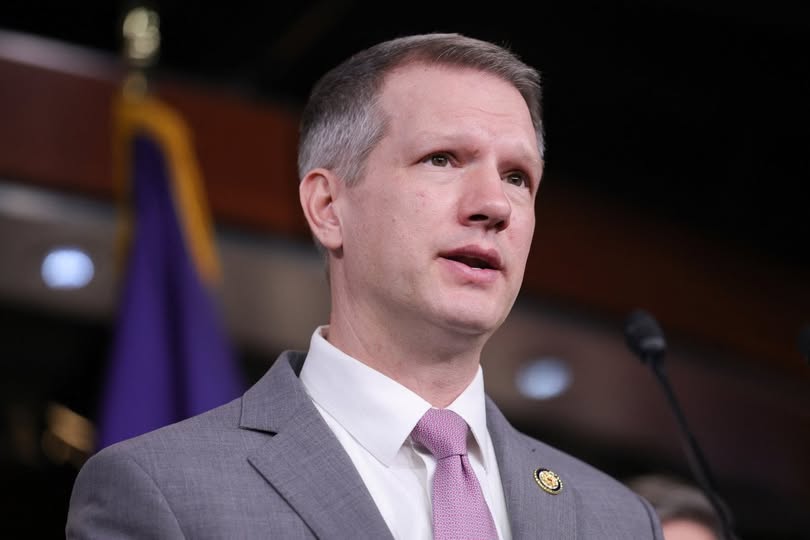
In a move reflecting deep concern over reports of sectarian violence, US. Representative Riley M. Moore (R-West Virginia) has introduced a resolution in the House of Representatives urging immediate U.S. action to stop what he and his co-sponsors describe as systematic persecution and killing of Christians in Nigeria. The measure also supports efforts by former President Donald J. Trump to designate Nigeria as a “Country of Particular Concern” (CPC) under the 1998 International Religious Freedom Act—an acknowledgement of what the resolution calls an “existential threat” to Christians in Nigeria. (Representative Riley Moore)
Federal Government Partners NASENI To Digitize FEC Operations, Targets Full Paperless System By 2025
The resolution draws on alarming statistics: according to the text, between 50,000 and 100,000 Christians have been killed in Nigeria since 2009; in the current year alone, more than 7,000 Christians have reportedly died—an average of 35 deaths per day. (Representative Riley Moore) With such figures cited, the author argues the violence is neither isolated nor random, but a “systematically coordinated” campaign of attacks on Christian-majority communities, churches and villages. (American Center for Law and Justice)
In introducing the resolution, Moore said: “For far too long, the world has turned a blind eye to the suffering of innocent Christians – entire villages destroyed, churches burned, pastors tortured, families torn apart. This grave suffering must end now.” (Representative Riley Moore) He went on to call on his colleagues across party lines to unite in defence of religious freedom: “The United States must make it clear that we will not tolerate the slaughter of Christians or the persecution of anyone for their belief in Jesus Christ.” (Quiver Quantitative)
Key Highlights of the Resolution
Moore’s resolution calls for several concrete U.S. policy responses:
- It implores the U.S. government to employ “all available diplomatic, economic and security tools” to pressure Nigeria’s government to act, including returning internally displaced persons, lifting blasphemy laws, and releasing prisoners detained for religious reasons. (Representative Riley Moore)
- It reaffirms support for Trump’s CPC designation of Nigeria, creating a path for possible sanctions or aid restrictions if the Nigerian government fails to safeguard religious minorities. (American Center for Law and Justice)
- The text encourages humanitarian assistance from the U.S. and international partners, including faith-based organisations, specifically directed to persecuted Christian communities. (Representative Riley Moore)
Co-sponsors include a wide spectrum of Republican Members of Congress such as Wesley Hunt (TX-38), Mary Miller (IL-15), Andrew Clyde (GA-09) and others. (Representative Riley Moore) Their collective commentary emphasises that this is a moral, not just a political, issue: “We are at an inflection point and we must act,” said one co-sponsor. (American Center for Law and Justice)
Background and U.S. Policy Context
Earlier this year, President Trump announced his intention to designate Nigeria as a CPC, citing what he described as the failure of the Nigerian government to stop the mass killings of Christians by extremist groups such as Boko Haram and affiliates. (AP News) That designation can trigger a range of U.S. responses, including the potential suspension of non-humanitarian assistance. (AP News)
The removal of Nigeria from the CPC list in 2021 — by the previous U.S. administration — is cited in the resolution as correlating with an increase in anti-Christian violence, making the new designation “overdue and necessary.” (American Center for Law and Justice)
Reactions and Implications
Supporters of the resolution argue it will send a strong message: the U.S. will no longer ignore what they describe as one of the most severe crises of religious freedom in the world. Organisations such as In Defense of Christians and the International Religious Freedom (RF) Roundtable have endorsed the resolution, describing Nigeria as “the deadliest place in the world for Christians” and praising the U.S. Congress for stepping in. (Representative Riley Moore)
However, critics caution that the situation in Nigeria is more complex than simply religious persecution. According to a report by the Associated Press, violence in Nigeria’s north and middle belt affects both Christians and Muslims and is driven by a mixture of factors including insurgency, ethnic roots, land conflicts and weak state presence. (Politico)
From a diplomatic perspective, the resolution positions the U.S. to exert pressure on Nigeria’s government. Analysts note that successive Nigerian administrations have struggled to curb rural violence and to hold perpetrators accountable. The resolution and CPC designation may compel the Nigerian government to act more boldly or risk losing U.S. support.
What Happens Next?
The resolution has been formally introduced — the next phase involves debate in the House and a possible vote. If adopted, it would represent a strong congressional signal and could trigger parallel legislative and executive actions. The Trump Administration has indicated it will use every tool at its disposal to address the crisis. (Quiver Quantitative)
Moreover, the resolution underscores the significance of human rights at the heart of foreign-policy decision-making: by linking humanitarian aid, diplomatic engagement and security tools to religious freedom, U.S. lawmakers seek to elevate this issue on the global stage.
For Nigeria, the implications are substantial. While the Nigerian government publicly rejects the characterization of the violence as purely religious persecution, the mounting external pressure could compel policy shifts. Analysts suggest that if the Nigerian state fails to reform and protect vulnerable communities, it risks not only aid reductions but reputational damage and potential sanctions.
Representative Riley Moore’s resolution marks a major step in U.S. efforts to confront what is described as targeted violence against Christians in Nigeria. By naming the issue explicitly, aligning with President Trump’s CPC designation, and calling for concrete U.S. policy responses, the measure seeks to mobilise both Congress and executive action. Whether it leads to meaningful change on the ground in Nigeria remains to be seen, but for now, the resolution signals that religious freedom is firmly on the legislative radar.












Leave a Comment
Your email address will not be published. Required fields are marked with *