
Borrowing to Service Debt May Become Vicious Cycle, Experts Warn FG LAGOS – Nigeria’s rising external debt service burden is igniting fears of a fiscal trap as new data shows the Federal Government spent $1.4 billion servicing external debt in the first quarter (Q1) of 2025, a 24 percent year-on-year increase, according to figures from
Borrowing to Service Debt May Become Vicious Cycle, Experts Warn FG
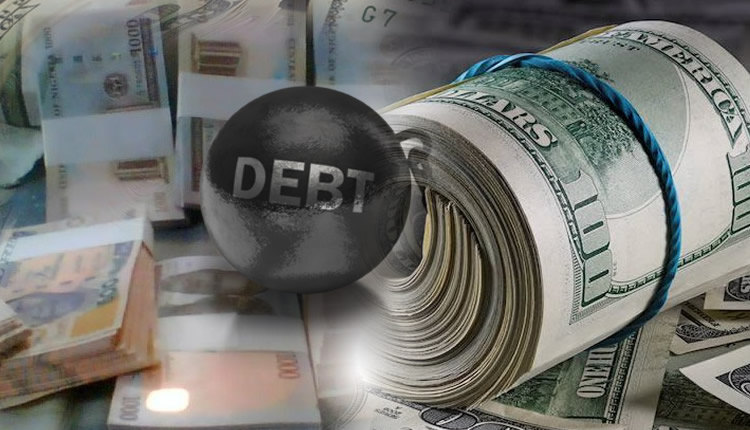
LAGOS – Nigeria’s rising external debt service burden is igniting fears of a fiscal trap as new data shows the Federal Government spent $1.4 billion servicing external debt in the first quarter (Q1) of 2025, a 24 percent year-on-year increase, according to figures from the Debt Management Office (DMO).
This surge continues a worrying pattern: since 2020, the country’s annual external debt service payments have expanded at a compound annual growth rate (CAGR) of 32 percent. Economists say this trajectory risks compromising fiscal sustainability if borrowing is not aligned with revenue growth and economic expansion.
Nigeria’s Lassa Fever Death Toll Hits 155 As Confirmed Cases Reach 822
A Debt Profile Dominated by Multilateral Creditors
Out of the $1.4 billion debt service outlay in Q1 2025, $961 million went to non-market-related obligations while $432 million was used to service market-linked debts.
Analysts at FBNQuest explained the implications in a research note released Monday:
“This distinction is more than accounting. It speaks to the heavy concentration of Nigeria’s external borrowings in concessional multilateral and bilateral sources, which now represent 61.9 percent of the FGN’s total external debt stock. Of this, multilateral lenders such as the World Bank and African Development Bank account for approximately 49 percent.”
Interest and fees paid to these multilateral creditors amounted to $137 million in Q1, representing an annualised cost of borrowing of 2.5 percent—a relatively low rate compared to commercial loans. For the World Bank alone, the effective interest rate is around 2.0 percent.
“While concessional funding helps reduce borrowing costs, it does not erase the fundamental pressures associated with a growing debt stock—especially when principal repayments begin and new borrowings accumulate,” the analysts cautioned.
Market-Linked Debt Poses Higher Risks
Although market-linked debt makes up just 38 percent of Nigeria’s external debt stock, it carries an outsized financing burden, with interest rates averaging 10.2 percent. These loans—primarily Eurobonds and other capital market instruments—are also exposed to global liquidity conditions and currency fluctuations.
Even though international financial markets slightly eased in 2025, helped by a 9 percent decline in the U.S. dollar, Nigeria’s debt position remains vulnerable to further naira depreciation, which would inflate the domestic cost of repaying foreign-denominated debt.
More Borrowing Ahead
The fiscal outlook could tighten further following the Senate’s approval in June of President Bola Tinubu’s external borrowing plan worth $21.5 billion for 2025–2026.
The scale of the planned borrowing is striking—it represents almost 47 percent of Nigeria’s current external debt stock. If fully implemented, this could nearly double the country’s external debt within two years.
Government officials argue that the funds are essential to finance critical infrastructure and bridge budget deficits, but economists remain wary. Without robust revenue growth, they warn, the country risks piling up debt faster than it can generate resources to service it.
The Revenue Bottleneck
One of Nigeria’s biggest fiscal weaknesses is its extremely low revenue-to-GDP ratio, currently estimated at below 10 percent—among the lowest globally.
This limits the government’s ability to fund social services, infrastructure, and debt repayment without resorting to more borrowing.
“Debt service is consuming an ever-larger share of Nigeria’s budget. Without significant revenue growth, borrowing to service debt could become a self-reinforcing cycle,” a macroeconomist in Abuja observed.
The Federal Government recently passed new tax reforms expected to boost revenue, but most provisions will only take effect in 2026, offering no immediate relief for current fiscal stress.
Currency Mismatch and External Shocks
The naira remains under pressure despite foreign exchange reforms by the Central Bank of Nigeria (CBN). Every depreciation increases the naira equivalent of external debt repayments, reducing resources for domestic spending.
Nigeria’s overreliance on oil exports—still the major source of foreign exchange—adds further risk. A slump in global oil prices or supply disruptions could curtail FX inflows, making it harder to meet external obligations.
At the same time, global interest rates remain relatively high, meaning market-based borrowings will continue to carry elevated servicing costs, even if monetary policy in advanced economies shifts towards easing.
Debt Sustainability in Focus
The DMO’s periodic Debt Sustainability Analysis (DSA) has consistently flagged Nigeria’s limited fiscal space and stressed the need for stronger domestic revenue mobilisation. Institutions such as the IMF and World Bank have also warned that without urgent reforms, Nigeria’s debt trajectory could reach unsustainable levels.
Experts suggest several approaches:
- Phasing external borrowings to avoid a sudden spike in obligations
- Prioritising concessional loans over costlier market instruments
- Linking debt strictly to high-return infrastructure projects
- Improving transparency in loan utilisation and project execution
“Borrowing isn’t inherently negative, but it must be strategic and tied to repayment capacity. Otherwise, we risk mortgaging future revenues,” a Lagos-based development economist said.
Walking the Fiscal Tightrope
Nigeria stands at a crossroads: balancing the need for development financing with the imperative of long-term fiscal health.
While concessional loans provide temporary breathing space, the combined pressures of market-based borrowing, revenue weakness, currency volatility, and external shocks could undermine the country’s financial sovereignty if left unchecked.
Every new borrowing decision, analysts stress, must be weighed not just against its immediate benefits but also against its opportunity cost for future generations.
For Nigeria, charting a sustainable debt path will require bold revenue reforms, disciplined borrowing, and a commitment to ensuring that every dollar borrowed translates into tangible economic growth.














Leave a Comment
Your email address will not be published. Required fields are marked with *