
NLC Protests Appointment of Aminu Said Ahmed to NNPC Board, Cites Legal Breach The Nigerian Labour Congress (NLC) chapter within the Ministry of Petroleum Resources (MPR) has raised strong objections to the appointment of Aminu Said Ahmed as the ministry’s representative on the board of the Nigerian National Petroleum Company Limited (NNPCL). The appointment, made
NLC Protests Appointment of Aminu Said Ahmed to NNPC Board, Cites Legal Breach
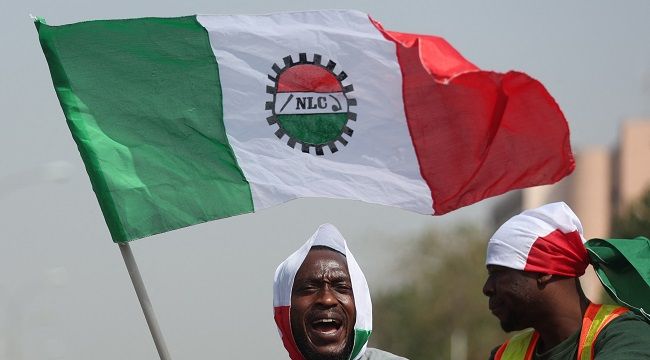
The Nigerian Labour Congress (NLC) chapter within the Ministry of Petroleum Resources (MPR) has raised strong objections to the appointment of Aminu Said Ahmed as the ministry’s representative on the board of the Nigerian National Petroleum Company Limited (NNPCL). The appointment, made by President Bola Ahmed Tinubu, has triggered an outcry over its alleged violation of the Petroleum Industry Act (PIA) 2021 and concerns about institutional representation and legal compliance.
Ahmed, a senior manager with the Nigerian Midstream and Downstream Petroleum Regulatory Authority (NMDPRA), was named to represent the MPR on the NNPCL board. However, the ministry’s NLC chapter has rejected this move, arguing that it disregards statutory provisions and undermines the integrity of Nigeria’s oil governance structure.
Nigeria Not Banned from Entering Saudi Arabia – Foreign Ministry Clarifies
Legal Backing Fuels Opposition to Appointment
The crux of the protest is based on Section 59(2)(d) of the PIA 2021, which clearly outlines that the MPR’s representative on the NNPC board must hold a position not below the rank of a director within the ministry. Labour leaders argue that Ahmed, being a senior manager at the NMDPRA—a regulatory agency independent of the MPR—does not fulfill this requirement.
In a viral video, union members strongly stated, “He is not a staff of the Ministry of Petroleum.” The union believes Ahmed’s appointment is not only irregular but also sets a dangerous precedent that could erode the professional standards expected in governance of Nigeria’s petroleum sector.
Expert Opinions Reinforce Legal Concerns
Several energy policy analysts have echoed the concerns raised by the union. Abolade Adewale, an energy expert speaking on behalf of concerned stakeholders, pointed out that the PIA was designed to bring transparency and order to the petroleum industry. Deviating from its provisions weakens the rule of law and creates room for political interference.
“Aminu Said Ahmed is neither a director nor a serving officer of the Ministry of Petroleum Resources. His appointment violates the very spirit of the PIA,” Adewale stated. He added that the NMDPRA is an autonomous regulatory body, and its officials should not represent the Ministry in matters requiring statutory representation.
The union cited the case of the Federal Ministry of Finance, which has ensured strict compliance by assigning its Permanent Secretary as its representative on the same NNPCL board. They argue that maintaining institutional parity is crucial for fairness and effective decision-making at the national level.
Broader Concerns: OPEC and International Representation
The NLC also extended its grievances to international petroleum affairs. It condemned the trend of appointing non-MPR officials to represent Nigeria in key international platforms such as the Organization of the Petroleum Exporting Countries (OPEC). This, they claim, diminishes the role of the Ministry and sidelines officials with institutional knowledge and experience.
They noted that decisions surrounding such delegations are often driven by favoritism and nepotism, rather than merit or institutional alignment. According to Adewale, “We therefore respectfully submit that all nominations to international engagements on petroleum-related matters should be made strictly among serving officials of the MPR through formal appointment by the Minister, as permitted under the law.”
Call for Presidential Reconsideration
The union has therefore issued a strong appeal to President Tinubu to reverse Ahmed’s appointment and replace him with a high-ranking official from the MPR, ideally the Permanent Secretary, in line with the PIA and existing norms followed by other ministries.
They emphasized that their opposition is rooted not in personal grievances but in a deep-seated concern for due process, legal integrity, and the long-term stability of the petroleum industry.
“As the President of the Federal Republic of Nigeria, President Bola Ahmed Tinubu has always listened to valid judgments,” the union noted. “We are confident he will take corrective action to uphold the integrity of the PIA 2021.”
Implications for Governance and Policy Compliance
This controversy underscores the importance of strict adherence to legal provisions in public appointments. The PIA 2021 was enacted to provide a clear framework for the administration and regulation of Nigeria’s oil sector. When these provisions are ignored, it not only breeds distrust but also weakens institutional frameworks designed to enhance transparency and accountability.
Observers warn that failure to address this issue could trigger further labor unrest, legal challenges, and loss of credibility in government decision-making. It may also prompt questions from the international community and investors, who closely monitor the governance of Nigeria’s energy sector.
Moreover, the dispute reignites broader debates on inter-agency boundaries and the need to clearly define roles within the petroleum value chain. As regulatory bodies like the NMDPRA and the Nigerian Upstream Petroleum Regulatory Commission (NUPRC) continue to gain prominence, the need for clarity on who represents the core Ministry in strategic platforms becomes even more crucial.
The Way Forward
Labour unions and policy experts alike insist that Nigeria must prioritize merit, legality, and institutional alignment in all key appointments, particularly in sectors as vital as oil and gas. While President Tinubu’s intention may have been well-meaning, ensuring legal compliance and stakeholder consultation remains critical.
As the matter unfolds, all eyes remain on the presidency for a response that will either affirm the rule of law or expose further cracks in Nigeria’s public sector governance structure.














Leave a Comment
Your email address will not be published. Required fields are marked with *