
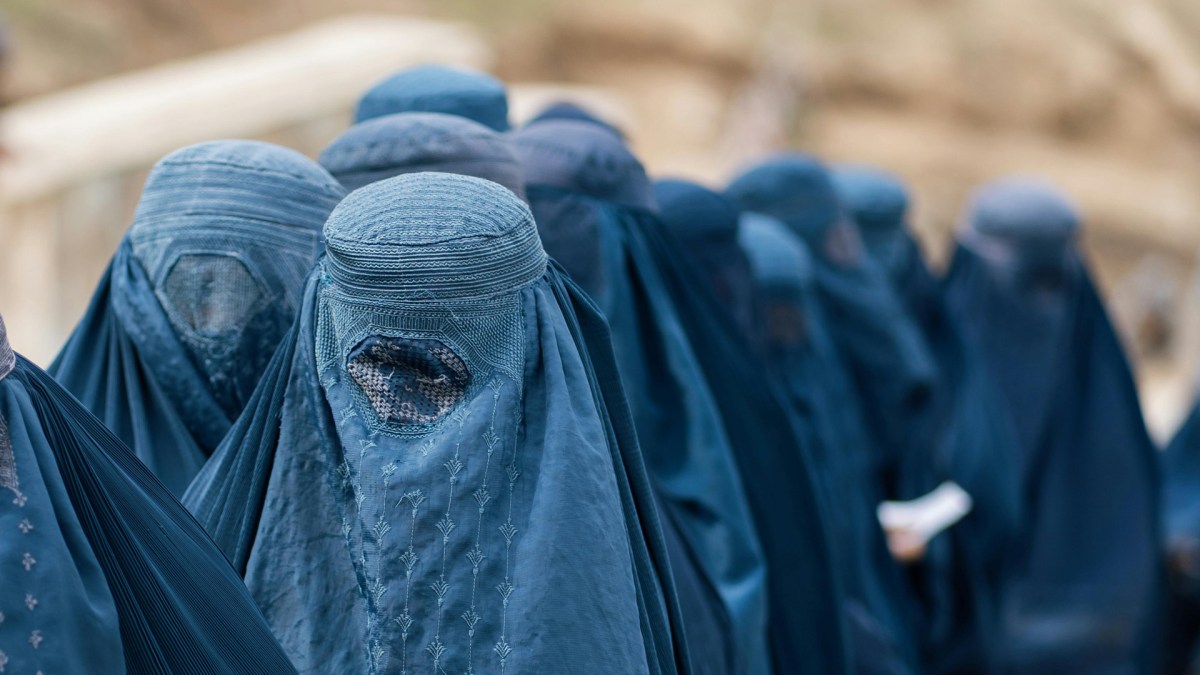
No Names, No Freedom, No Voice: Taliban Women Reduced to ‘Bibi’, ‘Goat’ and ‘Cow’ Erases Their Names From Records By Newsworld International Desk. Henryrich Ojo The rights and freedoms of women in Afghanistan are facing renewed international scrutiny following reports that Taliban authorities in the country's northern Balkh Province have prohibited the use of
No Names, No Freedom, No Voice: Taliban Women Reduced to ‘Bibi’, ‘Goat’ and ‘Cow’ Erases Their Names From Records
 By Newsworld International Desk. Henryrich Ojo
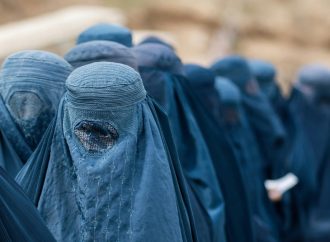
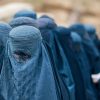
The rights and freedoms of women in Afghanistan are facing renewed international scrutiny following reports that Taliban authorities in the country’s northern Balkh Province have prohibited the use of women’s actual names in official documents, including hospital records and medical prescriptions.
 blob:https://www.image2url.com/6b1201f1-93ee-44f9-bbeb-45816585e575
The reported directive requires healthcare workers and other public employees to identify women using the generic term “Bibi”, an honorific traditionally used to address women.
Why Tinubu Needs More Time in Office – Bisi Akande
An investigation published by Afghan media outlet Zan Times and Britain’s The Guardian revealed that the instruction was introduced in May 2026 and applies to hospitals, private medical practices and clinics.
A subsequent report by Spanish newspaper EL PAÍS on November 23 quoted Afghan activist Lalah Osmany, who said that some women have also been addressed using degrading animal-related terms such as “goat” and “cow”.
Osmany described the practice as a systematic process of dehumanisation, warning that removing women’s names from official records threatens their individual identities and recognition in society.
The reports have raised concerns about the consequences of replacing individual names with a common designation in medical documentation, where accurate identification is essential for prescriptions, treatment histories and patient records.
Although the reported naming directive currently concerns Balkh Province, activists fear that similar restrictions could spread to other parts of Afghanistan.
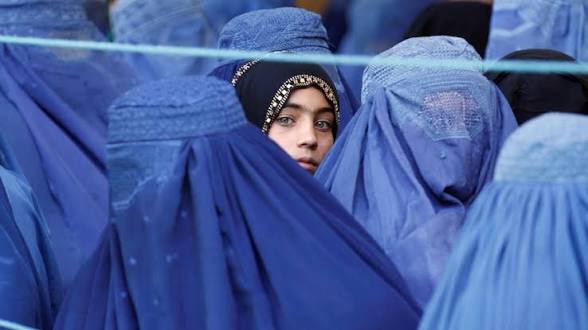 A Wider System of Restrictions
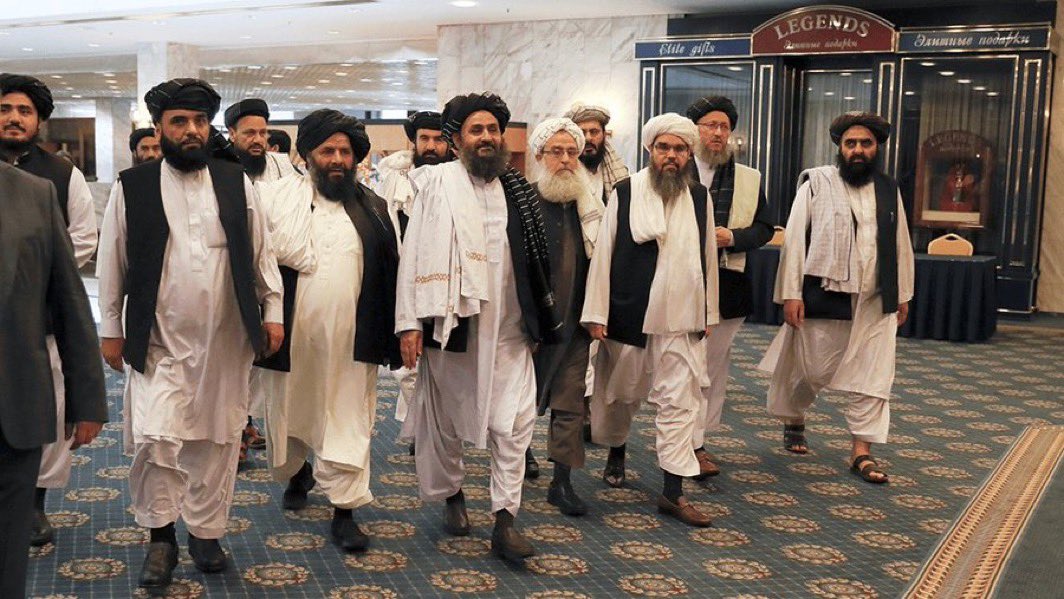
The reported removal of women’s names is unfolding against the background of years of restrictions imposed by the Taliban since returning to power in August 2021.
Afghanistan remains the only country where girls are systematically prohibited from continuing formal education beyond primary school.
Girls have been excluded from secondary education since 2021, while women have been barred from universities since December 2022.
According to the United Nations, approximately 2.6 million girls remain excluded from secondary education.
Women have also been excluded from numerous employment opportunities, including government positions, many international and national NGO jobs and beauty salons.
UN Women reported in 2026 that only seven per cent of Afghan women were employed, compared with 84 per cent of men.
Restrictions on women’s freedom of movement have also made everyday activities increasingly difficult, with many women required to have a male guardian, known as a mahram, when travelling or accessing certain public services.
Healthcare Becomes Increasingly Difficult to Access
Perhaps one of the most disturbing consequences of the restrictions is their impact on women’s access to medical treatment.
An investigation published by The Guardian and Zan Times on November 12 documented cases of female patients whose treatment was interrupted after male doctors and dentists were reportedly instructed not to examine or treat women without meeting Taliban-imposed conditions.
The restrictions have created serious difficulties in areas where female medical professionals are unavailable.
The situation has been compounded by the Taliban’s December 2024 prohibition on women attending medical training institutions, threatening the future supply of female doctors, nurses and midwives.
On November 20, 2026, the United Nations reported that nearly 300 humanitarian health facilities had closed or suspended operations, affecting more than one million women and girls.
UN Women also warned that restrictions on movement, healthcare access and employment are putting the lives and wellbeing of millions of Afghan women at risk.
Women’s Voices Under Restrictions
The restrictions extend beyond education, employment and healthcare.
In August 2024, the Taliban introduced its morality law, which places severe restrictions on women’s public appearance, movement and expression.
The law prohibits women from singing, reciting or reading aloud in public.
Women have also faced restrictions on accessing public spaces and participating in various aspects of public life.
The cumulative effect is a society in which women and girls face extensive barriers to education, employment, healthcare, freedom of expression and participation in public affairs.
Where Are the World Leaders?
The international community has repeatedly condemned the Taliban’s restrictions, while international organisations have continued documenting violations and demanding accountability.
There have also been important legal developments.
On July 8, 2025, the International Criminal Court issued arrest warrants against Taliban Supreme Leader Haibatullah Akhundzada and Chief Justice Abdul Hakim Haqqani over alleged crimes against humanity of persecution on gender grounds.
Two additional warrants were issued in September 2025 against senior education officials.
The ICC confirmed in October 2026 that all four warrants had been unsealed.
The developments represent a significant step towards international accountability, although the warrants do not themselves mean that the accused have been arrested or tried.
The United Nations and human rights organisations have continued calling for the protection of Afghan women’s fundamental rights and the restoration of their access to education, healthcare, employment and justice.
Yet, the situation remains deeply concerning.
A Question the World Cannot Ignore
A woman’s name is more than an entry in a document. It represents her identity, dignity, history and place in society.
When women cannot freely access education, work, healthcare or public life, and their identities are increasingly excluded from official records, the consequences extend far beyond individual discrimination.
Afghan women are not asking for special privileges. They are demanding the basic rights and dignity that should belong to every human being.
The question confronting the international community is no longer simply what the Taliban will do next, but what governments, international institutions and world leaders are prepared to do to protect the rights of millions of Afghan women and girls.
Where are the world leaders, and what more can be done to ensure that Afghan women are not forgotten?













Leave a Comment
Your email address will not be published. Required fields are marked with *