
TBO Declares Support for Tinubu, Vows to Mobilise CPC Bloc for 2027 The influential Buhari Organisation (TBO) has declared its full support for President Bola Ahmed Tinubu, pledging the unwavering loyalty of its members as the 2027 general election approaches. Led by former Nasarawa State Governor Senator Tanko Al-Makura, the organization assured the President that
TBO Declares Support for Tinubu, Vows to Mobilise CPC Bloc for 2027
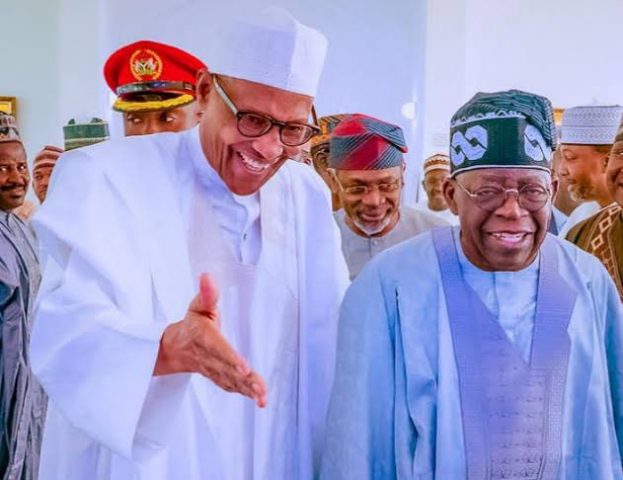
The influential Buhari Organisation (TBO) has declared its full support for President Bola Ahmed Tinubu, pledging the unwavering loyalty of its members as the 2027 general election approaches. Led by former Nasarawa State Governor Senator Tanko Al-Makura, the organization assured the President that the Congress for Progressive Change (CPC) bloc within the All Progressives Congress (APC) remains firmly united behind his administration.
During a courtesy visit to the State House in Abuja, Al-Makura and his delegation praised Tinubu’s leadership during turbulent economic times and commended him for sustaining peace and stability across the country. They also hailed the President for honouring the legacy of their late mentor, former President Muhammadu Buhari, whose political foundation remains central to the APC’s history.
Activist Embarks On Hunger Strike Over Poor Voter Registration In South-East
Buhari Organisation: From Movement to Political Legacy
Founded in the early 2000s, TBO served as a political platform to shape and amplify Buhari’s image before his full immersion into partisan politics. The group functioned as a nationwide grassroots mobilisation engine, bringing together loyalists, volunteers, and political strategists who saw Buhari as a transformative figure.
Its activities culminated in the formation of the CPC in 2009, which fielded Buhari in the 2011 presidential elections. That movement later merged with Tinubu’s Action Congress of Nigeria (ACN), the All Nigeria Peoples Party (ANPP), and other groups to form the APC in 2013. This coalition eventually propelled Buhari to the presidency in 2015, a victory rooted in the political groundwork laid by TBO.
Speaking on behalf of TBO, Al-Makura described Tinubu and Buhari as visionaries who reshaped Nigeria’s political landscape through unity and shared ideals. “Mr. President, you and President Muhammadu Buhari shared more than a political alliance; you shared a vision of a Nigeria built on justice, economic sovereignty, and good governance,” he said.
He pledged that the CPC bloc, which includes former governors, ministers, legislators, women leaders, and grassroots mobilisers, would work relentlessly to consolidate Tinubu’s reforms and ensure victory for the APC in 2027.
Abbas and CPC Leaders Reaffirm Loyalty
Also present was the Speaker of the House of Representatives, Hon. Tajudeen Abbas, who assured the President that the CPC bloc remains intact and deeply loyal. He dismissed claims of division within the group, asserting that over 90 per cent of its pioneer members are still actively engaged.
“Indeed, today is the very first time that former members of the CPC have gathered in such large numbers to visit our President. I want to seize this opportunity to assure you of the unconditional support of all former CPC members,” Abbas said.
He praised Tinubu for the respect shown to Buhari, particularly during his passing, and announced that CPC members in every state would begin grassroots mobilisation to secure Tinubu’s reelection. “That movement will cascade down to local government areas, wards, and units. CPC members will be at the forefront of ensuring your re-election in 2027,” he declared.
Tinubu: ‘Nigeria is Not Borrowing Anymore’
Addressing the delegation, President Tinubu announced a landmark development: Nigeria has met its 2025 revenue target ahead of schedule, largely through non-oil earnings, and has stopped borrowing to finance government operations.
“Nigeria is not borrowing. We have met our revenue target for the year, and we met it in August,” Tinubu said. He added that his administration’s revenue reforms had stabilised the naira, with exchange rates improving from N1,900 to the dollar at the start of his tenure to about N1,450 currently.
The President stressed that his government is focused on industrial expansion, export promotion, and job creation. On agriculture, he unveiled plans for nationwide mechanisation, promising to establish farm centres in every region to achieve food security and eliminate poverty.
“Our path to food security is clear. Every region will have a mechanised farm centre. We are committed to removing poverty from our land, and that is the work we have already started,” he assured.
Tinubu also reaffirmed his commitment to transparency, justice, and accountability, promising to build on Buhari’s legacy. He joked about his tardiness compared to Buhari’s punctuality, reflecting on their political journey together and the challenges they overcame. “When I see people like you, my determination is to work harder,” Tinubu said.
What Tinubu’s ‘No More Borrowing’ Means for Nigeria
If Tinubu’s declaration holds true, it signals a major shift in Nigeria’s fiscal policy. For years, the government relied heavily on borrowing—both externally and domestically—to plug budget deficits, pushing the country’s debt profile to unsustainable levels. This included the controversial use of “ways and means” advances, where the Central Bank of Nigeria (CBN) financed government shortfalls directly, a practice that fueled inflation and raised concerns about fiscal indiscipline.
By meeting its revenue target early through taxes, customs, and non-oil earnings, Nigeria may finally reduce its dependence on debt. This has several implications:
- Fiscal Stability: The government may be able to fund its budget without excessive borrowing, restoring credibility to fiscal management.
- Relief for the CBN: Halting “ways and means” financing would allow the CBN to operate more independently, improving monetary policy effectiveness.
- Private Sector Growth: With reduced government borrowing in the domestic market, liquidity could be freed up for businesses, lowering interest rates and stimulating investment.
- Investor Confidence: Demonstrating fiscal discipline could boost investor trust, strengthen the naira, and help stabilize inflation.
Politically, the move positions Tinubu as a reformist committed to long-term sustainability rather than short-term fixes. If sustained, this policy could redefine Nigeria’s economic trajectory, ensuring growth driven by internally generated revenue rather than debt accumulation.
The Buhari Organisation’s endorsement of President Tinubu underscores the enduring political alliance between Buhari’s legacy and Tinubu’s leadership. With the CPC bloc pledging nationwide mobilisation, the APC is already laying groundwork for the 2027 election.
Meanwhile, Tinubu’s announcement that Nigeria has stopped borrowing could be the beginning of a fiscal turnaround. If the government sustains revenue growth and discipline, it could mark a historic shift from debt dependency to financial self-reliance. For Nigerians, this would mean a more stable economy, stronger currency, and a pathway to prosperity.










Leave a Comment
Your email address will not be published. Required fields are marked with *