
Tinubu’s $24.14bn Loan Request Triggers Concerns as Nigeria’s Debt Nears ₦183tn Nigeria’s debt trajectory is set for another sharp climb as President Bola Ahmed Tinubu seeks the National Assembly’s approval to secure $24.14 billion in new foreign loans. The request, if approved, could increase Nigeria’s total public debt from ₦144.67 trillion at the end of
Tinubu’s $24.14bn Loan Request Triggers Concerns as Nigeria’s Debt Nears ₦183tn
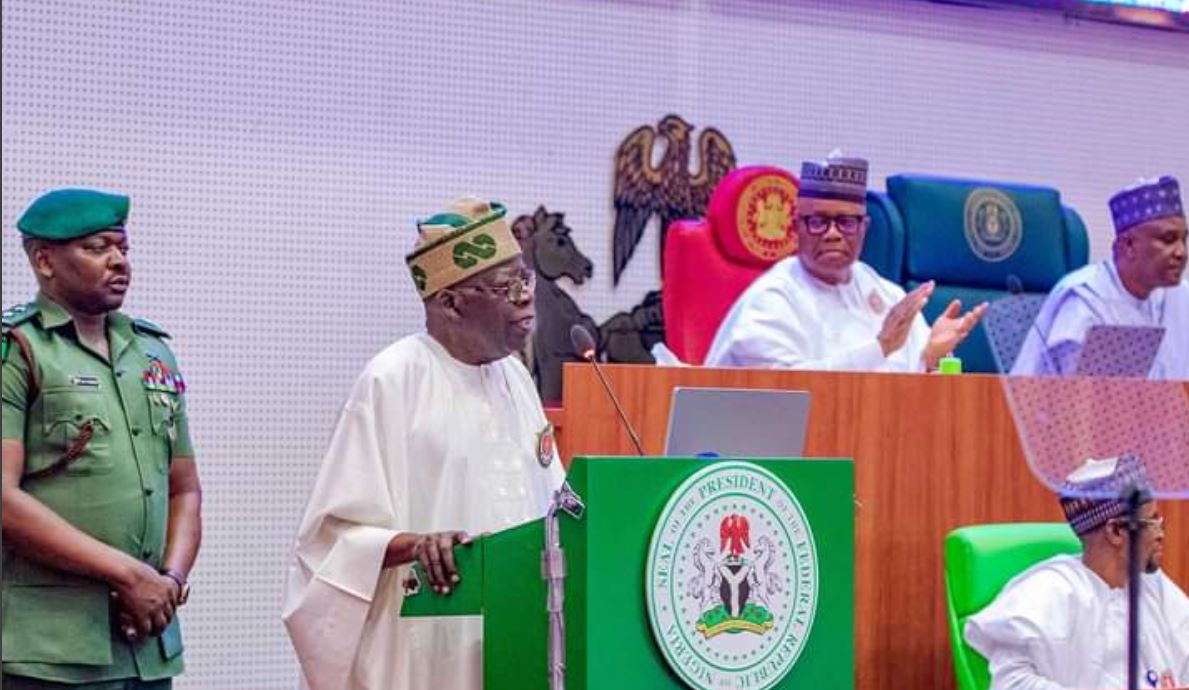
Nigeria’s debt trajectory is set for another sharp climb as President Bola Ahmed Tinubu seeks the National Assembly’s approval to secure $24.14 billion in new foreign loans. The request, if approved, could increase Nigeria’s total public debt from ₦144.67 trillion at the end of 2024 to over ₦182.91 trillion by 2026—an alarming rise that has stirred serious concerns among economists and fiscal analysts.
According to Tinubu’s letter to the National Assembly, the borrowing is intended to fund key developmental sectors including infrastructure, agriculture, healthcare, education, water resources, security, and public finance reforms. The loan comprises $21.54 billion, €2.19 billion (approximately $2.5 billion), and ¥15 billion (about $102 million). At the current exchange rate of ₦1,583.74 to $1, the borrowing translates to ₦38.24 trillion.
Ohanaeze Warns Tinubu: Dialogue, Not Defections, Key To 2027 Victory In Southeast
This massive financial proposal adds to Nigeria’s already mounting external obligations. As of December 31, 2024, Nigeria’s total public debt was ₦144.67 trillion—up 48.58% from ₦97.34 trillion in 2023. External debt surged to ₦70.29 trillion ($45.78 billion) in 2024, a sharp rise from ₦38.22 trillion ($42.5 billion) in 2023, driven largely by the depreciation of the naira. Domestic debt also grew to ₦74.38 trillion from ₦59.12 trillion during the same period.
With the proposed $24.14 billion loan, Nigeria’s external debt could rise to $69.92 billion, representing a 52.7% increase. This would also push external debt above ₦108 trillion when converted to naira. For the Federal Government, whose total debt stood at ₦133.33 trillion in 2024, the new loan would raise its debt profile by nearly 29%.
In a separate request, President Tinubu is seeking approval for a $2 billion foreign currency-denominated bond program within the domestic market. The initiative, part of a 2023 Presidential Executive Order, aims to deepen the local financial market, attract foreign exchange inflows, and support exchange rate stability. However, since the bond is dollar-denominated, it will also add to Nigeria’s external repayment obligations and debt service burden.
Additionally, the President has asked for permission to issue ₦757.98 billion in bonds to clear outstanding pension liabilities under the Contributory Pension Scheme. This move, previously approved by the Federal Executive Council, is intended to restore trust in Nigeria’s pension system and alleviate the financial strain on retirees.
Altogether, these three initiatives—the foreign loan, dollar bond, and pension bond—could push Nigeria’s debt well past ₦182.91 trillion, excluding further domestic borrowing to fund budget shortfalls in 2025 and 2026.
Economists Sound Alarm
Leading economists are increasingly worried about the implications of this borrowing spree. In separate interviews with The PUNCH, fiscal experts emphasized the urgent need for strategic utilization of borrowed funds and fiscal consolidation.
Johnson Chukwu, Group CEO of Cowry Assets Management, stressed that the problem lies not with the size of the loan, but with its deployment. “The most important thing is what the money is being used for, and that’s what Nigerians will be focused on,” he said. Chukwu acknowledged that debt can be beneficial when invested wisely but cautioned that misuse could saddle the nation with unsustainable obligations. “If borrowed funds are invested in assets that generate value higher than the value of the loan, then it is worth it.”
He warned that Nigeria risks repeating a cycle where debt is incurred without tangible returns. Chukwu also advised the government to pursue private sector partnerships for large-scale infrastructure projects to reduce financial risk and ensure better value for money.
Dr. Muda Yusuf, CEO of the Centre for the Promotion of Private Enterprise (CPPE), echoed similar concerns. He warned that the Federal Government’s aggressive borrowing, especially in foreign currencies, threatens fiscal stability. “Debt service is already far more than the appropriation for capital spending,” he noted, adding that this growing imbalance could eventually crowd out essential government functions.
Yusuf urged the administration to shift its focus toward growing non-oil revenue, reforming tax systems, and eliminating wasteful expenditure. “We need to tread very cautiously with respect to debt commitments,” he cautioned. “The current path may not be sustainable unless matched with significant revenue growth.”
While acknowledging recent economic reforms and improved oil sector performance, Yusuf insisted that short-term borrowing must be accompanied by long-term strategies to boost productivity and reduce Nigeria’s dependence on loans.
Debt Repayment Pressures Mount
Nigeria is also under pressure to meet upcoming repayment obligations. A $1.118 billion Eurobond matures in November 2025, and although the country has fully repaid the $3.4 billion IMF loan secured during the COVID-19 pandemic, it still owes roughly $30 million annually in Special Drawing Rights.
These repayments, alongside interest and sinking fund requirements, are expected to strain an already stretched fiscal budget. With nearly 90% of government revenue currently going to debt service, analysts argue that fresh borrowing could worsen the country’s debt-servicing ratio unless managed efficiently.
Conclusion
As Nigeria’s debt profile edges closer to ₦183 trillion, the Tinubu administration faces a critical moment. While development financing remains necessary, the current borrowing plan raises pressing questions about debt sustainability, fiscal prudence, and accountability. Without a clear strategy to ensure transparency and value creation, the proposed loans could do more harm than good—deepening the country’s debt trap and limiting future economic flexibility.














Leave a Comment
Your email address will not be published. Required fields are marked with *