

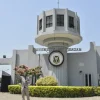
According to Professor Jesse Otegbayo, Chief Medical Director (CMD) of University College Hospital (UCH), Ibadan, 661 clinical staff members left their positions between 2020 and October 15th, indicating that the hospital's operations are beginning to suffer from the constant resignations and staff relocations abroad. Speaking at a media briefing to commemorate the hospital's 65th founder's
According to Professor Jesse Otegbayo, Chief Medical Director (CMD) of University College Hospital (UCH), Ibadan, 661 clinical staff members left their positions between 2020 and October 15th, indicating that the hospital’s operations are beginning to suffer from the constant resignations and staff relocations abroad.
Speaking at a media briefing to commemorate the hospital’s 65th founder’s day, Professor Otegbayo said that the majority of these clinical staff members were nurses, doctors, and pharmacists. The head of the anesthesia department recently wrote to the hospital’s management to inform them that the department would not be able to cover the accident and emergency department due to a staffing shortage. “I receive about 15 registration letters every week; there are more nurses than doctors and pharmacists,” Professor Otegbayo said.
Health Workers At UCH Decry Poor Performance Over Power Outage
“I must admit that the health worker movement will continue for a time, but the results will not be good for Nigeria since we will feel fully imparted in the next five years.”
Although the CMD pointed out that the constant resignations are not limited to UCH, Ibadan, but are a worldwide issue, he also mentioned that committees had already been established by the federal government and the federal ministry of health to examine health worker retention.
He claims that the committee of tertiary hospital CMDs has also sent recommendations to these various committees, including requesting that the government guarantee the complete replacement of departing employees. “The high cost of diesel to continuously supply electricity from the national grid, bureaucratic bottlenecks in replacing existing staffing, and negative perception and high expectations from the public are some of the challenges that the hospital faces in providing training, research, and health care services,” he said.
In addition to highlighting the hospital’s accomplishments since he became CMD, Professor Otegbayo announced that the facility had started emergency medicine training for the first time in Nigeria.












Leave a Comment
Your email address will not be published. Required fields are marked with *