
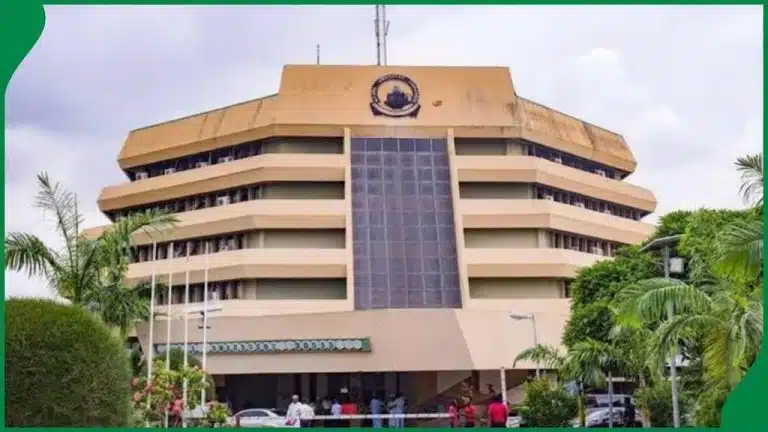
2027 Elections: NUC Proposes Up to Four-Week Break for Nigerian Universities The National Universities Commission (NUC) has proposed that universities across Nigeria adjust their academic calendars and observe a break of up to four weeks to accommodate the 2027 general elections. NUC Executive Secretary, Professor Abdullahi Yusufu Ribadu, made the proposal on Monday in Abuja
2027 Elections: NUC Proposes Up to Four-Week Break for Nigerian Universities
The National Universities Commission (NUC) has proposed that universities across Nigeria adjust their academic calendars and observe a break of up to four weeks to accommodate the 2027 general elections.
NUC Executive Secretary, Professor Abdullahi Yusufu Ribadu, made the proposal on Monday in Abuja during a meeting with the Chairman of the Independent National Electoral Commission (INEC), Professor Joash Amupitan.
The proposal is intended to prevent academic activities from clashing with the election timetable, particularly because university lecturers and other academic staff are often engaged as collation and returning officers during elections.
 blob:https://www.image2url.com/6b1201f1-93ee-44f9-bbeb-45816585e575
Nollywood Actress Anike Sinleke Dies After Battle With Ovarian Cancer
2027 Election Dates Announced
The presidential and National Assembly elections are scheduled for Saturday, January 16, 2027, while governorship and State Houses of Assembly elections are expected to take place on Saturday, February 6, 2027.
INEC has therefore asked universities to make arrangements that will allow qualified academic staff to participate in the electoral process without disrupting academic activities.
NUC to Consult Vice-Chancellors
Responding to INEC’s request, Ribadu said the commission would consult Vice-Chancellors across the country on how best to adjust their academic calendars.
He explained that the NUC would issue a circular to universities after receiving a formal letter from INEC.
Ribadu stressed that the adjustments would be designed to accommodate the elections without unnecessarily affecting students’ academic programmes.
“We will discuss with the Vice-Chancellors and have their calendars tweaked in such a way that it will not affect the elections, nor will it affect the studies of the students,” he said.
He also disclosed that the NUC could organise an online meeting with university heads to discuss the nomination of academic staff for election duties.
INEC Announces New Measures for 2027 Elections
During the meeting, INEC Chairman Joash Amupitan outlined measures the commission intends to introduce to improve the credibility and security of the 2027 elections.
He said results recorded at polling units on Form EC8A would undergo automated checks for mathematical errors and over-voting before being transmitted to the INEC Result Viewing Portal (IReV).
Amupitan also disclosed that INEC had acquired 57,000 new Bimodal Voter Accreditation System (BVAS) devices, reducing the number of voters assigned to each device to 850.
The commission is also scheduled to conduct a nationwide mock voter accreditation and result transmission exercise on Saturday, November 28, 2026, across the 36 states and the Federal Capital Territory.
INEC Seeks Support From Universities
Amupitan urged the NUC to ensure that universities nominate qualified and non-partisan academic staff for election duties.
He also requested support for voter education programmes on campuses and improved welfare and recognition for academics involved in the electoral process.
On security, the INEC chairman said the Inter-Agency Consultative Committee on Election Security had been extended to all Local Government Areas and Registration Areas.
He added that special security arrangements would be made around collation centres.
Amupitan further referred to Sections 96 and 97 of the Electoral Act 2026, which he said criminalise violence, abusive statements and threats against electoral officials.
He also cited Section 148, which provides for INEC’s power to prosecute electoral offenders directly.
“No Returning Officer or Collation Officer will be left to stand alone against lawlessness,” he said.
NUC Proposes Electoral Studies and Student Internships
Beyond the proposed academic calendar adjustments, Ribadu suggested stronger cooperation between the NUC and INEC.
His proposals included student internship opportunities at INEC offices, the possible introduction of programmes in electoral studies and joint research into artificial intelligence, robotics and data analytics.
He also suggested that university students could support voter education through campus clubs and other organised activities.
The NUC executive secretary expressed confidence that INEC would conduct free, fair and transparent elections in 2027.
What do you think about the proposed four-week university break for the 2027 elections? Will it help protect the electoral process without disrupting students’ academic calendars? Share your views in the comments.

















Leave a Comment
Your email address will not be published. Required fields are marked with *