
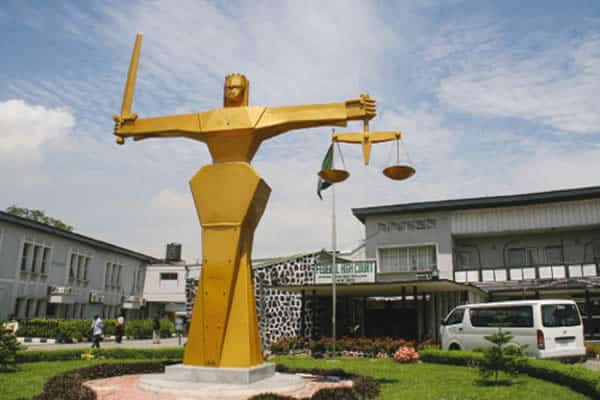
On Wednesday, the Federal High Court in Abuja delivered a significant judgment, marking a major development in Nigeria’s ongoing fight against insurgency. Presided over by Justice James Omotosho, the court sentenced four individuals linked to Boko Haram activities to life imprisonment for their roles in attacks across Borno State between 2021 and 2024. The
On Wednesday, the Federal High Court in Abuja delivered a significant judgment, marking a major development in Nigeria’s ongoing fight against insurgency. Presided over by Justice James Omotosho, the court sentenced four individuals linked to Boko Haram activities to life imprisonment for their roles in attacks across Borno State between 2021 and 2024.
The ruling followed guilty pleas entered by the defendants, who faced terrorism-related charges filed by the federal government. Lateef Fagbemi led the prosecution team, with Rotimi Oyedepo and other legal representatives alongside him.
 blob:https://www.image2url.com/6b1201f1-93ee-44f9-bbeb-45816585e575
Adetimehin Gains Group Support For ADC Reps Ticket Amid Warning On Same Ward Aspirants
The four convicts—Ali Abiso, Bakura Abah Kabiru, Ado (also known as Luka Garba), and Babagoni Masawai—were found guilty of participating in or supporting terrorist operations linked to Boko Haram. Their activities reportedly spanned several communities in Borno State, including Bama, Gwoza, and Konduga.
In one of the highlighted cases, Ali Abiso, a 30-year-old from Bama Local Government Area, pleaded guilty to all charges against him. The court sentenced him to life imprisonment on two counts and imposed an additional 25-year term on the other counts, to run concurrently. Justice Omotosho emphasized that the defendant’s admission of guilt reinforced the evidence presented, including confessional statements and investigative findings.
Similarly, Bakura Abah Kabiru received life imprisonment alongside additional 25-year sentences, while Ado (Luka Garba) was handed a life sentence plus a 25-year term. Babagoni Masawai faced multiple sentences, including life imprisonment on two counts, 20 years on others, and shorter terms for additional offences.
Beyond the four life sentences, the court also ruled on 14 other defendants who admitted guilt. These individuals received prison terms ranging between 20 and 25 years. Among them were Ali Mustapha, Danbawa Salisu, Modu Ali, and others, each convicted for varying degrees of involvement in terrorism-related activities.
Evidence presented during the trial included reports and confessional statements from the Department of State Services, which played a central role in the investigation.
In a separate but related ruling, another judge, Justice Musa Liman, ordered the release of Amina Audu. She had previously been sentenced to one year in prison after pleading guilty to providing logistical support to Boko Haram. The court ruled that her sentence should be counted from the date of her arrest in April 2024, meaning she had already served her term.
Audu had appealed for leniency, explaining that insurgents had killed her husband and left her responsible for eight children. Taking the court’s decision into account, the court granted her immediate release.
The rulings underscore Nigeria’s intensified judicial efforts to address terrorism and enforce accountability. By securing convictions through due legal process, authorities aim to deter future crimes while reinforcing the rule of law in regions affected by insurgency.
These outcomes highlight a broader commitment by the Nigerian justice system to confront security challenges through structured legal mechanisms, ensuring that perpetrators face consequences while also considering humanitarian factors in appropriate cases.




















Leave a Comment
Your email address will not be published. Required fields are marked with *