
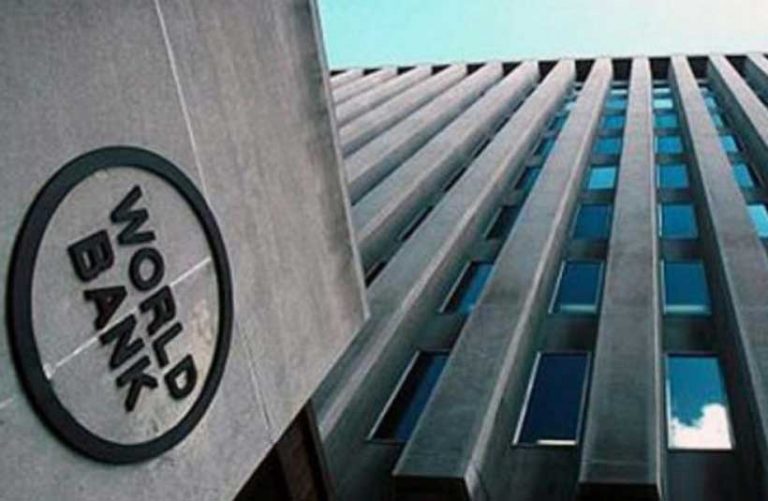
The Federal Government of Nigeria has intensified discussions with the World Bank over a proposed $1.25bn loan aimed at supporting economic reforms, job creation, and investment competitiveness. According to findings obtained from a World Bank Programme Information Document, the proposed facility, known as the Nigeria Actions for Investment and Jobs Acceleration, has progressed to a
The Federal Government of Nigeria has intensified discussions with the World Bank over a proposed $1.25bn loan aimed at supporting economic reforms, job creation, and investment competitiveness.
According to findings obtained from a World Bank Programme Information Document, the proposed facility, known as the Nigeria Actions for Investment and Jobs Acceleration, has progressed to a crucial stage in the lender’s approval process and is expected to be presented for approval on June 26, 2026.
If approved, the loan would become the second-largest World Bank facility secured under the administration of Bola Tinubu, trailing only the $1.5bn Reforms for Economic Stabilisation to Enable Transformation Development Policy Financing approved in June 2024.
 blob:https://www.image2url.com/6b1201f1-93ee-44f9-bbeb-45816585e575
At the current exchange rate of N1,361.4 per dollar, the proposed loan translates to approximately N1.70tn, highlighting the scale of external financing being pursued amid ongoing economic reforms.
The development comes less than seven months before Nigeria’s next presidential election scheduled for January 16, 2027, based on the revised timetable released by the Independent National Electoral Commission.
Cleric Tells Court Alleged Coup Organisers Requested Spiritual Backing
Financial projections indicate that if the proposed facility is approved and fully disbursed, Nigeria’s external debt stock could rise from N74.43tn ($51.86bn) recorded as of December 31, 2025, to at least N76.13tn ($53.11bn).
The country’s total public debt may also increase from N159.28tn to approximately N160.98tn, while total debt in dollar terms could rise from $110.97bn to about $112.22bn.
The World Bank document revealed that the project has already moved beyond the appraisal stage and is now at the “decision meeting” phase, where senior management reviews the final financing package before forwarding it to the Board of Executive Directors for formal approval.
According to the document, “The review did authorise the team to appraise and negotiate,” indicating that major policy commitments and financing conditions have already been substantially agreed upon between Nigeria and the World Bank team.
The Federal Ministry of Finance has been listed as the implementing agency for the proposed programme.
The World Bank stated that the facility is intended “to support the government’s efforts to expand access to finance, digital, and electricity services, and strengthen competitiveness through tax, trade, and agriculture reforms.”
Rising Dependence on World Bank Funding
Findings showed that the World Bank has approved approximately $9.35bn in loans and credits for Nigeria between June 2023 and May 2026.
These approvals cover sectors such as healthcare, agriculture, power, renewable energy, education, MSME financing, social protection, and economic reforms.
Major facilities approved during the period include the $2.25bn RESET and ARMOR reform financing in June 2024, $1.57bn for the HOPE and SPIN programmes in September 2024, and another $1.08bn for education and resilience programmes in March 2025.
Should the latest $1.25bn facility receive approval, total World Bank commitments under Tinubu’s administration would rise to about $10.6bn.
However, many of these loans are typically disbursed in phases, with releases tied to the implementation of specific policy reforms and performance benchmarks.
FG Raises Concerns Over Delayed Loan Approvals
Earlier, the Accountant-General of the Federation, Shamseldeen Ogunjimi, warned that Nigeria could reconsider future World Bank loan arrangements if approval and disbursement timelines continue to experience delays.
Speaking during a meeting in Abuja with a World Bank delegation led by Treed Lane, Ogunjimi stressed that the country expected faster processing since the facilities were loans rather than grants.
“If approvals take more than six months, the Nigerian Government may no longer honour such arrangements,” he warned.
The World Bank’s Senior External Affairs Officer, Mansir Nasir, however, explained that funds are usually released in instalments depending on project implementation and financing structures.
Meanwhile, recent data from the Debt Management Office showed that Nigeria’s debt exposure to the World Bank rose from $17.81bn in 2024 to $19.89bn in 2025, representing an 11.7 per cent increase.
The debt comprises loans from both the International Development Association and the International Bank for Reconstruction and Development.
Economists Express Mixed Reactions
Several economists have expressed concern over Nigeria’s rising debt profile despite acknowledging the concessional nature of World Bank financing.
Economist Adewale Abimbola argued that borrowing itself is not necessarily harmful if the funds are channelled into productive projects capable of generating economic returns.
Development economist Aliyu Ilias questioned the need for continued borrowing at a time when the government claims increased revenues following the removal of fuel subsidies.
Similarly, the Chief Executive Officer of the Centre for the Promotion of Private Enterprise, Muda Yusuf, warned that excessive foreign borrowing could expose Nigeria to exchange rate risks and place additional pressure on foreign reserves.
The Nigerian Economic Summit Group also cautioned that Nigeria’s debt outlook remains fragile despite temporary improvements in some debt indicators.
In its latest Debt Burden Monitor report, the group noted that although the Debt Burden Index declined from 83.6 points in 2023 to 70.9 points in 2024, the improvement was largely due to short-term moderation in debt servicing pressures rather than lasting fiscal reforms.
According to the NESG, Nigeria’s debt profile remains vulnerable because of weak revenue mobilisation and continued dependence on borrowing to finance budget deficits.















Leave a Comment
Your email address will not be published. Required fields are marked with *