
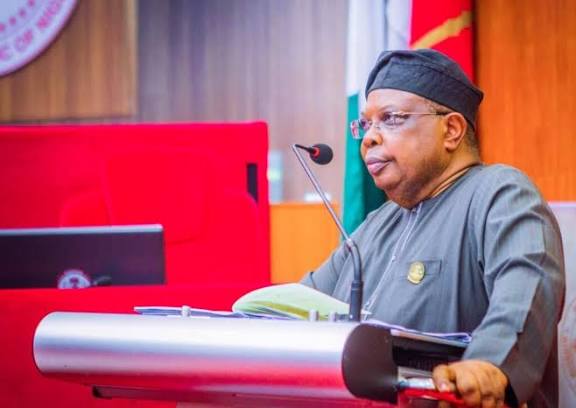
FG Plans $2bn East-West Super Grid to Boost Electricity Capacity to 19,000MW, Promises Stable Power in Five Years The Federal Government has announced plans to invest $2 billion in an East-West super grid project aimed at strengthening Nigeria's electricity transmission network and increasing its capacity to 19,000 megawatts. The Minister of Power, Joseph Tegbe, disclosed
FG Plans $2bn East-West Super Grid to Boost Electricity Capacity to 19,000MW, Promises Stable Power in Five Years
The Federal Government has announced plans to invest $2 billion in an East-West super grid project aimed at strengthening Nigeria’s electricity transmission network and increasing its capacity to 19,000 megawatts.
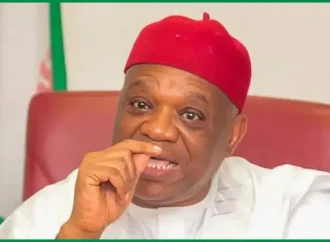
The Minister of Power, Joseph Tegbe, disclosed this on Monday during an interview on TVC, saying the proposed project would complement existing transmission infrastructure and improve the stability and resilience of the national electricity grid.
INEC Breaks Silence On ADC Leadership Crisis, Says It Has Not Received Court Judgment
 blob:https://www.image2url.com/6b1201f1-93ee-44f9-bbeb-45816585e575
Tegbe said the government was targeting a three-to-five-year period to achieve stable electricity supply across the country, stressing that major infrastructure development required time and sustained investment.
According to him, the proposed super grid will cut across different parts of the country, linking Funtua, Gwagwalada, Ikot Ekpene, Benin, Epe and Ilorin.
He explained that the project would significantly expand the country’s electricity transmission capacity from its current operational level of about 4,000 megawatts to 19,000 megawatts.
The minister also disclosed that the procurement process had commenced, expressing optimism that the project could be completed within two years.
He said the government was equally working towards encouraging private sector participation in electricity transmission within the next two to three years.
Speaking on the timeline for improved electricity supply, Tegbe said Nigerians should expect more stable power within three to five years.
“Honestly speaking, you already see some visible improvement despite the challenge we have had. By the time we fix the grid, I will look at the horizon of about three to five years from now,” he said.
He added that Nigeria’s growing electricity demand, driven partly by technology, artificial intelligence, data infrastructure and remote working, made urgent investment in transmission capacity necessary.
“Infrastructure build out is not done overnight. Even when we fix some of the challenges we have today, we need to build the capacity. Everybody is building capacity for AI, for data. Most young people work from home, and because of that, there is a need for bandwidth and for electricity supply,” the minister stated.
FG Announces Restoration of Electricity in Affected States
Meanwhile, Tegbe said electricity supply had been restored to several communities affected by recent disruptions in Lagos, Ogun, Oyo, Kwara states and the Federal Capital Territory.
He attributed part of the disruption to the vandalism of the Benin-Egbin 330-kilovolt transmission line, which has since been repaired and returned to service.
According to the minister, the restoration helped increase electricity supply to the Lagos Complex to more than 1,000 megawatts, effectively returning supply to the level recorded before the disruption.
He specifically mentioned areas including Ajah, Lekki, Ikoyi, Magodo and Ikeja as locations where electricity had been restored.
“I am sure in Lagos, I confirm as at last night because I made personal calls, Ajah, Lekki, Ikoyi, Magodo, Ikeja, lights are back,” he said.
The minister added that electricity sector teams were still working to restore full supply to other affected locations.
Minister Seeks Cooperation of Electricity Operators
Tegbe further disclosed that the Ministry of Power was working with major stakeholders in the electricity industry to ensure sustained improvement in power supply.
The stakeholders include electricity generation companies (GenCos), the System Operator, the Transmission Company of Nigeria (TCN) and distribution companies (DisCos).
He maintained that the government’s immediate priority was to stabilise the national grid and ensure reliable electricity for households and businesses.
“Our priority continues to be the provision of reliable electricity to Nigerians,” he said.
The proposed $2 billion super grid represents another major government initiative aimed at addressing Nigeria’s longstanding electricity transmission challenges.
However, Nigerians will be watching closely to see how quickly the project moves from the procurement stage to actual construction and whether the promised improvements will translate into consistent electricity supply.
Tags: Nigeria Electricity, Joseph Tegbe, $2 Billion Super Grid, Electricity Supply, National Grid, Transmission Network, Bola Tinubu, 19,000MW, Power Sector Reform, Nigerian Government


















Leave a Comment
Your email address will not be published. Required fields are marked with *