
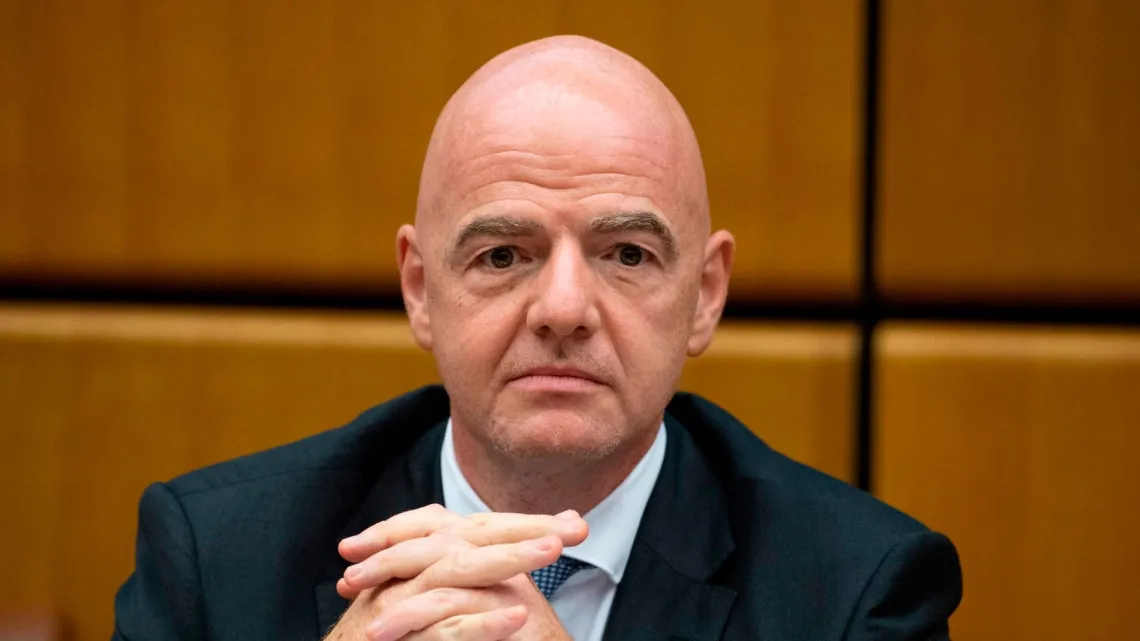
FIFA Knew DR Congo Goalkeeper Had Eligibility Issue Before Nigeria’s World Cup Exit — Report Fresh reports have raised questions over FIFA’s handling of Nigeria’s complaint against the Democratic Republic of Congo after it emerged that the world football governing body was reportedly aware of an eligibility issue involving DR Congo goalkeeper Lionel Mpasi. The
FIFA Knew DR Congo Goalkeeper Had Eligibility Issue Before Nigeria’s World Cup Exit — Report
Fresh reports have raised questions over FIFA’s handling of Nigeria’s complaint against the Democratic Republic of Congo after it emerged that the world football governing body was reportedly aware of an eligibility issue involving DR Congo goalkeeper Lionel Mpasi.
The Super Eagles lost to DR Congo 4-3 on penalties after a 1-1 draw following extra time in the African play-off final in Rabat, Morocco, on November 16, 2025, ending Nigeria’s hopes of qualifying for the 2026 FIFA World Cup.
We Are Ignorant In This Country, We Don’t Read – NAFDAC DG Blasts Nigerians
 blob:https://www.image2url.com/6b1201f1-93ee-44f9-bbeb-45816585e575
According to reports by Le Monde and The New York Times, FIFA lawyers discovered in March 2026 that Mpasi had not completed the required process to change his international allegiance from France to DR Congo. Mpasi, 32, was born in France and represented the country at youth level, while DR Congo reportedly began the process of switching his international association in 2021.
The reports said the process was not completed, raising questions over whether Mpasi had been properly cleared to represent DR Congo when he featured in the World Cup qualification campaign.
The development is significant because FIFA reportedly considered several possible responses after Nigeria raised its complaint. According to The New York Times, options considered included awarding the relevant match to Nigeria, sanctioning DR Congo, replacing DR Congo in the intercontinental play-off against Jamaica or taking no action because Nigeria’s complaint was considered to have been filed late.
FIFA ultimately did not impose a sporting sanction that altered the qualification process. The governing body has maintained that its committees operate independently and determine cases according to the applicable regulations and facts presented before them.
DR Congo subsequently defeated Jamaica in the intercontinental play-off and qualified for the 2026 World Cup. The Leopards later advanced to the knockout stage before losing 2-1 to England, with Mpasi starting in goal.
The revelations have now prompted renewed calls for Nigeria to examine its options. A senior National Sports Commission official reportedly told ESPN that the country is considering whether to seek compensation from FIFA over the financial consequences of missing the tournament.
“Nothing has been decided yet, but we will seriously consider seeking compensation from FIFA for all of the economic losses this has cost Nigeria,” the official was quoted as saying.
The possible losses, according to the official, could include revenue to the Nigeria Football Federation and the Super Eagles, sponsorship income, player exposure and wider economic benefits associated with Nigeria’s participation at the World Cup.
Former NFF president Ibrahim Gusau, who was in office when Nigeria filed its complaint, has also criticised FIFA’s handling of the matter, arguing that the governing body has not fully disclosed the findings of its investigation.
The controversy has also generated questions about FIFA President Gianni Infantino’s relationship with Congolese football federation president Véron Mosengo-Omba. However, the reports cited do not establish that Infantino personally directed the handling or dismissal of Nigeria’s complaint.
FIFA has previously imposed sporting sanctions for fielding ineligible players. South Africa, for instance, forfeited a 2026 World Cup qualifying match against Lesotho after using suspended midfielder Teboho Mokoena, while Bolivia forfeited two 2018 World Cup qualifiers after Nelson Cabrera was found ineligible.
The latest reports have therefore renewed debate over whether FIFA applied its eligibility rules consistently in the DR Congo-Nigeria case.
For Nigeria, the issue now extends beyond the missed 2026 World Cup. The Nigeria Football Federation and the National Sports Commission could still explore a review of FIFA’s handling of the complaint and possible financial claims, although it remains unclear whether FIFA will reopen the matter.












Leave a Comment
Your email address will not be published. Required fields are marked with *