
I’m Not Afraid of Losing ADC Ticket to Atiku, Says Peter Obi Labour Party’s 2023 presidential candidate and influential political figure, Peter Obi, has stated that he is not afraid of losing the African Democratic Congress (ADC) presidential ticket to former Vice President Atiku Abubakar, should both men contest under the same platform in the
I’m Not Afraid of Losing ADC Ticket to Atiku, Says Peter Obi
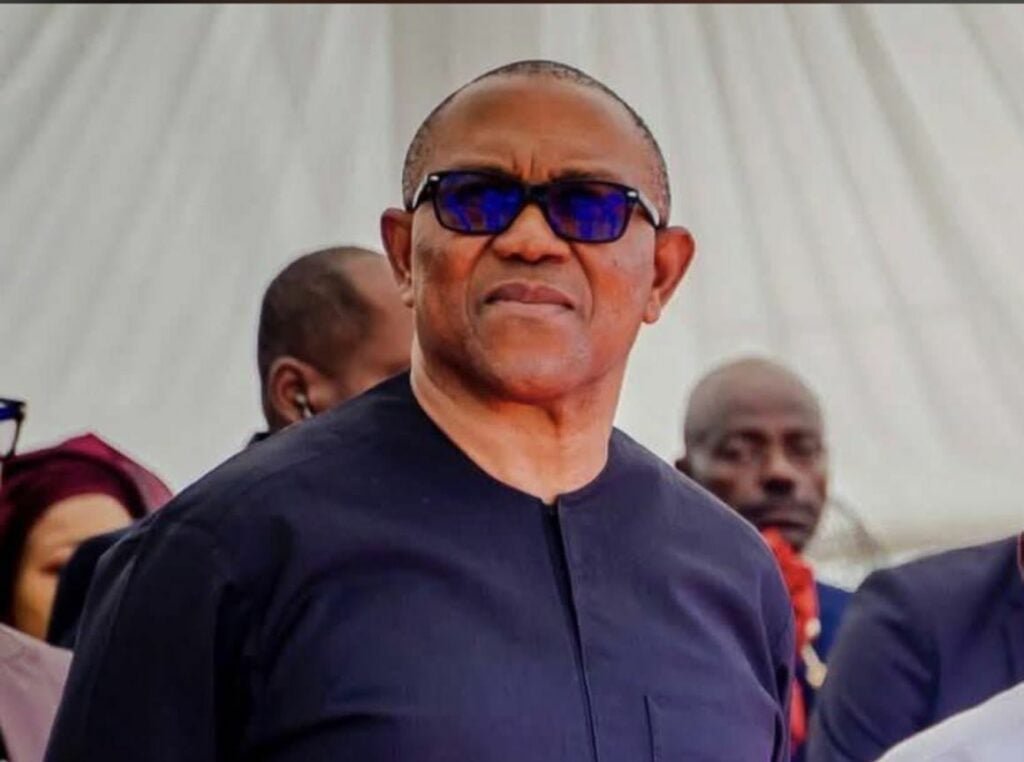 Labour Party’s 2023 presidential candidate and influential political figure, Peter Obi, has stated that he is not afraid of losing the African Democratic Congress (ADC) presidential ticket to former Vice President Atiku Abubakar, should both men contest under the same platform in the 2027 general elections.
Obi made the declaration during an exclusive interview with journalists in Abuja on Saturday, where he addressed growing speculation about his rumored move to the ADC and the possibility of aligning with Atiku Abubakar ahead of the next presidential election. His remarks come amid widening divisions within opposition ranks and ongoing talks about the formation of a broad political coalition to challenge the ruling All Progressives Congress (APC) in 2027.
The former Anambra State governor emphasized that his focus was not on political party labels or ticket battles but on building a national movement capable of delivering good governance and accountability to Nigerians. According to him, politics should be about service, not personal ambition.
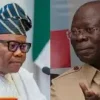
 blob:https://www.image2url.com/6b1201f1-93ee-44f9-bbeb-45816585e575
“I am not afraid of losing any ticket to anyone, not even to Atiku Abubakar or anyone else,” Obi said firmly. “For me, politics is not about who gets what ticket; it is about building a Nigeria that works. The people should be the focus, not personal interest. If another candidate is chosen and Nigerians believe he can do better, so be it. What matters is rescuing our country from the current state of decay.”
Calls for Opposition Unity
Obi’s statement follows weeks of speculation about a possible merger or alliance among opposition parties — including the Labour Party (LP), Peoples Democratic Party (PDP), and ADC — to form a formidable front capable of defeating the APC. Sources within both the ADC and LP confirmed that high-level discussions are ongoing, though no formal announcement has been made.
When asked whether he was planning to defect to the ADC, Obi avoided a direct answer but hinted at the need for a stronger and more organized opposition platform.
“Nigeria is bigger than any political party,” he said. “If the ADC or any other party becomes a viable platform to unite Nigerians and drive our development agenda, I am ready to support that cause. The goal is not about Peter Obi or Atiku; it is about Nigeria. We need a coalition that will prioritize education, healthcare, security, and jobs.”
Obi also reiterated his belief in issue-based politics rather than personality-driven campaigns. He called on Nigerian politicians to move away from what he described as “transactional politics” that has defined governance for decades.
“This idea of jumping from one party to another because of tickets is not sustainable. We must redefine leadership by focusing on character, competence, capacity, and compassion,” Obi stressed.
Atiku’s Role and the 2027 Equation
Former Vice President Atiku Abubakar, who was the presidential candidate of the PDP in 2023, has also been linked to ongoing coalition talks. Atiku recently stated that he was open to working with Obi again if doing so would help rescue Nigeria from poor governance. Their previous collaboration in 2019 — when Obi served as Atiku’s running mate — remains a reference point in discussions about a potential reunion.
Political observers note that a joint ticket or coordinated opposition strategy between Obi and Atiku could significantly alter the 2027 race, particularly given their combined influence across the North and South.
However, questions about who would lead such a coalition remain unresolved. Some ADC officials have expressed interest in fielding a consensus candidate who commands cross-regional appeal, and both Obi and Atiku fit that profile.
An ADC national officer, speaking anonymously, said:
“Both men have strong followership. What we are discussing is how to avoid another divided opposition front. If they come together, Nigerians will have a real alternative in 2027.”
Obi: “Nigeria Needs a Leadership Revolution”
Throughout the interview, Obi maintained that Nigeria’s biggest challenge is not just leadership failure but the lack of collective national will to change the system. He argued that citizens must demand accountability and transparency, insisting that political reforms will only succeed when people stop celebrating corruption and mediocrity.
“What we need is a leadership revolution built on trust and competence,” Obi said. “I keep telling people that you cannot continue to elect the same kind of leaders and expect a different outcome. Nigerians must start asking hard questions — where is our money going, why are our youths unemployed, why is insecurity worsening? These are the issues that matter, not party tickets.”
He further criticized the current economic situation under the APC-led government, describing it as “unsustainable and dangerous.” According to him, rising inflation, currency depreciation, and widespread unemployment are signs that urgent intervention is required.
“People are suffering. The naira is losing value, food prices are unbearable, and insecurity is still high. Instead of fighting over political positions, we should be fighting for the soul of our nation,” Obi said.
Public Reaction and Political Implications
Obi’s comments have since generated intense discussion on social media, with supporters praising his humility and detractors accusing him of political double-speak. Many see his openness to collaboration as a strategic move aimed at consolidating opposition power before 2027.
Political analysts believe Obi’s latest remarks may signal a willingness to play a unifying role rather than insist on being the flag bearer of any particular party. Dr. Tunde Olanipekun, a political scientist at the University of Ibadan, noted:
“Obi is positioning himself as the conscience of the opposition. By saying he is not afraid to lose the ticket, he is appealing to a broader base and preparing the ground for alliance politics.”
As the 2027 election draws closer, discussions about opposition realignment are expected to intensify. While the ruling APC remains confident in its nationwide structure, a united front comprising figures like Atiku Abubakar, Peter Obi, and other reform-minded politicians could reshape the political landscape.
For Obi, however, the message remains consistent: governance must be people-centered.
“Nigeria must work again,” he concluded. “It doesn’t matter who leads the change. What matters is that we begin to rebuild our nation — together.”



















Leave a Comment
Your email address will not be published. Required fields are marked with *