
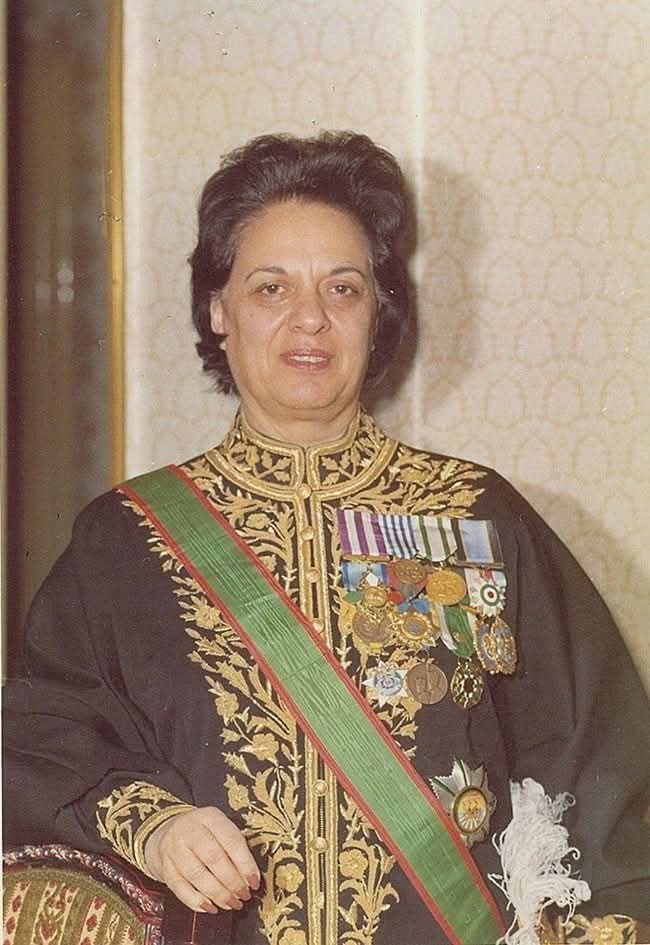
Iran's Trailblazing First Female Minister: Executed in 1980 for Defending Women's RightsIn the turbulent months following Iran's 1979 Islamic Revolution, the new regime moved swiftly to eliminate figures associated with the previous monarchy and its progressive policies. Among the most prominent victims was Farrokhroo Parsa, a physician, educator, parliamentarian, and pioneer who became the country's
Iran’s Trailblazing First Female Minister:
Executed in 1980 for Defending Women’s RightsIn the turbulent months following Iran’s 1979 Islamic Revolution, the new regime moved swiftly to eliminate figures associated with the previous monarchy and its progressive policies. Among the most prominent victims was Farrokhroo Parsa, a physician, educator, parliamentarian, and pioneer who became the country’s first female cabinet minister.
On May 8, 1980, at the age of 58, she was executed by firing squad in Tehran, charged with “spreading corruption on earth” — a vague accusation rooted largely in her lifelong advocacy for gender equality and opposition to compulsory veiling.
A Life Rooted in ActivismBorn on March 24, 1922, in Qom, Farrokhroo Parsa grew up in an environment shaped by her mother’s fierce feminism. Her mother, Fakhr-e Āfāgh Parsa, edited the women’s magazine Jahān-e Zan and campaigned openly for gender equality and education for girls.
These views led to government harassment, including the family’s temporary exile to Qom under house arrest. Parsa pursued medicine and became a biology teacher at Jeanne d’Arc High School in Tehran, where one of her students was Farah Diba — who later became Empress Farah Pahlavi. Parsa’s commitment to education and women’s advancement soon propelled her into politics. In 1963, she was elected to Iran’s Parliament (Majles) representing Tehran. She actively pushed for women’s suffrage and reforms to family and gender laws.
Her rise continued: in 1965, she was appointed Deputy Minister of Education, and on August 27, 1968, she made history as Minister of Education in Prime Minister Amir Abbas Hoveyda’s cabinet — the first woman to hold a cabinet post in Iran. She served until January 1971 and remained a vocal advocate for women’s rights, including resisting efforts to impose veiling on schoolgirls and promoting non-sexist educational materials.
The Revolution and ArrestAfter the 1979 revolution toppled the Shah, many officials from the Pahlavi era faced retribution. Though Parsa had left office years earlier, her feminist stance and past role made her a target. She was arrested in early 1979 and tried by the Islamic Revolutionary Court under Judge Sadeq Khalkhali, infamous as the “Hanging Judge.”
The charges against her included “plundering the national treasury,” “causing corruption and spreading prostitution” in the ministry, collaborating with the Shah’s secret police (SAVAK), and enacting “anti-people” laws. In reality, her “crimes” centered on her progressive views — particularly her refusal to support mandatory hijab and her efforts to advance women’s education and equality.
Her trial was swift and lacked due process. She defended herself in statements but could not effectively challenge witnesses or evidence. Offered a chance to repent and express regret, she refused.A Defiant Final LetterFrom prison, Parsa wrote a poignant farewell letter to her children that has since become a powerful symbol of resistance:
“I am a doctor, so I have no fear of death. Death is only a moment and no more.
I am prepared to receive death with open arms rather than live in shame by being forced to be veiled. I am not going to bow to those who expect me to express regret for fifty years of my efforts for equality between men and women. I am not prepared to wear the chador and step back in history.”
Her words captured her unyielding commitment to dignity and progress over submission. On May 8, 1980, she was executed by firing squad at Evin Prison in Tehran (some accounts note initial attempts at hanging failed, leading to shooting). The regime announced her death the same day, framing it as justice against corruption.Legacy in a Continuing StruggleParsa’s execution marked one of the early, stark demonstrations of the new regime’s hostility toward secular women’s rights advocates.
Her successor as education minister expressed shock, noting her competence and even her past support for Islamic figures through ministry funding.Today, her story resonates strongly amid ongoing protests in Iran against compulsory hijab laws. Women’s rights activists and ordinary citizens continue to echo the defiance Parsa embodied — refusing to “step back in history.”
Her final letter remains widely shared on social media and in discussions of feminism and human rights in Iran, a reminder that the fight for gender equality has deep roots and enduring courage.Farrokhroo Parsa’s life and death highlight the high cost paid by those who challenge authoritarian control over women’s bodies and freedoms.
Her refusal to kneel continues to inspire generations.











Leave a Comment
Your email address will not be published. Required fields are marked with *