
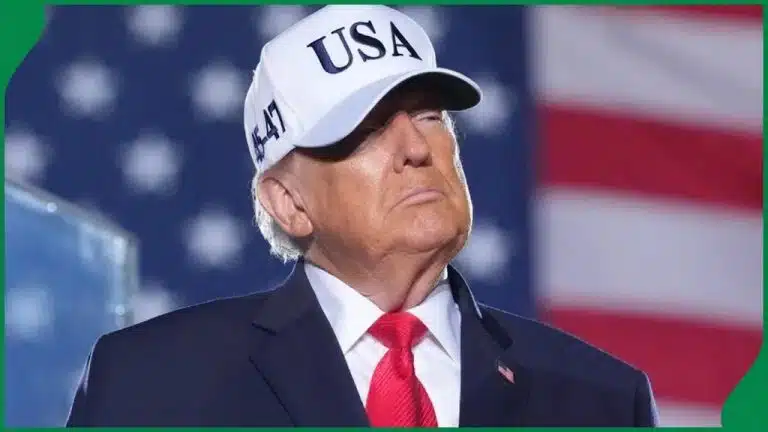
Trump Rules Out Imminent War With Iran, Warns of Fresh US Attacks if Tehran Rejects Deal United States President Donald Trump has said another round of military confrontation with Iran is unlikely for now but warned that Washington could launch fresh attacks if Tehran refuses to accept what he described as a strong agreement. Trump
Trump Rules Out Imminent War With Iran, Warns of Fresh US Attacks if Tehran Rejects Deal
United States President Donald Trump has said another round of military confrontation with Iran is unlikely for now but warned that Washington could launch fresh attacks if Tehran refuses to accept what he described as a strong agreement.
Trump made the remarks ahead of a meeting with Qatar’s Prime Minister, as diplomatic efforts continue to secure a lasting agreement between the two countries.
INEC Declares Osun Ready For 2027 Elections, Completes Nine Of 14 Key Activities
 blob:https://www.image2url.com/6b1201f1-93ee-44f9-bbeb-45816585e575
Speaking in an interview with CNN on Sunday, the US president indicated that he was not currently planning to resume military operations against Iran but would not rule out further attacks if necessary.
Trump said, “I would if necessary, but we hit them really hard. I hit them so hard. You don’t know how hard I hit them.”
His comments came amid growing uncertainty over the future of the conflict, which began with US-Israeli attacks against Iran in late February.
Although large-scale military operations have largely subsided, tensions remain high, with both countries maintaining positions that have complicated efforts to reach a permanent peace agreement.
Iran Says Peace Negotiations Have Stalled
Meanwhile, Iranian Foreign Minister Abbas Araghchi has disclosed that diplomatic negotiations with Washington have been put on hold as both sides assess the outcome of the recent US midterm elections.
Speaking on Iranian state television on Sunday, Araghchi said mediators had stopped travelling between the countries in recent days.
“For the past few days, there has been no more travel (by mediators), and the reason for this is the shock that the election results in the United States have caused to everyone,” he said.
The Iranian foreign minister added that Tehran was waiting to understand how the American government would respond to the election results before determining its next steps.
Araghchi also suggested that the outcome of the elections had introduced fresh uncertainty into the diplomatic process.
Trump has acknowledged that the unpopular conflict with Iran contributed to the Republican Party’s disappointing performance in the midterm elections.
In a separate reaction on Monday, Araghchi claimed that many Americans were unhappy with Israel’s involvement in the conflict.
In a post on X, he argued that Americans were tired of Israel drawing Washington into prolonged military confrontations.
Disagreement Over Iran’s Economic Situation
Trump has continued to argue that Iran’s worsening economic conditions would eventually compel its leaders to accept Washington’s demands.
The US president claimed that Iran was experiencing inflation of 301 per cent and facing severe financial difficulties.
However, official Iranian figures placed the country’s year-on-year inflation at nearly 90 per cent in September.
The disagreement over Iran’s economic condition has added another dimension to the confrontation, with Washington maintaining pressure on Tehran while Iranian officials insist they will not surrender to American demands.
Fresh Tensions Despite Peace Efforts
Meanwhile, reports of renewed attacks have raised concerns that the conflict could escalate again.
Iranian state television reported that Qeshm Island, located in the strategically important Strait of Hormuz, came under attack overnight on Sunday.
The report followed claims by Iranian news agency IRNA that two explosions had occurred on the island.
Countries including Qatar and Pakistan have continued diplomatic efforts to broker a lasting agreement between Washington and Tehran, but their interventions have yet to produce a final deal.
The United States Navy has also maintained its blockade of Iranian ports, while Iran continues to exert pressure around the Strait of Hormuz, a critical international route for global oil and gas supplies.
With diplomatic negotiations stalled and military tensions unresolved, uncertainty remains over whether the two countries can reach an agreement or return to another round of confrontation.















Leave a Comment
Your email address will not be published. Required fields are marked with *