
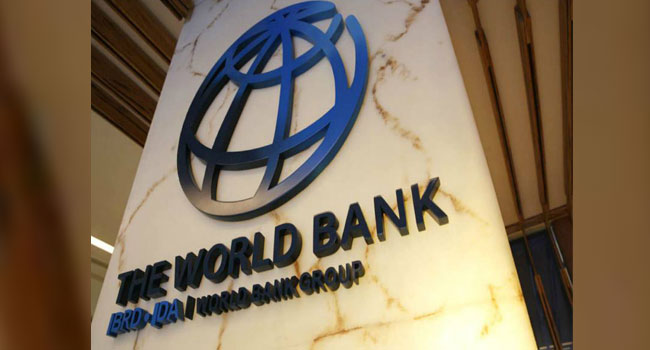
“World Bank Ties $750m Loan to Excise Hike on Sin Goods, Urges Presidential Directive” The World Bank has urged the Nigerian Federal Government to issue a presidential directive mandating increased excise duties on “sin goods” such as alcohol, tobacco, and sugary drinks. This requirement forms a central condition under the $750 million “Accelerating Resource Mobilisation
“World Bank Ties $750m Loan to Excise Hike on Sin Goods, Urges Presidential Directive”
The World Bank has urged the Nigerian Federal Government to issue a presidential directive mandating increased excise duties on “sin goods” such as alcohol, tobacco, and sugary drinks. This requirement forms a central condition under the $750 million “Accelerating Resource Mobilisation Reforms Programme-for-Results” loan aimed at enhancing Nigeria’s non-oil revenue mobilisation.
“MTN Nigeria In Turmoil As Osun Government Shuts Offices Over N945 Million Tax Dispute”
According to the bank’s latest Implementation Status and Results Report, the disbursement of at least $10 million under this facility is contingent upon the issuance of the directive, which is designed to boost health-related tax revenue and discourage the consumption of harmful products.
The programme, which commenced on October 14, 2024, and runs through November 2028, is designed to help Nigeria strengthen domestic revenue streams while safeguarding earnings from the oil and gas sector. As of May 2025, only $1.88 million—representing a mere 0.25% of the total loan amount—has been disbursed. However, $235 million worth of milestones have reportedly been achieved but remain unverified, pending key policy actions such as the sin tax reforms.
“Sin Tax Hikes Crucial to Unlocking Loan Disbursement”
Under disbursement-linked result (DLR) 3.1, the World Bank specifically calls for a presidential order to increase excise rates on alcohol, tobacco, and sugary beverages. Nigeria currently levies excise duties on these products—such as a 30% ad valorem tax plus a specific rate on tobacco (rising to N5.2 per stick in 2024), and N10 per litre on sweetened drinks.
Despite past tax increases, the World Bank insists current excise rates remain too low to meet the reform’s fiscal and public health goals. The bank’s team has warned that delays in adopting a presidential order could hinder overall programme success and derail associated revenue targets under DLR 3.2, which tracks additional revenue generated from excise increases.
While committees like the Trade Tariff Committee (TTC) and the Presidential Committee on Fiscal Policy and Tax Reforms have proposed a phased increase in health taxes by January 2026, discussions have yet to begin. The report noted, “TTC and PCRPTR have plans to adopt a framework to increase health taxes effective January 2026, but joint discussions have not yet started.”
The World Bank has urged Nigeria to fast-track the procurement of an Independent Verification Agent to certify achieved milestones and enable further disbursements under the loan scheme.
“Telecoms Tax Returns Amid Broader Fiscal Reforms”
The Nigerian Senate’s recent approval of the Nigeria Tax Bill 2024—passed on May 8, 2025—reintroduces a controversial 5% excise duty on telecom services. This duty, originally enacted under the 2020 Finance Act but suspended by President Bola Tinubu in 2023 due to inflationary concerns, will now impact voice calls, SMS, and data usage.
This development has sparked criticism from telecom operators and consumer advocacy groups, who argue that rising service costs may hinder digital inclusion in a country with expanding connectivity needs.
The law mandates that both domestic and international telecom providers operating in Nigeria must collect and remit the tax. As such, Nigerian consumers face higher mobile and internet bills, compounding recent economic pressures amid broader tax reform efforts.
“Green Taxes and Carbon Levies Still Unresolved”
Aside from sin taxes, the World Bank has tied another $30 million in disbursements to green tax reforms (DLR 3.4), which are yet to be implemented. The reform includes levies on large-engine vehicles and a proposed 10% carbon tax on petroleum products.
The report flagged a lack of consensus among relevant agencies on these proposals. Ongoing disagreements over their scope and implementation have stalled the legislative process, delaying a crucial aspect of Nigeria’s climate-aligned fiscal policy.
“Non-Oil Revenue Growth Shows Progress, But Legislative Delays Persist”
Despite these setbacks, Nigeria has made modest headway in non-oil revenue generation. The World Bank observed an increase in non-oil revenue from 5.5% of GDP in 2023 to 8.4% in 2024. Tax collections from VAT, Corporate Income Tax (CIT), and Customs duties also rose from 3.8% to 5.0% of GDP over the same period.
These gains were attributed to policy measures such as the removal of foreign exchange subsidies, expanded taxpayer education, and the introduction of VAT withholding for sectors like telecom and banking.
However, structural reform remains sluggish. A key deliverable under DLR 2.2—rationalising tax expenditures—was missed. A bill to replace the Pioneer Status Incentive with a new Economic Development Tax Incentive was submitted to the National Assembly in October 2024, but legislative bottlenecks and the exclusion of the Ministry of Finance from the approval process prevented its enactment by the December 2024 deadline.
The World Bank report highlighted the delay as a setback, stressing the importance of aligning fiscal objectives with economic policy incentives.
“Oil Revenue Reforms Advance with New FAAC Template”
In a related update, the Federal Account Allocation Committee (FAAC) approved a new reporting template for the Nigerian National Petroleum Company Limited (NNPCL) in March 2025. Effective from June 2025, the new format mandates transparent disclosure of domestic crude allocations, fiscal liabilities, and penalties, including gas flaring fines.
This reform, under DLR 9.3, is expected to boost transparency in oil revenue remittances. As a result, net fiscal oil revenues as a percentage of GDP rose from 1.80% in 2023 to 2.70% in 2024—one of the few disbursement-linked indicators already completed and awaiting verification.
“Implementation Lag Hampers Broader Reform Success”
While progress has been made in certain areas, the World Bank expressed concern over the overall pace of implementation. Several action points—such as launching a taxpayer complaints redressal system, engaging citizens through structured feedback, and implementing an e-waste strategy—remain delayed.
Key technical systems, including an e-invoicing platform for VAT traders and automated data sharing between FIRS and Customs, are still in pilot phases. A risk-based audit selection framework, meant to enhance compliance, is also pending due to data quality constraints.
The World Bank emphasized the urgency for Nigeria to address these gaps to unlock the full benefits of the reform programme and achieve its fiscal sustainability targets.









Leave a Comment
Your email address will not be published. Required fields are marked with *