
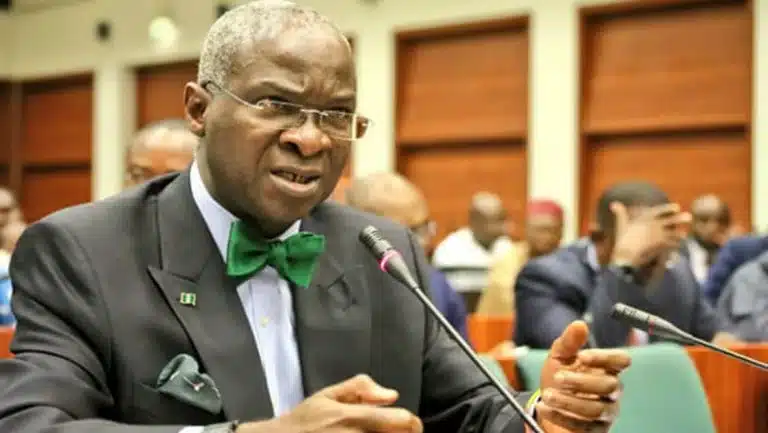
World Bank Threatened to Withdraw Nigeria’s Financing Over Petrol Subsidy, Fashola Reveals Former Minister of Works and Power, Babatunde Fashola, has disclosed that the World Bank warned Nigeria it could withdraw financial support unless the country abolished its petrol subsidy regime. Fashola made the revelation on Tuesday during an appearance on Channels Television’s Politics Today,
World Bank Threatened to Withdraw Nigeria’s Financing Over Petrol Subsidy, Fashola Reveals
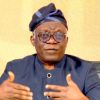
Former Minister of Works and Power, Babatunde Fashola, has disclosed that the World Bank warned Nigeria it could withdraw financial support unless the country abolished its petrol subsidy regime.
Fashola made the revelation on Tuesday during an appearance on Channels Television’s Politics Today, where he discussed the economic and legal considerations behind the decision to remove the subsidy.
According to the former Lagos State governor, the World Bank’s position was communicated during discussions under the previous administration, when he served as a member of the Federal Executive Council.
 blob:https://www.image2url.com/6b1201f1-93ee-44f9-bbeb-45816585e575
Senate Passes State Police Bill, Sends Constitutional Amendment To Tinubu
He argued that the decision to end the subsidy was influenced not only by financial pressures but also by provisions in the Petroleum Industry Act (PIA), which provide for petroleum products to be sold at competitive market rates.
Fashola said Nigerians should revisit President Bola Tinubu’s inaugural address, arguing that public attention had focused heavily on the declaration that “subsidy is gone” without considering the wider context of the speech.
He maintained that the policy decision should be understood against the country’s financial position and existing legal framework.
Fashola Explains World Bank’s Position on Subsidy Removal
During the television interview, Fashola said the World Bank had warned that continued financing for Nigeria would be at risk if the government failed to remove the petrol subsidy.
“The World Bank simply said, ‘We won’t finance your country again unless you remove subsidy.’ It was that simple,” he stated.
The former minister said the issue had been discussed during the previous administration, when he was part of the Federal Executive Council.
He also highlighted Nigeria’s debt obligations, claiming that the country was spending almost 90 per cent of its revenue on debt servicing at the time.
Fashola questioned how the government could continue funding the subsidy arrangement under such financial conditions.
His comments come amid continuing public debate over the economic consequences of subsidy removal and calls by some Nigerians and political figures for the policy to be reversed.
He challenged those advocating a return to the subsidy system to explain how they intended to finance it, particularly given the country’s revenue and debt-servicing pressures.
Petroleum Industry Act Raises Questions Over Subsidy Return
Fashola also referred to the Petroleum Industry Act as another reason he believes restoring the previous subsidy arrangement would be problematic.
He argued that the legislation provides for petroleum products to be sold at competitive market rates.
The former minister’s position is that the subsidy debate should not be considered solely as a question of political preference, but also in relation to the legal framework governing the petroleum sector.
His comments suggest that any proposal to restore the previous arrangement would need to address the relevant provisions of the PIA, as well as the financial implications for government spending.
Fashola also urged Nigerians to consider the broader contents of Tinubu’s inaugural speech rather than focusing exclusively on the announcement that the subsidy had ended.
Former Minister Accuses Politicians of Changing Positions
Fashola criticised politicians who, according to him, had changed their positions on subsidy removal because the policy had become unpopular.
He argued that political leaders should explain the alternatives they would introduce rather than simply calling for the restoration of the previous system.
He also said the Tinubu administration deserved recognition for maintaining its position despite the hardship experienced by Nigerians following the policy change.
“What this government deserves commendation for is not falling over on its word and saying, ‘Because the people like it, let’s bring it back.’ It was a road to perdition,” he said.
His remarks reflect the continuing political disagreement over whether the economic costs of subsidy removal are justified by the government’s stated financial objectives.
While supporters of the policy have pointed to the need to reduce public expenditure, critics have continued to highlight the impact of higher petrol prices on household budgets and the cost of living.
Fashola Points to Measures to Cushion Economic Hardship
Despite defending the decision to remove the subsidy, Fashola acknowledged that the policy had affected household finances and increased pressure on living costs.
He pointed to several government initiatives that he said were introduced to reduce the burden on Nigerians.
These include tax reforms, the Nigerian Education Loan Fund (NELFUND), salary adjustments and compressed natural gas (CNG) initiatives.
NELFUND is intended to support eligible students with access to education financing, while CNG initiatives are part of efforts to encourage the use of alternative fuel options.
Fashola cited these interventions as measures aimed at cushioning the effects of the economic changes associated with subsidy removal.
However, the debate over the policy remains unresolved, with questions continuing about the cost of living, government revenue, public spending and the availability of relief for affected households.
His latest comments have brought renewed attention to the financial arguments surrounding subsidy removal, particularly the World Bank warning he says was communicated to Nigeria and the provisions of the Petroleum Industry Act.















Leave a Comment
Your email address will not be published. Required fields are marked with *