
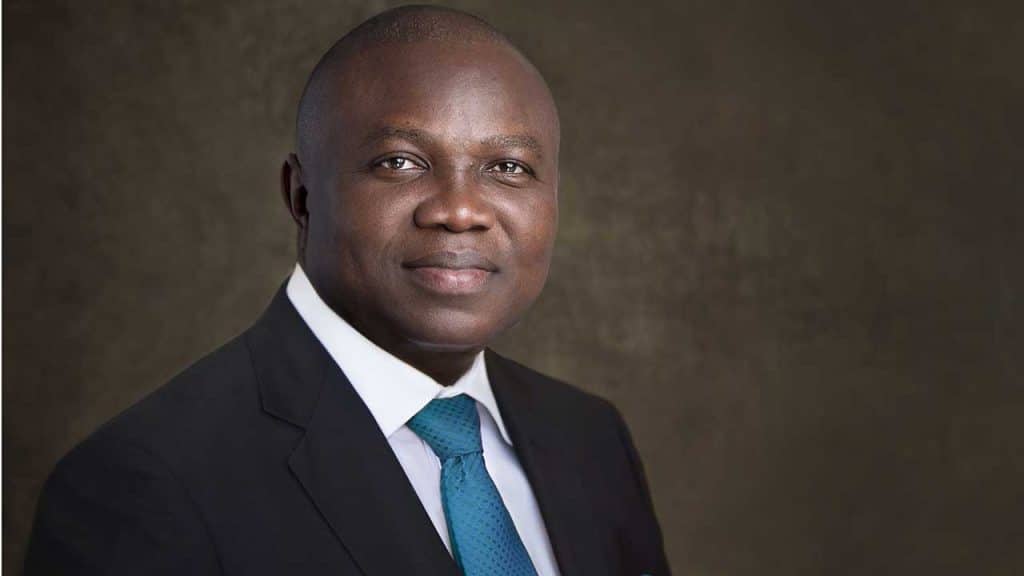
Fresh debate has emerged over political influence in Lagos State following claims by Umar Sani, a former aide to ex-President Goodluck Jonathan, that President Bola Ahmed Tinubu maintains significant control over the state’s political structure. Speaking during an interview on SYMFONI TV, Sani pointed to the political fate of former Lagos State governor, Akinwunmi
Fresh debate has emerged over political influence in Lagos State following claims by Umar Sani, a former aide to ex-President Goodluck Jonathan, that President Bola Ahmed Tinubu maintains significant control over the state’s political structure.
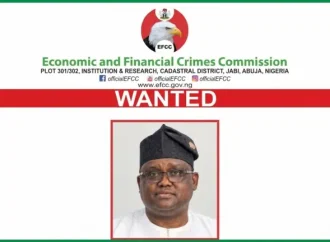
Speaking during an interview on SYMFONI TV, Sani pointed to the political fate of former Lagos State governor, Akinwunmi Ambode, as evidence of how leadership decisions are shaped behind the scenes. According to him, Ambode’s inability to secure a second term, despite what many described as a strong performance in office, highlights the role of internal political expectations.
 blob:https://www.image2url.com/6b1201f1-93ee-44f9-bbeb-45816585e575
Sani argued that Ambode’s removal from the gubernatorial race after one term was not necessarily based on public dissatisfaction but rather on his failure to align with Tinubu’s political benchmarks. This, he suggested, reflects a broader system in which loyalty and alignment with influential figures play a decisive role in determining political continuity in Lagos.
Osun 2026: Salaam Defends Choice Of Female Running Mate As ADC Elects New Executives
The former presidential aide further questioned Tinubu’s approach to democratic principles, emphasizing that a true democrat should maintain cordial relationships with political rivals even after competitive elections. He expressed concern that political competition within Tinubu’s circle often leads to strained relationships.
Sani cited the aftermath of the 2023 presidential primaries as an example, noting that Tinubu’s relationships with Vice President Yemi Osinbajo and former Minister of Transportation Rotimi Amaechi reportedly became tense after they contested against him. According to Sani, such developments raise questions about how political disagreements are managed within influential political networks.
The remarks have reignited discussions about the structure of power in Lagos politics, where people have long regarded Tinubu as a central figure. Observers note that his political influence has shaped the emergence and direction of leaders in the state for decades, making him one of the most powerful political figures in Nigeria.
Ambode’s tenure remains a focal point in these discussions. Widely regarded by some analysts and citizens as a reform-driven administrator, his single-term exit continues to be referenced in debates about internal party dynamics and candidate selection processes. Sani’s comments reinforce the perception that performance in office may not always be the sole determinant of political survival.
At the same time, supporters of Tinubu argue that political leadership often involves maintaining party discipline and ensuring alignment with broader strategic goals. They contend that internal decisions, including candidate endorsements, are part of the democratic process within political parties.
Nonetheless, Sani insists that the pattern observed in Lagos politics suggests a system where influence and loyalty are deeply intertwined. He maintains that such dynamics could have broader implications for democratic practices, particularly in how leaders are selected and how dissent is managed within political structures.
As Nigeria’s political landscape continues to evolve, the conversation sparked by Sani’s remarks is likely to persist. With increasing public interest in transparency and accountability, issues surrounding political influence and internal party democracy remain central to national discourse.
The Ambode episode, in particular, stands as a key example in ongoing debates about governance, leadership expectations, and the balance between individual performance and political allegiance in Nigeria’s democracy.

















Leave a Comment
Your email address will not be published. Required fields are marked with *