
Benue’s Bleeding Heart: Lessons from Mali as Nigeria Faces a Growing Crisis Benue State, once celebrated as Nigeria’s “Food Basket,” is fast transforming into a killing field amid intensifying farmer-herder conflicts. Long plagued by violence attributed to armed Fulani herders, the region has become a painful symbol of the country’s struggle with ethnic violence, state
Benue’s Bleeding Heart: Lessons from Mali as Nigeria Faces a Growing Crisis
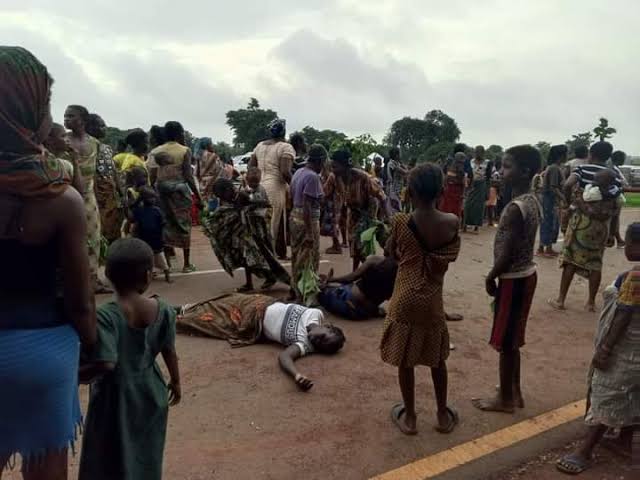
Benue State, once celebrated as Nigeria’s “Food Basket,” is fast transforming into a killing field amid intensifying farmer-herder conflicts. Long plagued by violence attributed to armed Fulani herders, the region has become a painful symbol of the country’s struggle with ethnic violence, state fragility, and lack of accountability.
The most recent tragedy underscores this grim reality. In the early hours of June 13, 2025, the quiet village of Yelwata in Guma Local Government Area witnessed a horror that has drawn national and international condemnation. Over 100 villagers were massacred in a meticulously coordinated midnight raid. According to witnesses, armed men moved from house to house, torching homes and executing civilians—many of them women, children, and the elderly—in cold blood.
 blob:https://www.image2url.com/6b1201f1-93ee-44f9-bbeb-45816585e575
PDP Slams INEC Over Alleged Overreach Ahead Of 100th NEC Meeting
Benue Under Siege: Trauma, Loss, and Silence
The Yelwata attack decimated entire families. One local farmer, Fidelis Adidi, recounted how he lost his wife, children, and farmland in a single night. Pregnant trader Talatu Agauta saw her only source of income—her rice stock and trading stall—burned to ashes. The stench of charred homes and the silence of death now linger where once stood vibrant community life.
Survivors now huddle in makeshift shelters, dependent on humanitarian aid, with emotional scars that may never heal. Many residents and human rights advocates reject the narrative of mere land disputes, describing the killings as part of a wider campaign of territorial conquest.
Despite the scale of the violence, decisive and timely action has been lacking. Five days after the attack, President Bola Ahmed Tinubu paid a visit to Benue. Rather than providing solace, the visit ignited further backlash. Social media erupted in outrage over what many called a performative appearance, likening it to a campaign stop rather than a true condolence mission.
Government Response: Too Little, Too Late?
President Tinubu demanded immediate arrests and ordered a security manhunt, calling for an overhaul of security operations to curb the farmer-herder violence. He emphasized that the effort must be part of a broader strategy addressing gang activities and insecurity across the country.
Governor Hyacinth Alia labeled the massacre “barbaric and inhumane.” He offered prayers and met with displaced persons, suggesting that some of the attackers spoke unfamiliar languages—fueling suspicions of foreign mercenaries. Alia proposed deeper collaboration between security agencies and local vigilantes, but many believe these gestures fall short of real reform.
Echoes from Mali: Ogossagou Massacre and the Price of Inaction
Nigeria’s current crisis draws unsettling parallels to Mali’s 2019 Ogossagou massacre. On March 23 that year, Dogon militia attacked a Fulani village in central Mali, killing over 160 people, mostly women and children. Like Benue, the violence was linked to ethnic tension over land and resource access, exacerbated by the presence of extremist actors and weak state enforcement.
Despite widespread condemnation, the Malian government failed to prosecute those responsible. The resulting impunity only worsened cycles of revenge killings. This same lack of accountability looms over Benue and other Nigerian hotspots like Plateau and Kaduna, where numerous mass killings have yielded few or no convictions.
Mali’s experience shows that military response alone is insufficient. The government deployed troops, but without addressing root causes—distrust, poverty, disarmament—lasting peace remained elusive. Nigeria risks following that path if it fails to combine security with structural reform.
Expert Insight: Security Must Begin with the People
Speaking with Naija News, security and intelligence expert Seyi Adetayo offered a sobering analysis. He stressed that current escalations in Benue may be politically influenced, referencing comments by both President Tinubu and Governor Alia that urged political unity in the state.
Adetayo noted that while herder-farmer tensions are longstanding, the crisis now includes banditry and cross-border attacks. “Benue has unfortunately become a hibernating ground for these criminals,” he said, referencing its porous borders with several states.
He proposed a radical shift in security thinking: empowering local communities as the first line of defense. Drawing from successful models in Anambra State, Adetayo recommended arming and regulating local vigilante groups under police supervision.
“It’s not traditional community policing,” he clarified. “These groups were documented, trained, and coordinated weekly with the police. In two months, they wiped out armed robbery and bullion van attacks from Anambra.”
Adetayo emphasized that this approach must be national, not isolated. If one state becomes secure while neighbors remain vulnerable, attackers simply relocate. “Only a unified, state-backed vigilante network can close the gaps these criminals exploit,” he added.
The Path Forward: Justice, Reform, and Unity
The tragedy in Yelwata must not join the long list of forgotten massacres. To avoid repeating Mali’s mistakes, Nigeria must overhaul its approach to rural insecurity. That means:
- Conducting independent investigations with public accountability;
- Prosecuting perpetrators swiftly and transparently;
- Investing in local defense networks as a permanent layer of security;
- Addressing root causes like poverty, land access, and ethnic mistrust;
- Coordinating across state lines to prevent the spread of violence.
Benue is bleeding, but it is not beyond saving. This moment demands more than visits and empty condemnations. It requires a national reckoning with the cost of inaction, and the courage to implement lasting, people-centered solutions.
If Nigeria fails to act now, it will not only betray the memory of those lost—but will sow the seeds of deeper national instability.




















Leave a Comment
Your email address will not be published. Required fields are marked with *