

The Central Bank of Nigeria (CBN) has retained the Monetary Policy Rate (MPR) at 26.5 percent, maintaining its tight monetary policy stance as policymakers weigh moderating inflation against rising global economic uncertainties. The decision was announced on Tuesday by CBN Governor Olayemi Cardoso at the conclusion of the 305th Monetary Policy Committee (MPC) meeting
The Central Bank of Nigeria (CBN) has retained the Monetary Policy Rate (MPR) at 26.5 percent, maintaining its tight monetary policy stance as policymakers weigh moderating inflation against rising global economic uncertainties.
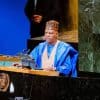
The decision was announced on Tuesday by CBN Governor Olayemi Cardoso at the conclusion of the 305th Monetary Policy Committee (MPC) meeting in Abuja.
 blob:https://www.image2url.com/6b1201f1-93ee-44f9-bbeb-45816585e575
The move marks the second consecutive meeting in which the apex bank has left the benchmark interest rate unchanged, signalling a cautious approach amid geopolitical tensions and inflationary risks.
CBN Retains Interest Rate at 26.5%
Announcing the committee’s resolutions, Cardoso said members unanimously agreed to maintain the existing monetary policy framework after reviewing both domestic and global economic conditions.
“The Committee decided as follows: retain the Monetary Policy Rate at 26.5 percent,” Cardoso stated.
In addition to retaining the MPR, the MPC left all other key monetary policy parameters unchanged.
The committee retained the asymmetric corridor around the MPR at +500/-100 basis points, maintained the Cash Reserve Ratio (CRR) for Deposit Money Banks at 45 percent, Merchant Banks at 16 percent, and kept the Liquidity Ratio at 30 percent.
Middle East Crisis Influenced MPC Decision
Cardoso explained that the committee adopted a cautious stance after assessing the balance of risks facing the Nigerian economy.
Although headline inflation declined slightly in June 2026, he said renewed hostilities in the Middle East posed fresh threats to global commodity markets and could reverse recent gains.
According to the CBN Governor, escalating geopolitical tensions could push up global oil prices and increase imported inflation through higher fuel, transportation and production costs.
“Although headline inflation moderated marginally in June 2026, global uncertainties have heightened due mainly to the renewed hostilities in the Middle East,” Cardoso said.
He added that maintaining the current monetary policy stance would allow the committee to monitor incoming economic data before taking any further action.
MPC Expresses Confidence in Nigeria’s Economic Resilience
Despite concerns over global developments, the Monetary Policy Committee expressed confidence in the resilience of the Nigerian economy.
The committee attributed the country’s ability to withstand external shocks to ongoing fiscal and monetary reforms implemented by the Federal Government and the Central Bank.
According to the MPC, these reforms have strengthened macroeconomic stability and improved the economy’s capacity to absorb global pressures.
CBN Commends Fiscal-Monetary Policy Coordination
The committee also praised the Federal Government for improving coordination between fiscal and monetary authorities.
Cardoso noted that stronger collaboration between both institutions has helped reduce the domestic impact of external economic shocks while supporting broader macroeconomic stability.
The MPC reiterated its commitment to closely monitoring inflation, exchange rate movements and global economic developments before considering any future adjustment to Nigeria’s monetary policy.





















Leave a Comment
Your email address will not be published. Required fields are marked with *