
Cooking Gas Prices Soar Across Nigeria Despite NBS Report of Decline Despite the National Bureau of Statistics (NBS) reporting a sharp drop in the average cost of refilling a 5kg cylinder of Liquefied Petroleum Gas (LPG) from ₦8,243.79 in July to ₦6,404.02 in August 2025, the reality on the ground paints a different picture. Retail
Cooking Gas Prices Soar Across Nigeria Despite NBS Report of Decline
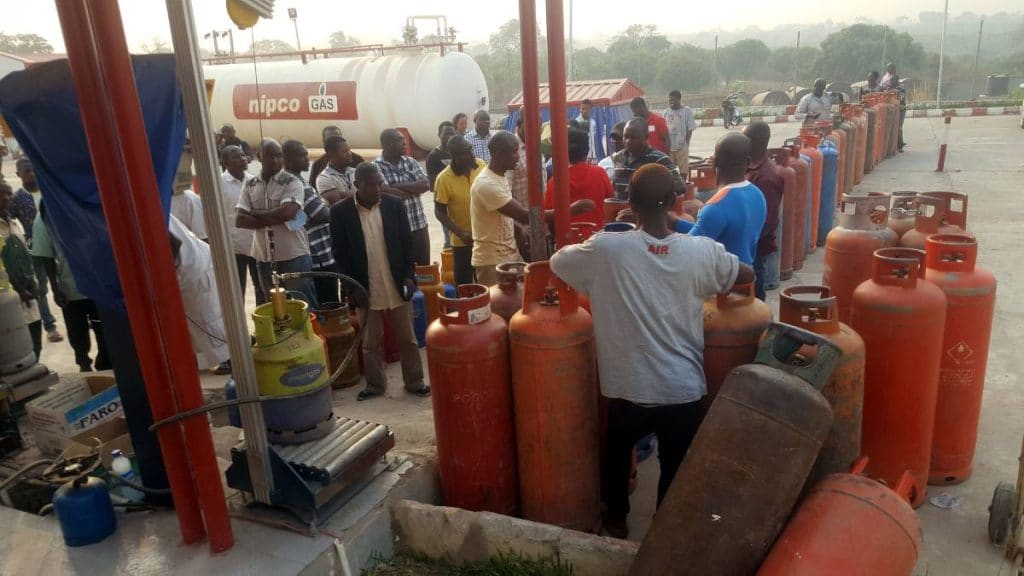 Despite the National Bureau of Statistics (NBS) reporting a sharp drop in the average cost of refilling a 5kg cylinder of Liquefied Petroleum Gas (LPG) from ₦8,243.79 in July to ₦6,404.02 in August 2025, the reality on the ground paints a different picture. Retail prices of cooking gas have surged dramatically across Lagos, Ogun, Ibadan, Abuja, and several other parts of Nigeria, leaving households struggling to cope with soaring costs and scarcity. A market survey by The Guardian revealed that a kilogram of LPG now sells between ₦1,800 and ₦3,500 depending on the location. In Ijeshatedo, Lagos, residents lamented the worsening situation, with one consumer describing the ordeal as “exhausting.”
Appeal Court Overturns Oyo Government’s Suspension Of NURTW, Declares Makinde’s Action Illegal
“Retailers are selling between ₦3,000 and ₦3,500 per kilogram, while filling stations sell slightly lower at ₦2,500. But the queues are unbearable, with hundreds of customers waiting,” she said. She recounted how she spent hours the previous day searching for gas before giving up, describing the situation as “unbearable” and forcing many families to revert to charcoal or electric alternatives. In Atan, Ogun State, residents said they bought gas at between ₦2,000 and ₦2,500 per kilogram, while consumers in Igando, Lagos, reported paying ₦1,800–₦2,000 depending on the location. According to the President of the Nigerian Association of Liquefied Petroleum Gas Marketers (NALPGAM), Olatunbosun Oladapo, the sharp rise in prices was caused by a temporary disruption in supply resulting from the Petroleum and Natural Gas Senior Staff Association of Nigeria (PENGASSAN) strike and internal maintenance work at the Dangote Refinery.
 blob:https://www.image2url.com/6b1201f1-93ee-44f9-bbeb-45816585e575
“At the moment, most of our LPG supply is produced locally, and importation is minimal. In fact, importing now could lead to losses because local supply has increased significantly,” Oladapo explained. He added that while the strike disrupted vessel berthing at Lagos terminals, the Nigeria Liquefied Natural Gas (NLNG) company supplied large volumes to Port Harcourt, insulating the South-South region from severe shortages.
He, however, assured that normalcy would soon return as suppliers resumed full-scale loading. Energy law expert and Partner at Bloomfield LP, Dr. Ayodele Oni, criticised the recurring supply crises despite the increase in Nigeria’s gas production levels. He explained that although upstream gas production has improved, much of the LPG output continues to be exported rather than allocated to domestic consumption. “Domestic gas sales rose by about 22 percent year-on-year to roughly 65,632 metric tonnes in March 2025, but much of the LPG is monetised through exports instead of being channelled into local bottling and retail,” Oni said. The ongoing scarcity, which started after last week’s three-day strike by PENGASSAN over a dispute with the Dangote Petroleum Refinery, has deepened the crisis, leaving retailers rationing limited stock and consumers facing record prices.
In Abuja, the cost of refilling a 12.5kg gas cylinder has jumped from ₦13,000 to between ₦17,000 and ₦18,750, depending on the area. In key districts such as Wuse, Garki, Kubwa, and Jabi, a kilogram now sells for ₦1,350–₦1,500. Lagos and Ogun residents have experienced one of the steepest price hikes. Just last week, 1kg was sold for ₦1,000 in Lagos and ₦1,100 in Ogun, but by the weekend, prices had spiked to ₦1,600–₦1,800. Mrs. Oluwole Adenike, a resident of Ogun State, told Leadership that she could not find gas at two major filling stations and was forced to buy from a neighbourhood shop at ₦1,800 per kg. Similarly, Mr. Temidayo Ogunbowale, a resident of Lagos, said, “I bought at ₦1,000 per kg previously. But on Thursday, I paid ₦1,300 at a filling station. By the weekend, it had gone even higher.” In Ibadan, Oyo State, the scarcity worsened as many depots and retailers ran out of stock. The few outlets that still had supplies witnessed long queues stretching across streets as demand outpaced supply.
Prices in the city increased sharply, with wholesale rates moving from ₦900–₦950 per kg to ₦1,000–₦1,100, while retailers raised prices from ₦1,100–₦1,300 to between ₦1,300 and ₦1,500. In remote areas, the price soared beyond ₦1,500 per kg. At BOVAS Petroleum in Ibadan, a kilogram sold for ₦1,070 as of Saturday, October 4, compared to ₦970 just two weeks earlier. A resident of Olodo, Ibadan, lamented the increase, saying, “Cooking gas price has increased. We bought at ₦1,000 at Gasland. Now it is scarce, and the queues are unbelievable.” Retailers across Lagos, Ogun, and Ibadan confirmed that the scarcity began on Tuesday when supply trucks stopped arriving from depots. An attendant at a gas station in Ogun said his station had to ration the last available stock, which was exhausted by Saturday.
“We don’t know when the next supply will come in. The crisis between tanker drivers and Dangote has also complicated the matter,” a retailer in Awotan, Ibadan, added. The scarcity has now spread beyond the southwest, with reports from Port Harcourt, Cross River, Kano, and Kaduna showing similar price spikes as retailers run out of supply. In some parts of Port Harcourt, 1kg of LPG now costs ₦1,600, while residents of Kano and Kaduna pay between ₦1,700 and ₦1,900. Analysts have warned that unless distribution challenges and refinery disruptions are swiftly addressed, Nigeria could face prolonged cooking gas scarcity, further straining household budgets already stretched by inflation and high fuel prices.
They also urged the federal government to strengthen local storage and distribution capacity to ensure consistent supply. For now, households across Nigeria are bracing for tougher days as the cost of cooking gas continues to climb, contradicting official statistics that suggest prices are falling.





















Leave a Comment
Your email address will not be published. Required fields are marked with *