
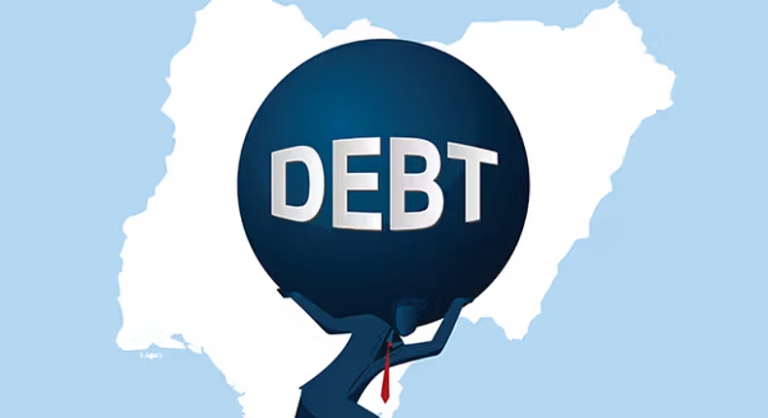
The Federal Government exceeded its approved borrowing target for 2024 by ₦4.79 trillion, borrowing a total of ₦12.62 trillion during the year as revenue fell significantly below expectations, according to the Fourth Quarter and Consolidated Budget Implementation Report for 2024 released by the Budget Office of the Federation. Ex-Kano LG Chairman Returns To Tailoring
The Federal Government exceeded its approved borrowing target for 2024 by ₦4.79 trillion, borrowing a total of ₦12.62 trillion during the year as revenue fell significantly below expectations, according to the Fourth Quarter and Consolidated Budget Implementation Report for 2024 released by the Budget Office of the Federation.
Ex-Kano LG Chairman Returns To Tailoring After Election Defeat
 blob:https://www.image2url.com/6b1201f1-93ee-44f9-bbeb-45816585e575
The report showed that the government surpassed its approved borrowing plan of ₦7.83 trillion by 61.2 per cent, following a wider fiscal deficit of ₦13.51 trillion, compared to the ₦9.18 trillion projected in the 2024 budget. The Budget Office attributed the increased borrowing to weaker-than-expected revenue rather than excessive government spending.
According to the report, total government revenue stood at ₦20.98 trillion, falling ₦4.90 trillion short of the ₦25.88 trillion target. Meanwhile, total expenditure amounted to ₦34.49 trillion, only ₦561.29 billion below the approved estimate of ₦35.06 trillion.
“The revenue and expenditure outturn of the Federal Government resulted in a fiscal deficit of ₦13.51 trillion in the 2024 fiscal year. This was ₦4.34 trillion (47.33 per cent) above the projected budget deficit estimate for the year,” the report stated.
The Budget Office disclosed that while domestic borrowing remained within the approved limit at ₦6.06 trillion, foreign borrowing rose from the budgeted ₦1.77 trillion to ₦3.37 trillion. The government also secured an additional ₦3.19 trillion in budget support, despite no provision for such financing in the 2024 budget.
The report further revealed that new borrowings financed about 36 per cent of the Federal Government’s total expenditure during the year. It also noted that project-tied multilateral and bilateral loans reached ₦1.98 trillion, nearly double the ₦1.05 trillion budgeted, while the expected ₦298.49 billion from privatisation was not realised.
On revenue performance, the report showed that gross oil revenue stood at ₦15.07 trillion, missing the budget target by ₦4.93 trillion due to lower crude oil prices and reduced production. Average crude oil production was 1.54 million barrels per day, below the budget benchmark of 1.78 million barrels per day, while the average oil price was $74.65 per barrel, lower than the projected $77.96.
However, non-oil revenue outperformed expectations, rising to ₦16.09 trillion, exceeding the ₦10.81 trillion target by ₦5.29 trillion, driven by improved collections from Company Income Tax, Value Added Tax, Electronic Money Transfer Levy and Customs revenue.
The report also indicated that debt servicing increased sharply, with total debt expenditure reaching ₦12.36 trillion, 52.71 per cent above the budgeted ₦8.27 trillion, adding further pressure to public finances.
Nigeria’s total public debt climbed to ₦144.67 trillion by the end of December 2024, pushing the country’s debt-to-GDP ratio to 61.22 per cent, well above its self-imposed threshold of 40 per cent.
Despite the rising debt burden, the Budget Office expressed optimism that ongoing reforms aimed at improving tax administration, increasing non-oil revenue, reducing leakages and enhancing remittances from government-owned enterprises would gradually reduce the country’s dependence on borrowing.
Economic experts, however, expressed mixed reactions. Chief Executive Officer of CSA Advisory, Aliyu Ilias, warned that continued borrowing could worsen inflation and increase debt servicing costs if funds were not invested productively. Similarly, Dr. Muda Yusuf, Chief Executive Officer of the Centre for the Promotion of Private Enterprise (CPPE), urged the government to slow the pace of debt accumulation while strengthening revenue generation.
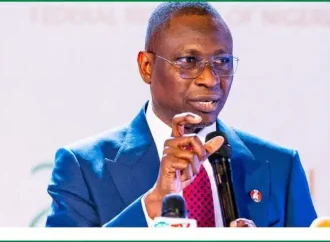
Meanwhile, the Presidency defended the government’s borrowing strategy, maintaining that the loans were necessary to finance critical infrastructure projects. Minister of Finance and Coordinating Minister of the Economy, Taiwo Oyedele, argued that borrowing should be assessed based on how the funds are utilised rather than on the size of the debt alone, while acknowledging that Nigeria must improve its fiscal framework to reduce reliance on debt financing.


















Leave a Comment
Your email address will not be published. Required fields are marked with *