
FIRS Defends Federal Government’s Borrowing Strategy, Calls Debt a Sustainable Tool The Federal Inland Revenue Service (FIRS) has defended the borrowing strategy of the Federal Government, describing debt as a legitimate and sustainable component of every national budget. FIRS Chairman, Zacch Adedeji, made this assertion on Tuesday during the “Meet-the-Press” series organised by the Presidential
FIRS Defends Federal Government’s Borrowing Strategy, Calls Debt a Sustainable Tool

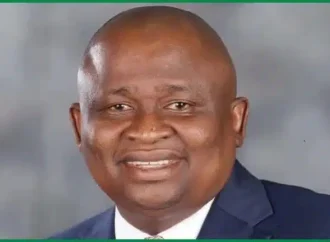
The Federal Inland Revenue Service (FIRS) has defended the borrowing strategy of the Federal Government, describing debt as a legitimate and sustainable component of every national budget. FIRS Chairman, Zacch Adedeji, made this assertion on Tuesday during the “Meet-the-Press” series organised by the Presidential Communications Team at the Presidential Villa, Abuja.
Adedeji’s comments came against the backdrop of mounting criticism over Nigeria’s rising debt profile, with some stakeholders warning of long-term fiscal risks. However, the FIRS boss insisted that borrowing is not only normal but also necessary for economic growth, provided it remains within legal and sustainable limits.
 blob:https://www.image2url.com/6b1201f1-93ee-44f9-bbeb-45816585e575
NNPP Chairman Dismisses Kwankwaso Defection Rumors, Clarifies Position On Party’s Options
Borrowing as a Global Practice
According to Adedeji, no nation in the world funds its budget exclusively on internally generated revenue. He argued that borrowing forms part of every viable economy, sustaining development while stimulating business activity.
“Borrowing is not a problem. It is part of every viable nation’s ecosystem. No country in the world survives entirely on its own revenue,” he explained.
The FIRS chairman went further to describe the borrowing process as a cycle that benefits the economy at multiple levels. “When the government borrows from banks, it pays interest; banks pay salaries from that, and taxes are collected from their profits. It is a cycle that sustains continuity,” he said.
Adedeji emphasised that every national budget consists of three fundamental elements—expenditure, revenue, and loans. As long as government borrowing remains within the framework approved by the National Assembly, he argued, there should be no controversy.
Borrowing for Infrastructure as a Growth Driver
One of the major points raised by the FIRS chairman was that borrowing, when properly directed, has the potential to generate future revenues. He highlighted infrastructure spending as a prime example, noting that projects such as roads, energy expansion, and transport systems stimulate economic activity.
“Borrowing to fund infrastructure, like roads, yields future tax revenues from businesses and individuals who benefit from those projects. It is a sustainable approach,” Adedeji said.
He maintained that the government’s debt strategy was not about financing recurrent expenses but targeted at long-term investments that could unlock tax revenue and support economic growth.
Reforms to Strengthen Revenue Base
While defending the borrowing strategy, Adedeji also acknowledged the importance of expanding Nigeria’s revenue base to reduce dependence on debt. He announced that significant reforms to Personal Income Tax (PIT) and Company Income Tax (CIT) would take effect from January 2026.
The reforms, he said, are designed to strengthen revenue mobilization, improve compliance, and ensure a more balanced fiscal structure. “The idea is not to tax people more but to broaden the base so that more individuals and businesses are brought into the tax net,” he explained.
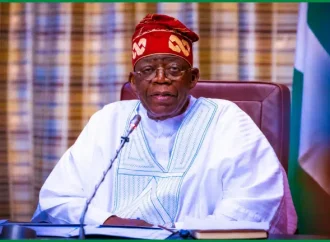
Adedeji also noted that the administration of President Bola Tinubu had introduced key fiscal changes, including the termination of Ways and Means financing from the Central Bank of Nigeria. The practice, he said, had been converted into a structured federal loan that is now being serviced with both principal and interest payments.
“This change has helped to stabilise the economy and ease pressure on the naira,” he added.
Rising Revenue Collections Under Tinubu’s Administration
The FIRS boss highlighted progress in Nigeria’s revenue collection drive since 2023. He revealed that federal revenue had surged to ₦3.64 trillion in September 2025, compared to ₦711 billion recorded in May 2023—a remarkable 411 percent increase in just over two years.
A presentation shared during the session showed that the revenue growth was largely driven by non-oil receipts, reflecting the government’s effort to diversify income sources away from crude oil.
According to Adedeji, this shift demonstrates that fiscal reforms and better tax administration are beginning to yield tangible results. He described the upward trend as evidence of the government’s commitment to building a more sustainable fiscal framework.
Critics and Concerns
Despite Adedeji’s defense, critics continue to voice concerns about Nigeria’s rising debt burden, warning that excessive borrowing could limit future fiscal space and increase debt servicing obligations. Some economists argue that while borrowing for infrastructure is commendable, poor implementation and corruption often undermine the intended benefits.
Adedeji, however, maintained that the administration is focused on ensuring transparency and accountability in the use of borrowed funds. He stressed that as long as borrowing remains targeted at productive investments and aligned with legislative approval, it should be seen as a tool for growth rather than a liability.
The FIRS chairman’s remarks reflect the government’s effort to counter negative narratives about Nigeria’s debt strategy while projecting confidence in ongoing fiscal reforms. By framing borrowing as part of a global economic practice and highlighting the government’s focus on infrastructure-driven borrowing, Adedeji positioned debt as a catalyst for long-term development rather than a source of crisis.
With major tax reforms set for 2026 and revenue collections already rising significantly, the administration appears determined to balance borrowing with stronger domestic resource mobilization. Whether these efforts translate into sustainable economic stability will depend on execution, transparency, and the ability to ensure that borrowed funds are channeled into projects that genuinely stimulate growth.
For now, the message from FIRS is clear: borrowing is not a problem—mismanagement of borrowing is.


















Leave a Comment
Your email address will not be published. Required fields are marked with *