
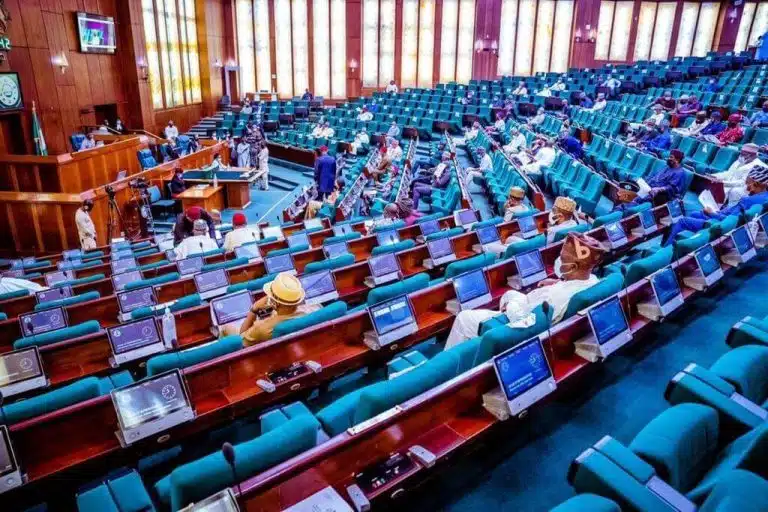
The House of Representatives is set to hold an emergency plenary session to consider legislation seeking an extension of the implementation period for the capital component of the 2025 national budget. The special sitting, scheduled for Monday, June 15, 2026, comes despite the chamber currently being on a short legislative recess that began last week
The House of Representatives is set to hold an emergency plenary session to consider legislation seeking an extension of the implementation period for the capital component of the 2025 national budget.
The special sitting, scheduled for Monday, June 15, 2026, comes despite the chamber currently being on a short legislative recess that began last week and is expected to continue until early July.
According to an official notice issued to lawmakers by the Acting Clerk of the House, Ibrahim Sidi, members have been directed to attend the session as a matter of priority due to the importance of the proposed amendment.
 blob:https://www.image2url.com/6b1201f1-93ee-44f9-bbeb-45816585e575
The bill under consideration is titled the Appropriation (Repeal and Enactment) Act, 2025 (Amendment) (No. 2) Bill, 2026. It seeks to extend the implementation deadline for capital projects contained in the 2025 Appropriation Act by an additional three months.
If approved, the extension would move the expiration date from June 30, 2026, to September 30, 2026.
Akpabio’s Daughter Given Juicy Position In NNPC Without Regular Interview – Oshiomhole
The emergency session is being convened under the provisions of the House Standing Orders, which allow lawmakers to reconvene when urgent legislative matters require immediate attention.
The proposed extension is intended to provide government ministries, departments and agencies with additional time to complete ongoing capital projects funded under the 2025 budget framework.
Capital allocations are typically dedicated to infrastructure development, public facilities, equipment acquisition and other long-term investments designed to stimulate economic growth and improve public services.
Budget implementation challenges, including procurement delays, funding constraints and project execution timelines, have often led to requests for extensions to ensure allocated funds are fully utilized before expiration.
Supporters of the amendment argue that extending the implementation period will help prevent abandoned projects and allow government agencies to achieve better value from budgeted expenditures.
The move also reflects efforts by the National Assembly to maintain oversight of public spending while ensuring that critical development projects are not disrupted by administrative deadlines.
The House’s consideration of the bill follows a similar action by the Senate, which approved the proposed extension during its sitting last week.
With the upper chamber already giving its approval, attention now shifts to the House of Representatives, whose decision will determine the next stage of the legislative process.
Observers note that the extension could provide relief to agencies managing major infrastructure and development projects that require additional time for completion.
The emergency sitting underscores the importance lawmakers attach to budget implementation and the execution of government-funded projects across the country.
Should the amendment receive final approval, government institutions responsible for capital projects will have until the end of September 2026 to utilize funds allocated under the 2025 budget framework.
The development highlights ongoing efforts by the National Assembly to balance fiscal oversight with practical considerations surrounding project delivery and national development priorities.






















Leave a Comment
Your email address will not be published. Required fields are marked with *