
How the one-party system shapes democracy in Nigeria. By Henry Ojo Nigeria, Africa’s most populous country, operates under a multi-party democratic system as established by the 1999 Constitution (as amended). This system allows multiple political parties to compete for power, giving citizens the freedom to choose their leaders. However, Nigeria’s political history has at times
How the one-party system shapes democracy in Nigeria. By Henry Ojo
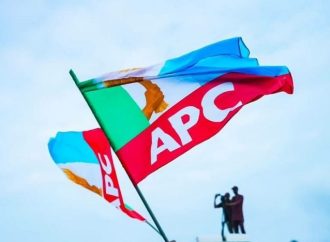
 Nigeria, Africa’s most populous country, operates under a multi-party democratic system as established by the 1999 Constitution (as amended). This system allows multiple political parties to compete for power, giving citizens the freedom to choose their leaders. However, Nigeria’s political history has at times reflected the dominance of a single party, such as the People’s Democratic Party (PDP), which controlled national politics from 1999 to 2015, and the All Progressives Congress (APC), which has since held power. These periods of dominance have often sparked public discussions about whether Nigeria is at risk of evolving into a de facto one-party state—a political environment where only one party effectively controls the government while others exist with minimal influence.
A one-party system is a political structure in which only one political party is legally allowed to rule, or where one party dominates so completely that opposition parties have little or no real chance of winning power. This system is common in some authoritarian or socialist countries, but it has also been used in certain post-colonial African states as a tool for national unity. Although Nigeria has never officially adopted a one-party system, understanding its potential advantages and disadvantages helps in appreciating why Nigeria continues to uphold multiparty democracy.
FG Revises Admission Policy: Mathematics No Longer Compulsory For Arts And Humanities Students
 blob:https://www.image2url.com/6b1201f1-93ee-44f9-bbeb-45816585e575
Advantages of a One-Party System
Supporters of the one-party model often highlight its potential benefits, especially in countries struggling with political instability, ethnic tension, or policy inconsistency. Below are some of its main advantages:
1. Political Stability and Reduced Conflict
One of the strongest arguments in favor of a one-party system is political stability. In a country as diverse as Nigeria—with over 250 ethnic groups and multiple religions—frequent clashes between political parties can lead to tension, violence, and even regional unrest. A one-party government could reduce these conflicts by promoting unity and preventing the fierce political competition that sometimes divides communities.
Under a single political framework, there would be fewer election-related crises and less manipulation of ethnic or religious sentiments for political gain. This could, in theory, create a more peaceful and focused national atmosphere.
2. Faster Decision-Making and Policy Implementation
In a multi-party democracy like Nigeria’s, decision-making often takes time due to debates, opposition challenges, and political gridlock. A one-party system could eliminate these obstacles, allowing the government to make quicker policy decisions and respond rapidly to national problems.
For example, pressing issues such as insecurity in the Northeast, poverty alleviation, or economic reforms could be addressed more decisively without political opposition blocking or delaying progress. This efficiency might make governance appear smoother and more coordinated.
3. Economic Efficiency and Better Use of Resources
Conducting elections in a multi-party system is expensive. The costs of campaigns, advertisements, and logistics during Nigeria’s general elections run into billions of naira. In a one-party system, such expenses would be drastically reduced. The government could then channel those funds into developmental projects such as schools, hospitals, and infrastructure.
Moreover, a one-party government could create a centralized economic policy without interference from rival parties, helping to implement long-term national plans without fear of reversal by future governments.
4. National Unity and Shared Vision
A one-party system can unite citizens around a common national goal, particularly in times of crisis or rebuilding. Historically, many newly independent African countries adopted this model to strengthen unity and discourage tribal politics.
In Nigeria’s case, a one-party system could theoretically promote a shared sense of purpose in fighting corruption, improving education, and enhancing national security. It would allow all members of society to work collectively under a single vision rather than being divided by party interests.
5. Equal Opportunity for Citizens Within the Party
Since there would be only one party, every citizen interested in politics would have to participate within that structure. This could potentially ensure that everyone has an equal chance to contribute to policymaking or hold office, rather than being sidelined due to party affiliations.
It might also reduce the winner-takes-all mentality that currently characterizes Nigerian politics, where losing parties often feel excluded from governance.
Disadvantages of a One-Party System
Despite its possible benefits, a one-party system carries serious risks that could be especially harmful in Nigeria’s democratic and multi-ethnic environment. Below are some major drawbacks:
1. Lack of Accountability and Increased Corruption
Without opposition parties to criticize or monitor the ruling government, corruption and abuse of power could thrive unchecked. A dominant party might control every branch of government, including the legislature and judiciary, making it difficult for citizens to demand transparency.
Nigeria already struggles with corruption under a multi-party system, and removing opposition voices would likely worsen the problem. Leaders could become complacent and unresponsive to public needs, knowing there is no alternative political threat.
2. Risk of Dictatorship and Authoritarian Rule
A one-party system often leads to authoritarianism, where the ruling elite suppress dissent and control media and civil society. Nigeria’s democratic ideals—such as freedom of speech, press, and assembly—could be undermined.
This kind of political environment could resemble Nigeria’s past military regimes, where citizens had limited rights to challenge government policies. Once a party becomes too powerful, it can easily drift into dictatorship.
3. Limited Representation and Diversity
Nigeria is known for its ethnic, cultural, and religious diversity. A one-party system could weaken this representation by concentrating power in the hands of a small group. Minority groups might feel excluded from decision-making, which could worsen ethnic mistrust and social inequality.
In contrast, a multi-party system allows various groups to form political platforms that reflect their interests and advocate for inclusion.
4. Stifled Competition and Lack of Innovation
Political competition encourages creativity, accountability, and better governance. When only one party dominates, there is little incentive to innovate or improve. Policies might become outdated or poorly designed because no opposition exists to question or refine them.
Nigeria’s development could stagnate as leaders become more concerned with maintaining control than with finding effective solutions to national problems.
5. Potential for Abuse of Power
A one-party government could easily manipulate elections, silence critics, and misuse state resources to maintain dominance. This would lead to widespread frustration and possible public unrest. Nigeria’s fragile democratic institutions could collapse, and citizens might lose faith in the political process altogether.
Why Nigeria Needs Multi-Party Democracy
While the one-party system may offer short-term stability and unity, it poses long-term dangers to democracy, human rights, and national development. In Nigeria’s complex and diverse society, the disadvantages far outweigh the benefits.
A vibrant multi-party democracy ensures that leaders remain accountable to the people, encourages policy innovation, and allows citizens to express their voices freely. For Nigeria to thrive politically and socially, it must continue to strengthen its democratic institutions, promote fair elections, and support multiple political parties that represent its diverse population.
In the end, the strength of Nigeria’s democracy lies not in the dominance of one party, but in the healthy competition of many.



















Leave a Comment
Your email address will not be published. Required fields are marked with *