
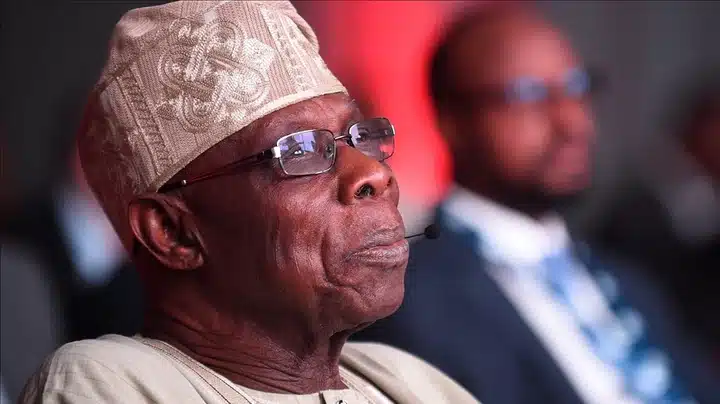
Former Nigerian President Olusegun Obasanjo has publicly acknowledged the support he received during one of the most difficult periods of his life, expressing gratitude to the current Inspector-General of Police, Olatunji Disu. Speaking during an interview with News Central, Obasanjo reflected on his time under house arrest in 1995, a period marked by political
Former Nigerian President Olusegun Obasanjo has publicly acknowledged the support he received during one of the most difficult periods of his life, expressing gratitude to the current Inspector-General of Police, Olatunji Disu.
Speaking during an interview with News Central, Obasanjo reflected on his time under house arrest in 1995, a period marked by political tension and uncertainty under the military regime of Sani Abacha. He described the experience as deeply challenging, noting that his survival during that time was not without the intervention of certain individuals.
 blob:https://www.image2url.com/6b1201f1-93ee-44f9-bbeb-45816585e575
The former president emphasized that while many people distanced themselves during the crisis, a few stood firm and offered support. Among those he singled out was Disu, whom he credited with playing a critical role in ensuring his safety. Obasanjo remarked that the contributions of such individuals should not be forgotten, especially given the life-threatening circumstances surrounding his detention.
Tele Oyegoke Launches Campaign Office Ahead Of 2027 Elections, Inaugurates AMBO Mobilizers Across 38 Wards
Recounting the events, Obasanjo suggested that his continued existence might be tied to the actions of those who quietly ensured his well-being. He stated that acknowledging these efforts is not just an act of gratitude but also a reminder of the importance of loyalty and humanity during times of crisis.
He noted that even decades later, the memory remains vivid, reinforcing his belief that people who offer support during adversity deserve lasting recognition. The former leader’s remarks have since sparked conversations about the untold roles individuals play behind the scenes during politically sensitive periods.
Beyond revisiting his personal history, Obasanjo used the platform to address Nigeria’s ongoing security challenges. He reiterated his longstanding position on the need for structural reforms within the country’s policing system.
According to him, the establishment of state police could significantly improve security outcomes. He argued that localized policing would enable officers to better understand their communities, respond swiftly to emerging threats, and prevent crimes before they escalate.
Obasanjo stressed that Nigeria’s security issues require practical and forward-thinking solutions. He maintained that decentralizing the police force could strengthen law enforcement capabilities and enhance public safety across the nation.
The former president concluded by emphasizing that while past experiences shape perspectives, they also offer lessons that can guide present and future decisions. His reflections serve as both a personal acknowledgment of past support and a broader call for reforms aimed at improving Nigeria’s security framework.













Leave a Comment
Your email address will not be published. Required fields are marked with *