
INEC Fixes November 28 for Nationwide Mock Voting, Tests BVAS Ahead of 2027 Elections The Independent National Electoral Commission (INEC) has scheduled a nationwide mock accreditation and voting exercise for November 28 as part of efforts to test its upgraded election technology ahead of the 2027 general elections. The exercise will be conducted across all
INEC Fixes November 28 for Nationwide Mock Voting, Tests BVAS Ahead of 2027 Elections
The Independent National Electoral Commission (INEC) has scheduled a nationwide mock accreditation and voting exercise for November 28 as part of efforts to test its upgraded election technology ahead of the 2027 general elections.
The exercise will be conducted across all states of the federation to assess the performance of the Bimodal Voter Accreditation System (BVAS) and electronic transmission of election results.
Nigerians Protest Against INEC Chairman Amupitan At Chatham House, Demand Resignation
 blob:https://www.image2url.com/6b1201f1-93ee-44f9-bbeb-45816585e575
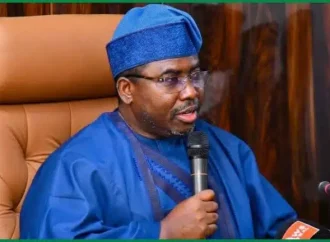
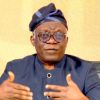
INEC Chairman, Professor Joash Amupitan, announced the development on Thursday during a dialogue at Chatham House in London, organised in partnership with the Kimpact Development Initiative.
The discussion was held under the theme, “Nigeria’s 2027 Elections: Democratic Trajectory and Regional Stability Beyond the Ballot.”
In a statement issued in Abuja and signed by his Chief Press Secretary and Media Adviser, Adedayo Oketola, Amupitan said the mock exercise would simulate the presidential election to determine whether the commission’s accreditation and electronic results transmission systems were functioning effectively.
“On the 28th of this month, we will conduct a mock accreditation and voting exercise across all states of the Federation to simulate the presidential election and verify that we have gotten both accreditation and electronic result transmission right,” he said.
INEC Introduces New Safeguards for IReV
The INEC chairman also disclosed that the commission had introduced additional technical safeguards to prevent inaccurate polling unit results and figures indicating over-voting from being uploaded to its Result Viewing Portal (IReV).
According to Amupitan, a post-election review of the 2023 general elections revealed that some of the major problems associated with election result management and declaration occurred at collation centres rather than polling units.
“We have now devised a technical safeguard: if a result is not accurate at the polling unit, it will not go to IReV at all,” he said.
He explained that INEC had opted to upgrade its existing election technology instead of introducing an entirely new system because of the limited time remaining before the 2027 elections.
INEC Increases BVAS Machines, Reduces Voter Allocation
Addressing concerns over BVAS failures recorded during the 2023 general elections, Amupitan said the commission was taking steps to improve the reliability and performance of the machines.
He disclosed that INEC had purchased additional BVAS devices and reduced the maximum number of registered voters assigned to each machine from 1,250 to 850.
Under the new arrangement, polling units with more than 850 registered voters will receive additional BVAS machines to reduce congestion and improve accreditation efficiency.
The chairman also revealed that the commission was constructing climate-controlled storage facilities across the states to protect the equipment from extreme temperatures and other environmental conditions that could affect its performance.
INEC Awaits Outstanding 2027 Election Funds
On preparations and funding, Amupitan said INEC had received a substantial portion of its budget for the 2027 general elections but was still awaiting the release of the outstanding funds.
He expressed confidence that the remaining amount would be made available before the end of November.
According to him, part of the funding would be used to recruit ad hoc election personnel and provide for their welfare during the polls.
Amupitan Admits 2023 Election Damaged Public Confidence
The INEC chairman also acknowledged that controversies surrounding the 2023 presidential election had significantly damaged public confidence in the commission.
He appealed to Nigerians to support his leadership, stressing that rebuilding public trust remained one of INEC’s major priorities.
“First and foremost, let me speak about what happened in 2023, which resulted in a significant trust deficit for INEC, damage so large that the Commission has not yet fully recovered from it,” he said.
Amupitan, however, maintained that the commission had learnt important lessons from subsequent elections, including the governorship elections in Anambra and Osun, the Federal Capital Territory Area Council elections, the Ekiti governorship election and 16 legislative by-elections.
He noted that the Anambra and Osun governorship election results were announced the day after voting, unlike previous experiences that were characterised by delays.
“Every election is a lesson. The 2023 general election was a major lesson for Nigeria, and the Anambra election was another,” he stated.
INEC Chairman Responds to Allegations of Political Bias
Amupitan also addressed allegations questioning his political neutrality, particularly claims involving an X account, formerly known as Twitter, allegedly linked to a controversial political post.
He denied operating the account and disclosed that INEC had obtained an independent forensic review of the matter.
He said the issue had also been referred to the Department of State Services (DSS) and the Inspector-General of Police for investigation.
The chairman further insisted that his loyalty remained with the Nigerian Constitution and the Electoral Act.
“My loyalty is solely to the Constitution of the Federal Republic of Nigeria and the Electoral Act,” he said.
He explained that his previous involvement in legal cases concerning political disputes occurred in his professional capacity as a lawyer before his appointment as INEC chairman.
Amupitan Urges Youths to Participate in 2027 Elections
The INEC chairman also encouraged young Nigerians to take an active interest in the electoral process and avoid spreading misinformation as the country prepares for the 2027 general elections.
He maintained that credible elections required the collective commitment of electoral officials, political parties, security agencies, civil society organisations and voters.
The presidential and National Assembly elections are scheduled for January 16, 2027, while governorship and State Houses of Assembly elections are expected to hold on February 6, 2027.
With the November 28 mock exercise approaching, attention will be focused on whether INEC’s upgraded BVAS and electronic results transmission systems can deliver the reliability and transparency Nigerians expect ahead of the 2027 polls.











Leave a Comment
Your email address will not be published. Required fields are marked with *