
IGP Egbetokun Denies Election Rigging Claims, Rejects Calls for Armed Citizenry Nigeria’s Inspector-General of Police (IGP), Kayode Egbetokun, has categorically rejected claims that security agencies, particularly the Nigeria Police Force, play any role in manipulating or rigging election results. Describing such allegations as “baseless” and “unfair,” Egbetokun stated that the police remain neutral actors
IGP Egbetokun Denies Election Rigging Claims, Rejects Calls for Armed Citizenry
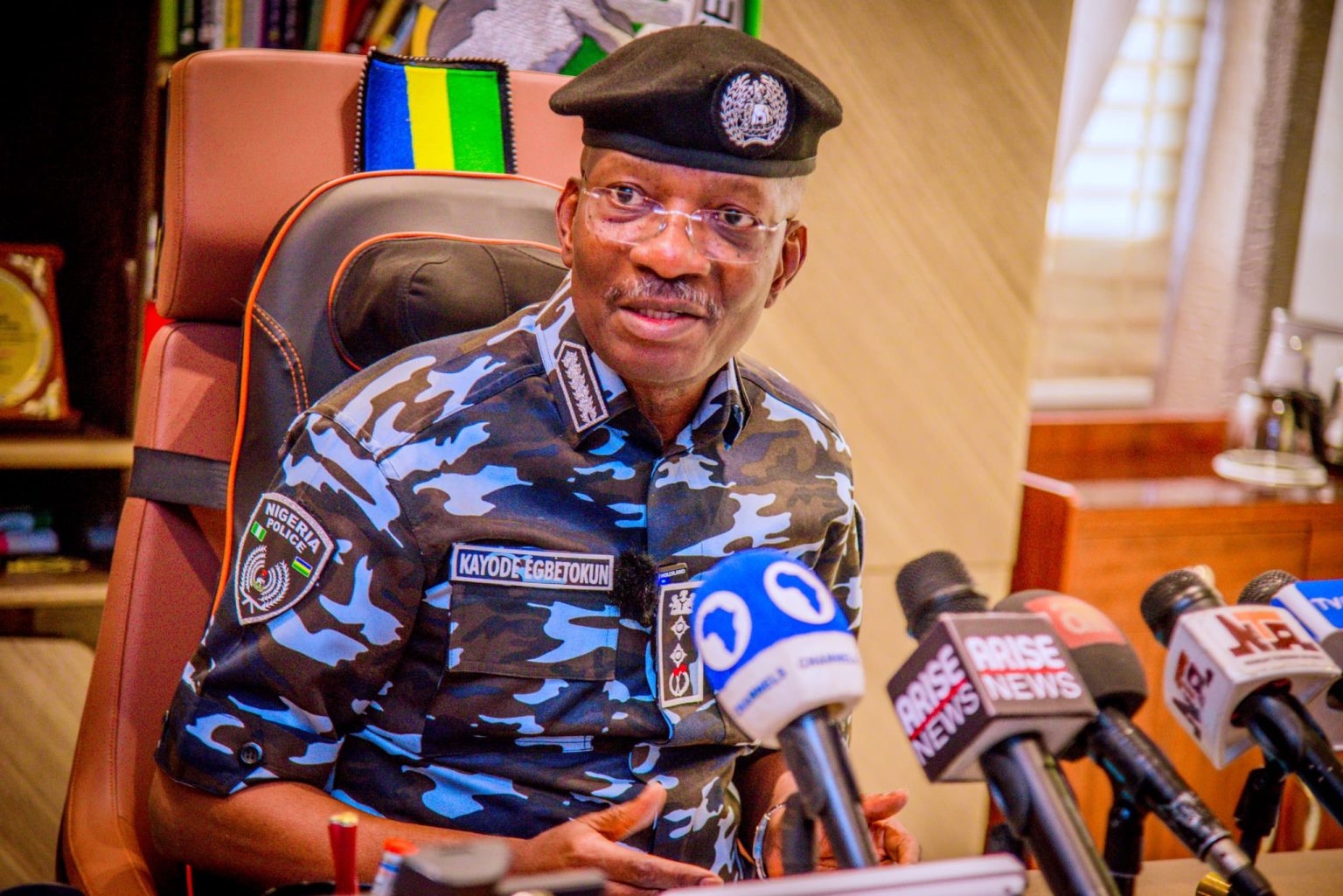
Nigeria’s Inspector-General of Police (IGP), Kayode Egbetokun, has categorically rejected claims that security agencies, particularly the Nigeria Police Force, play any role in manipulating or rigging election results. Describing such allegations as “baseless” and “unfair,” Egbetokun stated that the police remain neutral actors in the democratic process.
Speaking on Monday, June 24, through Adewale Ajao, the Commissioner of Police for the Federal Capital Territory (FCT), at the Third National Democracy Stakeholders Summit held in Abuja, Egbetokun addressed concerns lingering from the disputed 2023 general elections.
“The idea that the police are involved in rigging is pure imagination. We are not partisans—we are not umpires. We don’t count votes; we only monitor the process while INEC does the collation,” the IGP emphasized.
Nigeria’s Forex Reserves Soar To $38.4 Billion, Fiscal Deficit Narrows Under Tinubu’s Reforms
Election 2023 Fallout Still Echoes
The statement comes in the wake of lingering controversies from the 2023 presidential election, in which President Bola Tinubu of the All Progressives Congress (APC) secured 8,794,726 votes to defeat Atiku Abubakar of the Peoples Democratic Party (6,984,520 votes) and Peter Obi of the Labour Party (6,101,533 votes).
Both Atiku and Obi rejected the results, citing widespread rigging, voter suppression, and electoral violence, and called for reforms to restore electoral credibility. The legitimacy of the election remains a subject of debate among political stakeholders, civil society groups, and the electorate.
Egbetokun’s defense of the police comes at a time when many Nigerians continue to question the neutrality and conduct of security operatives during elections, with reports of intimidation and selective enforcement emerging from various polling units during the last electoral cycle.
Arming Citizens Not a Solution, IGP Warns
During the summit, Egbetokun also addressed growing calls from sections of the public for the right to bear arms in response to rising insecurity across parts of the country. He issued a strong warning against such proposals, arguing that an armed citizenry would worsen the nation’s already fragile security situation.
“You can’t solve violence with violence. The solution lies in dialogue, tolerance, and mutual surveillance,” Egbetokun said. “Armed citizenry will only compound our security challenges. Nigeria must learn from other nations where such policies failed.”
The IGP stressed that security cannot be achieved through increased weaponization of the public but through sustained collaboration between citizens, law enforcement, and local communities. He underscored the importance of intelligence sharing, civic education, and trust-building initiatives to mitigate violence.
Stakeholders Call for Electoral Reform
Also speaking at the summit, Kletsaint Akor, Chairman of the Proponent Council of the Nigeria Democracy Stakeholders Group, highlighted the central role of credible elections in ensuring democratic legitimacy. “Elections are not endpoints; they are entry points. Without electoral legitimacy, governance becomes performative rather than productive,” Akor remarked.
Akor praised the introduction of BVAS (Bimodal Voter Accreditation System) and electronic result transmission as innovative tools for transparency, but criticized the implementation of these systems during the 2023 elections. “Their flawed implementation weakened public trust,” he said.
He called for the institutionalisation of reforms, including financial autonomy for INEC, transparent appointment processes for electoral commissioners, and strict penalties for electoral malpractice to strengthen democracy.
FG Defends Reform Agenda Amid Economic Pressure
Representing Secretary to the Government of the Federation (SGF), George Akume, the Permanent Secretary for Economic and Political Affairs, Nadungu Gagare, commended the Tinubu administration’s reform efforts in spite of daunting economic conditions.
“In just two years, this administration has prioritised reforms across critical sectors. These interventions are laying the foundation for long-term national stability and inclusive growth,” Gagare stated.
While acknowledging the economic hardship caused by subsidy removals and exchange rate unification, the federal government has maintained that these reforms are necessary for long-term recovery and prosperity.
A Nation at the Crossroads
The Democracy Stakeholders Summit served as a timely platform for reassessing Nigeria’s democratic journey, particularly in light of the tension and mistrust that followed the 2023 elections. As institutions like the Nigeria Police come under public scrutiny, stakeholders are calling for enhanced transparency, accountability, and reform across all levels of the electoral process.
With 2027 on the horizon, rebuilding public confidence in electoral integrity will be a key test for Nigeria’s democracy. For now, IGP Egbetokun’s insistence on the police’s neutrality and rejection of armed citizenry reflect the challenges facing national security in a deeply polarized political environment.







Leave a Comment
Your email address will not be published. Required fields are marked with *