
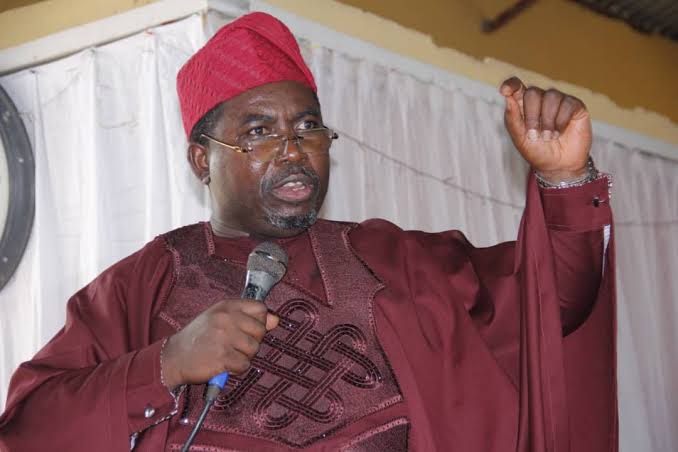
Amid growing political pressure and calls for his removal, the Chairman of the Independent National Electoral Commission, Joash Amupitan, has raised fresh concerns about the dangers facing Nigeria’s electoral system ahead of the 2027 general elections. Speaking at the 81st General Assembly of the Broadcasting Organizations of Nigeria in Abuja, Amupitan warned that misinformation
Amid growing political pressure and calls for his removal, the Chairman of the Independent National Electoral Commission, Joash Amupitan, has raised fresh concerns about the dangers facing Nigeria’s electoral system ahead of the 2027 general elections.
Speaking at the 81st General Assembly of the Broadcasting Organizations of Nigeria in Abuja, Amupitan warned that misinformation and disinformation could pose a far greater threat than traditional forms of electoral malpractice.
 blob:https://www.image2url.com/6b1201f1-93ee-44f9-bbeb-45816585e575
He noted that the landscape of election interference has shifted significantly, with digital platforms now replacing physical disruptions as the primary battleground for influence.
Court Jails Four Terrorists For Life, Convicts 14 Others Over Boko Haram Attacks
According to the INEC chairman, the role of the media—particularly broadcasters—has never been more critical in safeguarding democracy. He stressed that the spread of false information, especially when echoed by conventional media outlets, could distort public perception and undermine electoral credibility.
“In the 2027 General Election, the most dangerous weapon will not be a ballot-snatcher’s gun but a smartphone-user’s lies amplified by an uncritical broadcast station,” Amupitan stated.
He highlighted provisions within the Electoral Act 2026 designed to regulate political communication and ensure fairness. These include requirements for equal airtime for all political parties and a mandatory 24-hour media blackout before election day to prevent last-minute manipulation.
Amupitan also warned that violations of these rules carry serious consequences, including fines of up to N5 million for organizations and possible imprisonment for responsible individuals. Additionally, the law criminalises hate speech and inflammatory content capable of inciting ethnic or religious tensions.
Despite these safeguards, the INEC boss acknowledged persistent structural challenges. He pointed to weak enforcement mechanisms, the commercialization of broadcast space, and the disproportionate influence of wealthy political actors.
“Political actors with greater financial resources dominate broadcast space,” he said, cautioning that such imbalance threatens equal participation and fairness in the democratic process.
To address these concerns, Amupitan called for stronger collaboration among INEC, media organisations, security agencies, and the judiciary. He urged journalists and broadcasters to prioritise accuracy and professionalism over profit, emphasizing the need for real-time fact-checking and responsible reporting.
His remarks came shortly after opposition figures staged a protest at INEC headquarters in Abuja. Prominent politicians, including Atiku Abubakar, Rabiu Kwankwaso, and Peter Obi, led the demonstration alongside members of the African Democratic Congress.
The protesters accused Amupitan of aligning with the ruling party to weaken opposition chances in the upcoming election. However, in a response during an interview on ARISE Television, the INEC chairman firmly denied the allegations.
“Let me state very clearly that I’m not a part of anyone’s plan to turn Nigeria into a one-party state,” he said, maintaining that all decisions made by the commission were guided strictly by legal and judicial directives.
Addressing concerns over the commission’s handling of internal disputes within political parties, particularly those involving the African Democratic Congress, Amupitan insisted that INEC acted in accordance with court judgments and not on personal discretion.
He concluded by reiterating that the 2027 elections will largely depend on how effectively we manage misinformation within the information ecosystem.
As Nigeria prepares for another electoral cycle, the focus appears to be shifting beyond polling units to the digital and media spaces where narratives are formed and public opinion is shaped long before votes are cast.












Leave a Comment
Your email address will not be published. Required fields are marked with *