
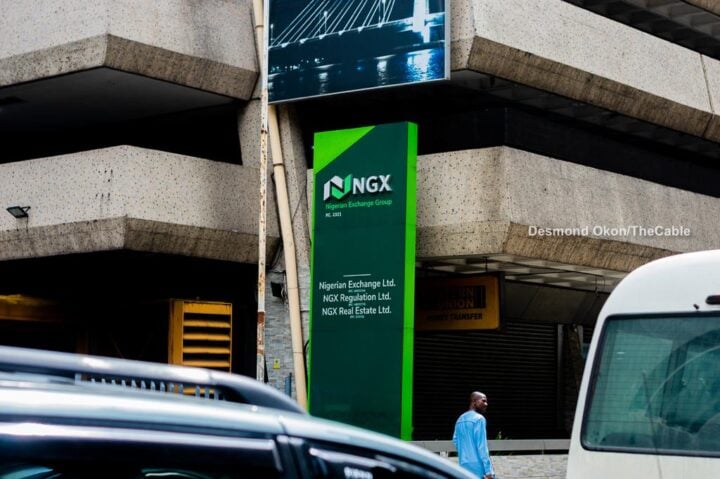
Stock market activity on the Nigerian Exchange Limited (NGX) slowed significantly last week, as investors traded shares worth about N161.75 billion over a five-day period, reflecting a sharp 50 percent decline compared to the previous week. The latest trading data highlights reduced investor participation across the equities market, alongside a mild dip in key performance
Stock market activity on the Nigerian Exchange Limited (NGX) slowed significantly last week, as investors traded shares worth about N161.75 billion over a five-day period, reflecting a sharp 50 percent decline compared to the previous week.
The latest trading data highlights reduced investor participation across the equities market, alongside a mild dip in key performance indicators, including the All-Share Index and overall market capitalisation.
The NGX reported that a total of 3.87 billion shares were exchanged in 334,745 deals during the week under review. This represents a steep drop from the 7.77 billion shares valued at N374.04 billion recorded in the preceding week, signalling a notable cooling in market momentum.
ADC Faction Crisis Deepens As Leadership Is Dissolved, Dumebi Kachikwu Endorsed For 2027 Race
The “N” focus reveals a broad-based decline in trading activity, with both volume and value of transactions falling by more than half week-on-week, despite continued dominance by the financial services sector.
 blob:https://www.image2url.com/6b1201f1-93ee-44f9-bbeb-45816585e575
According to NGX data, the All-Share Index (ASI) and market capitalisation also declined slightly by 0.25 percent and 0.23 percent respectively. The ASI closed at 249,712.37 basis points, while market capitalisation settled at approximately N160.077 trillion, indicating mild bearish sentiment across the market.
Despite the overall slowdown, the financial services sector remained the most active segment of the exchange. It accounted for 2.41 billion shares traded, valued at N69.71 billion, executed across 126,919 deals during the week.
This performance represents 62.19 percent of total trading volume and 43.1 percent of total transaction value, underscoring the sector’s continued dominance in driving liquidity on the Nigerian equities market.
Market analysts often attribute the strong presence of financial stocks to high investor familiarity, consistent dividend expectations, and relatively strong liquidity compared to other sectors. However, the overall decline suggests that broader investor sentiment may have been affected by macroeconomic uncertainty or profit-taking activities.
The drop in trading activity also points to reduced participation from both retail and institutional investors, who typically respond to inflation trends, interest rate expectations, and currency market dynamics when allocating funds.
While short-term fluctuations are common in equity markets, sustained declines in volume and value can signal caution among investors or a temporary shift toward fixed-income instruments.
Going forward, market watchers will be monitoring whether the NGX rebounds in the coming weeks or continues to experience subdued activity. Stability in macroeconomic indicators and improved corporate earnings are likely to play a key role in restoring stronger investor confidence.
For now, the latest figures reflect a cautious trading environment on Nigeria’s equities market, even as financial sector stocks continue to anchor overall market activity.






















Leave a Comment
Your email address will not be published. Required fields are marked with *