
Iran's Islamic Revolutionary Guard Corps (IRGC) has declared that the Strait of Hormuz will remain closed until the United States meets a series of demands, including the payment of compensation for damage allegedly caused during the recent conflict. If Adeleke Has Nightmares, He Will Say He Saw Me – Oyetola Fires Back The strategic waterway,
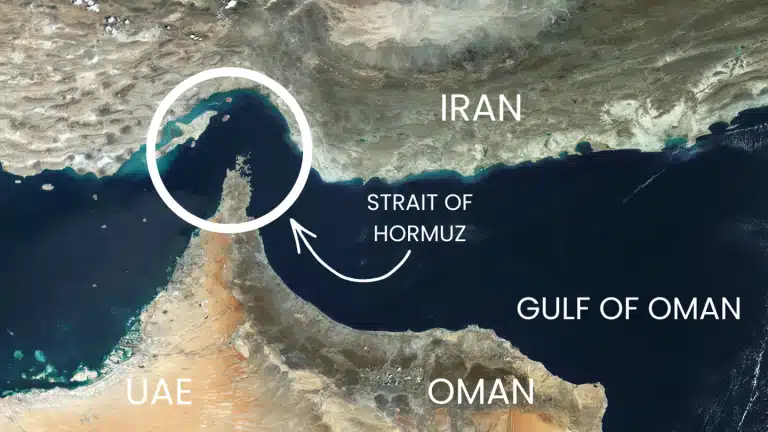
Iran’s Islamic Revolutionary Guard Corps (IRGC) has declared that the Strait of Hormuz will remain closed until the United States meets a series of demands, including the payment of compensation for damage allegedly caused during the recent conflict.
If Adeleke Has Nightmares, He Will Say He Saw Me – Oyetola Fires Back
The strategic waterway, regarded as one of the world’s most important maritime routes for global oil exports and international trade, has remained effectively blocked since the military confrontation involving the United States, Israel and Iran escalated in late February. The continued closure has heightened concerns over global energy supplies, commercial shipping and regional security.
 blob:https://www.image2url.com/6b1201f1-93ee-44f9-bbeb-45816585e575
Reaffirming Tehran’s position on Sunday, the Revolutionary Guards insisted that the Strait of Hormuz would remain closed until all of Iran’s conditions were met.
“Our strategy is to maintain the closure until the enemy accepts all our conditions… the strait is now actually a theatre of war for us and not just a waterway,” the Guards said.
Iran Lists Conditions for Reopening Strait
Iran’s Foreign Minister, Abbas Araghchi, disclosed that negotiations with Oman over future transit arrangements and the management of the Strait of Hormuz were nearing completion.
However, he stressed that reopening the waterway remained conditional on several unresolved issues, including compensation for what Tehran described as violations committed during the conflict.
“The reopening of Hormuz is subject to other conditions and compensation for the violation,” Araghchi stated.
The minister also denied reports of direct negotiations with Washington, explaining that both countries were only “exchanging messages” through intermediaries.
Earlier, Iran’s security chief, Mohammad Bagher Zolghadr, outlined Tehran’s key demands before shipping could resume normally through the strait.
According to him, Iran wants:
- An end to what it described as the “war and aggression” against Iran and its allies in Lebanon, Palestine, Yemen and Iraq.
- The lifting of restrictions on Iranian ports.
- The removal of economic sanctions.
- The release of frozen Iranian assets.
- Compensation from the United States for damage allegedly caused during the war.
The demands were published by Iran’s state-affiliated Tasnim News Agency.
Shipping Disruptions Deepen
The continued closure has significantly reduced commercial traffic through the Strait of Hormuz, with Iranian forces reportedly intercepting or attacking vessels they accused of attempting to use routes outside those approved by Tehran.
Iran has also reportedly demanded payments from some ships seeking passage through the strategic waterway.
The Strait of Hormuz remains one of the world’s most critical maritime corridors, with a substantial proportion of global crude oil and liquefied natural gas exports passing through the narrow channel each day.
The prolonged disruption has intensified concerns among international shipping operators, energy markets and global governments over possible supply shortages and higher transportation costs.
UAE Condemns Attack on Oil Tanker
The United Arab Emirates (UAE) has condemned what it described as a “hostile Iranian attack” on a tanker belonging to the Abu Dhabi National Oil Company (ADNOC).
According to the UAE Ministry of Foreign Affairs, the vessel was struck by a missile while transiting the Strait of Hormuz. Although no casualties were reported, the incident further heightened tensions in the Gulf.
On the same day, the United Kingdom Maritime Trade Operations (UKMTO) reported that another vessel had been struck by a projectile off the coast of Oman, causing a fire that was later extinguished without loss of life.
Authorities have not confirmed whether both reports referred to the same vessel.
Oman Calls for Restraint
Oman, which has been mediating discussions over maritime navigation in the Gulf, condemned the continued attacks on commercial vessels.
While avoiding direct accusations against Iran, Muscat described the incidents as “repeated attacks on vessels transiting the Strait of Hormuz” and urged all parties to avoid actions capable of undermining ongoing diplomatic negotiations.
The Omani Foreign Ministry stated that discussions on future navigation arrangements were progressing “in a positive and constructive atmosphere.”
A previous Iran-US understanding had envisaged discussions between Tehran, Muscat and other Gulf states on future arrangements governing navigation through the Strait of Hormuz in accordance with international law.
International maritime law generally prohibits countries from imposing unilateral tolls or restrictions on vessels exercising the right of transit passage through international waterways.
Regional Tensions Expand
In a related development, Yemen’s Iran-backed Houthi rebels claimed responsibility for an attack on a Saudi oil facility along the Red Sea coast.
Saudi authorities confirmed that a fire broke out at the facility but said it had been successfully extinguished.
The attack has raised fresh fears that instability could spread beyond the Strait of Hormuz to the Red Sea, another vital international shipping corridor that has witnessed repeated attacks in recent years.
Meanwhile, Turkey’s Foreign Minister, Hakan Fidan, disclosed that Egypt could soon join a proposed regional defence arrangement involving Turkey, Saudi Arabia and Pakistan.
Fidan described Egypt as a “natural partner on all issues” and expressed optimism that Cairo would eventually become part of the alliance.
“I believe that at the next stage Egypt will also be among us in the alliance. We already act toward one another as if we were alliance members,” he said.
The proposed defence cooperation follows a drone attack on United States assets at an Egyptian Mediterranean port last month—the first such attack on Egyptian territory since the outbreak of the Iran conflict.
Despite the growing military cooperation, Fidan maintained that the alliance was not directed against any specific country.
“There is no common threat that we have put in writing,” he stated.
Pakistan’s Foreign Ministry said the proposed agreement would treat an attack on one member as an attack on all, describing the arrangement as one “intended to strengthen collective deterrence” and enhance regional security.



















Leave a Comment
Your email address will not be published. Required fields are marked with *