
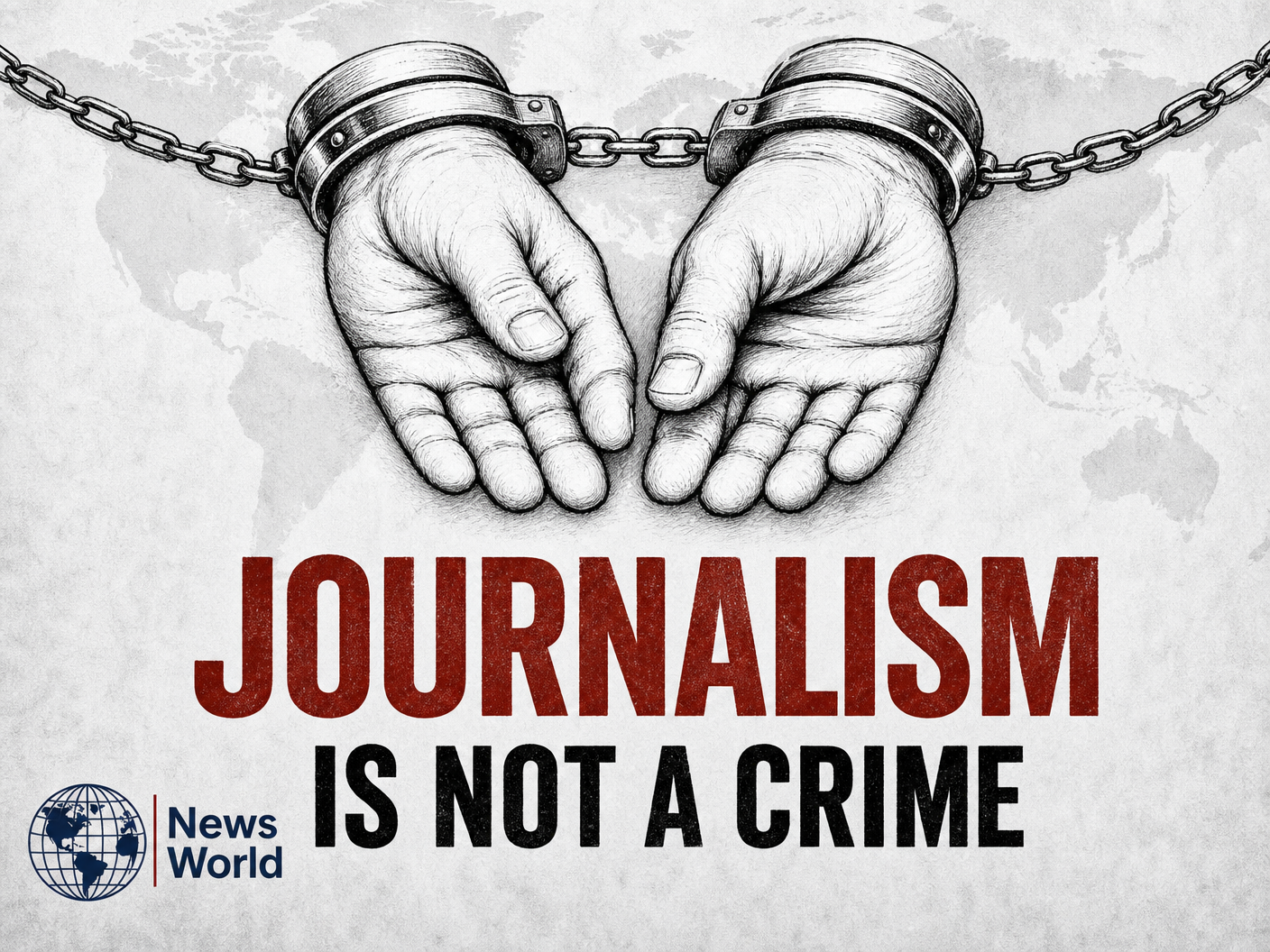
Newsworld - World Press Freedom Day is more than a ceremonial date on the global calendar; it is a reminder of the vital role journalism plays in society and the harsh realities many journalists face. Central to this year’s reflection is a difficult truth: journalism is not a crime, yet it is increasingly
Newsworld – World Press Freedom Day is more than a ceremonial date on the global calendar; it is a reminder of the vital role journalism plays in society and the harsh realities many journalists face.
Central to this year’s reflection is a difficult truth: journalism is not a crime, yet it is increasingly unrewarding, both materially and socially, for those who practice it.
Divorce Your Husband And Get Deported, – UK Govt
Journalism, at its core, is a profession built on service. It is driven by the pursuit of truth, the need to inform the public, and the responsibility to hold power accountable.
From uncovering corruption to reporting from conflict zones, journalists take on risks that many professions do not demand.
Yet, in many parts of the world, including developing democracies, this commitment is met not with recognition or adequate compensation, but with hostility, financial instability, and neglect.
The assertion that journalism is not a crime remains necessary because, in practice, journalists are often treated as offenders rather than professionals.
They are harassed, detained, or threatened simply for reporting facts.
Laws that should protect freedom of expression are sometimes manipulated to silence critical voices.
This criminalization of journalism undermines democracy and discourages investigative reporting, which is essential for transparency and accountability.
However, beyond the dangers lies another pressing issue; journalism is increasingly not rewarding.
Many journalists work under poor conditions, with low pay, delayed salaries, and limited job security.
In some cases, media practitioners struggle to meet basic living standards despite their critical role in society.
The rise of digital media has further complicated the landscape, as traditional revenue models collapse and media organizations cut costs, often at the expense of journalists’ welfare.
This lack of reward is not only financial. There is also a growing erosion of public trust in the media, fueled by misinformation and political polarization.
Journalists frequently face online abuse, public skepticism, and accusations of bias, even when adhering to professional standards. The emotional and psychological toll of this environment cannot be overlooked.
Yet, despite these challenges, journalists continue to carry out their duties. They report from the frontlines of conflicts, investigate complex issues, and amplify voices that would otherwise go unheard. Their resilience speaks to the enduring importance of the profession, even when the rewards are minimal.
The consequences of an unrewarding journalism profession are far-reaching. When journalists are undervalued, the quality of information available to the public declines.
Talented individuals may leave the profession, and those who remain may face pressures that compromise ethical standards.
Ultimately, society pays the price through weakened democratic institutions and a less informed citizenry.
Addressing this issue requires a collective effort. Governments must not only protect journalists from harm but also create an enabling environment for media sustainability.
Media organizations should prioritize fair wages, capacity building, and professional development. At the same time, journalists themselves must uphold ethical standards, ensuring that their work remains credible and trustworthy.
Citizens also have a role to play. Supporting credible journalism, through readership, subscriptions, and advocacy, to helps sustain the profession. Recognizing the value of accurate information and demanding accountability from both the media and those in power strengthens the ecosystem in which journalism operates.
On this World Press Freedom Day, the message is clear: journalism must never be criminalized, and it must not remain unrewarding.
For democracy to thrive, journalists need not only freedom but also dignity, security, and fair compensation. Protecting and valuing journalism is, ultimately, an investment in society itself.
 blob:https://www.image2url.com/6b1201f1-93ee-44f9-bbeb-45816585e575

















Leave a Comment
Your email address will not be published. Required fields are marked with *