

Economic reforms continue to dominate Nigeria’s public discourse, with inflation, taxation, exchange rates and fiscal deficits attracting daily attention. Yet beneath these macroeconomic debates lies a more fundamental question: who will build the healthy, productive population needed to sustain long-term economic growth? For the Director-General of the National Health Insurance Authority (NHIA), Dr Kelechi Ohiri,
Economic reforms continue to dominate Nigeria’s public discourse, with inflation, taxation, exchange rates and fiscal deficits attracting daily attention. Yet beneath these macroeconomic debates lies a more fundamental question: who will build the healthy, productive population needed to sustain long-term economic growth?
For the Director-General of the National Health Insurance Authority (NHIA), Dr Kelechi Ohiri, the answer begins with investing in people.
FG to begin 90,000km fibre optic rollout soon
 blob:https://www.image2url.com/6b1201f1-93ee-44f9-bbeb-45816585e575
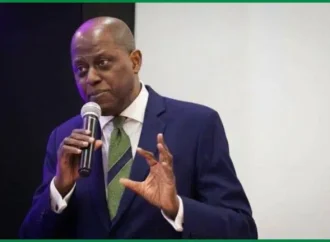
Speaking during a fireside conversation at the BusinessDay CEO Forum, Ohiri argued that Nigeria often overlooks its most valuable asset.
“We don’t make enough reference to Nigeria’s greatest resource, which is human capital,” he said.
The statement reflects a philosophy that has shaped his professional journey—from clinical medicine and global development to public policy and health financing.
Unlike many healthcare administrators who focus primarily on hospitals, disease treatment or insurance administration, Ohiri believes healthcare should be viewed as a strategic investment capable of transforming the country’s economy.
According to him, healthier citizens are naturally more productive, businesses thrive when workers remain healthy, and nations achieve sustainable development only when healthcare becomes accessible and affordable for everyone.
For Ohiri, universal health coverage is therefore not merely a social responsibility but an essential pillar of national economic competitiveness.
A Distinguished Global Career
Before assuming office as Director-General of the NHIA in 2023, Dr Ohiri had built an impressive international career spanning medicine, consulting, finance and global health policy.
A graduate of the University of Lagos College of Medicine, he later earned both a Master of Public Health (MPH) and a Master of Science in Health Policy and Management from Harvard University, one of the world’s leading institutions for public health education.
His career subsequently took him to McKinsey & Company in London, where he advised governments and major institutions across Europe, the Middle East and Africa on health systems, governance and public sector reforms.
From there, he joined the World Bank through its highly competitive Young Professionals Programme, working on health financing reforms and social protection initiatives across developing countries.
He later moved to Gavi, the Vaccine Alliance, where he rose to become Chief Strategy, Policy and Innovation Officer, helping shape one of the world’s largest global health partnerships.
During his time at Gavi, he contributed to strategies that enabled the vaccination of more than one billion children worldwide while strengthening health systems in low- and middle-income countries.
His experience across clinical medicine, management consulting, international finance and global health policy positioned him among Africa’s leading health policy experts.
Returning Home to Tackle Nigeria’s Biggest Health Challenge
Despite enjoying an accomplished international career, Ohiri accepted President Bola Tinubu’s appointment to lead the NHIA in 2023—a decision many considered surprising given the complexity of Nigeria’s health insurance system.
The NHIA had long struggled with limited enrolment, fragmented financing, inadequate public confidence and heavy dependence on out-of-pocket healthcare payments.
Millions of Nigerians continued to pay directly for medical treatment, pushing many households into poverty whenever serious illness occurred.
Rather than seeing these challenges as obstacles, Ohiri viewed them as an opportunity to build stronger institutions capable of delivering lasting reforms.
Throughout his career, he has consistently prioritised systems over isolated programmes.
Before joining Gavi, he served as Special Adviser to successive Nigerian Ministers of Health and later to the Minister of Finance, contributing to several major national reforms.
Among these were the Saving One Million Lives Programme and the conceptual development of Nigeria’s National Social Safety Nets Programme, both designed to strengthen public service delivery while reducing poverty.
These experiences reinforced his belief that health, economic opportunity and social protection must work together rather than operate as separate policy areas.
Transforming the NHIA
Since taking office, Ohiri has repositioned the NHIA from being viewed simply as a health insurance regulator into an institution responsible for building the financial foundation of universal health coverage.
Under his leadership, the authority has expanded collaboration with state governments, accelerated implementation of the National Health Insurance Act, strengthened digital systems and introduced reforms aimed at improving service quality and transparency.
One of the administration’s most notable achievements has been the steady expansion of health insurance coverage.
When Ohiri assumed office, approximately 16 million Nigerians were enrolled in health insurance programmes.
That figure has since risen to more than 22 million beneficiaries, reflecting increased participation across both public and private sectors.
The NHIA has also implemented reforms in strategic purchasing, quality assurance and digital administration designed to improve efficiency while increasing public confidence in the system.
Healthcare as Economic Infrastructure
For Ohiri, the success of universal health coverage cannot simply be measured by the number of insurance cards issued or healthcare facilities accredited.
Instead, he argues that its true impact lies in broader social and economic outcomes.
Universal health coverage means a pregnant woman survives childbirth because she can access quality care.
It means a worker remains productive instead of losing income due to untreated illness.
It means children remain in school because medical bills do not force their families into financial distress.
It also means businesses spend fewer resources replacing unhealthy workers and more resources expanding operations and creating jobs.
In this sense, healthcare becomes not only a social service but also critical economic infrastructure capable of driving national productivity and long-term development.
Building Institutions for Future Generations
Throughout his career, Dr Kelechi Ohiri has consistently demonstrated a commitment to building institutions capable of delivering sustainable impact rather than short-term interventions.
His work across Nigeria, the World Bank, McKinsey and Gavi reflects a belief that lasting development depends on strong systems, effective governance and investments in human capital.
As Nigeria pursues broader economic reforms, his leadership at the NHIA represents an effort to ensure healthcare occupies a central place in the country’s development agenda.
For Ohiri, economic transformation cannot be achieved through fiscal policies alone. It must also be supported by a healthy, productive population capable of driving innovation, enterprise and inclusive growth.
His vision positions universal health coverage not merely as a healthcare objective, but as one of the most important investments Nigeria can make in securing its long-term prosperity.

















Leave a Comment
Your email address will not be published. Required fields are marked with *