
Leadership Crisis Rocks Delta APC as Onyeme, Nwoko Clash Ahead of Key Meeting A fresh internal rift is threatening to destabilize the All Progressives Congress (APC) in Delta State, as Deputy Governor Monday Onyeme and Senator Ned Nwoko lock horns over who should steer the party’s affairs in the Delta North Senatorial District. With a
Leadership Crisis Rocks Delta APC as Onyeme, Nwoko Clash Ahead of Key Meeting
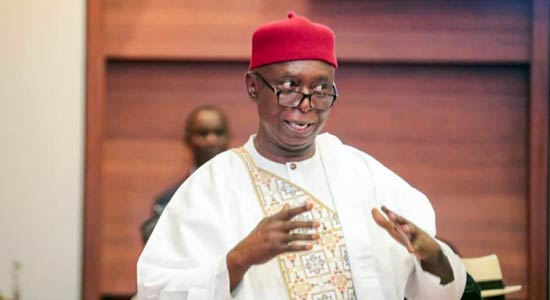
A fresh internal rift is threatening to destabilize the All Progressives Congress (APC) in Delta State, as Deputy Governor Monday Onyeme and Senator Ned Nwoko lock horns over who should steer the party’s affairs in the Delta North Senatorial District. With a critical APC Delta North stakeholders’ meeting scheduled for June 14 at Nwoko’s residence, tensions are mounting, raising concerns about growing factionalism within the party.
The friction follows Senator Ned Nwoko’s recent defection from the Peoples Democratic Party (PDP) to the APC earlier in the year. Seen by some as the most prominent APC figure in Delta North, Nwoko’s supporters believe his senatorial status automatically makes him the party leader in the zone. However, Deputy Governor Onyeme has publicly challenged this assumption, arguing that traditional political structures designate the role of political convener in Delta North to the office of the deputy governor.

Atiku Abubakar Blames Nigeria’s Security Crisis On Weak Political Will
“Tradition vs. Position: Who Leads APC Delta North?”
In a statement released by his Press Secretary, Fidelis Egugbo, Onyeme called on party stakeholders to recognize the established political precedent. According to him, past administrations had always acknowledged the deputy governor as the natural unifier and convener of political activities within Delta North.
“Deputy Governor traditionally played a central role in convening political meetings in the district,” Egugbo said. “Sir Monday Onyeme should now assume a similar unifying role within the APC and propose a private meeting with Senator Nwoko to prevent factionalism.”
He cited examples from the administrations of former governors Chief James Ibori and Dr. Emmanuel Uduaghan. During Ibori’s tenure, meetings were hosted at the Obior home of then-deputy governor, Chief Benjamin Elue. Under Uduaghan, the pattern was continued by the late Prof Amos Utuama. Onyeme’s camp is now pushing to restore this tradition to prevent the fragmentation of party unity ahead of the 2027 general elections.
However, Nwoko’s allies are not backing down. A senior APC chieftain, speaking anonymously to The PUNCH, dismissed Onyeme’s claim outright. “Senator Nwoko is the high-ranking officer in Delta North, and by the party rules, he remains the Delta North leader of the party. Is Onyeme the deputy governor of Delta North? How can he assume the party leader of our district?”
Efforts to reach Senator Nwoko directly were unsuccessful, as calls and messages to his phone went unanswered as of press time.
“Defection, Distrust, and the Shadow of PDP”
The leadership crisis has reopened old wounds within the party, many of which have lingered since Nwoko’s controversial departure from the PDP in February 2025. Sources close to Nwoko claim he left the PDP due to frustrations with former Governor Ifeanyi Okowa, who allegedly blocked his emergence as the party’s senatorial leader.
Nwoko’s defection, along with that of Governor Sheriff Oborevwori and several other PDP stalwarts, significantly shifted Delta State’s political landscape. Although publicly framed as a strategic move to secure future political relevance, especially heading into the 2027 elections, the mass defection has created new internal dynamics that the APC now struggles to manage.
In the midst of the rising tension, Governor Oborevwori has sought to reassure the public about the integrity of the transition and the health of his administration. Through the Commissioner for Works (Rural Roads), Mr. Charles Aniagwu, the governor defended the political realignment.
“Our desire is not to kill PDP but to move Delta forward, and so we changed our drinking pattern,” Aniagwu stated. “It was obvious that PDP won’t make headway in the forthcoming 2027 election, and so the need to move to the APC.”
He added, “Anyone suggesting that the administration is losing grip is far from the truth. We remain committed to delivering results.”
“Governance Amidst Internal Discord”
Despite the political wrangling, the state government is pushing ahead with its second anniversary celebrations. Aniagwu announced several major infrastructure projects scheduled for commissioning in the coming weeks. These include the Beneku Bridge, Ishiagu-Ewulu Road, erosion control projects in Okpanam, and upgrades to key medical facilities across Asaba, Warri, and Oghara.
Nonetheless, the spotlight remains firmly on the ongoing leadership dispute within the APC in Delta North. Many political watchers believe the outcome of the June 14 stakeholders’ meeting could either calm the waters or exacerbate the party’s internal divisions. If unity is not restored, the APC’s ambitions for 2027 may be significantly jeopardized by internal disorganization and competing centers of power.
Party elders and national leaders are now being urged to intervene before the situation deteriorates further. Some are calling for a neutral reconciliation committee to mediate between Onyeme and Nwoko, noting that unresolved leadership tussles have historically weakened party structures in Delta and beyond.
For now, APC members and observers await June 14 with bated breath. Will the meeting foster unity and affirm a clear leadership structure, or will it become the stage for a deeper crisis? Only time—and political maturity—will tell.







Leave a Comment
Your email address will not be published. Required fields are marked with *