
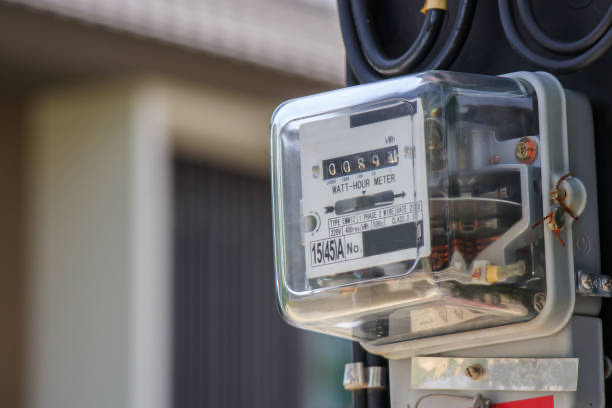
The Federal Government installed 707,765 electricity meters across Nigeria in the first half of 2026, representing a 71% increase compared with the 412,792 meters installed during the corresponding period of 2025. The figures are contained in quarterly data released by the Nigerian Electricity Regulatory Commission (NERC), showing that 357,495 meters were installed in the first
The Federal Government installed 707,765 electricity meters across Nigeria in the first half of 2026, representing a 71% increase compared with the 412,792 meters installed during the corresponding period of 2025.
The figures are contained in quarterly data released by the Nigerian Electricity Regulatory Commission (NERC), showing that 357,495 meters were installed in the first quarter of 2026 and another 350,270 in the second quarter.
Police Give Update On Abducted NYSC Members
 blob:https://www.image2url.com/6b1201f1-93ee-44f9-bbeb-45816585e575
By comparison, 187,161 meters were installed in the first quarter of 2025, while 225,631 were installed in the second quarter.
NERC said the increased installations were recorded under several metering frameworks as the government and electricity distribution companies continue efforts to reduce the number of unmetered customers and improve billing transparency in the Nigerian Electricity Supply Industry.
Metering Rate Reaches 61.51%
According to NERC, 350,270 meters were installed in the second quarter of 2026, with the Distribution Sector Recovery Programme (DISREP) accounting for the largest share.
The regulator said 205,486 meters, representing 58.67% of the second-quarter installations, were installed under DISREP.
Another 123,833 meters were installed under the Meter Asset Provider (MAP) framework, while 13,028 were installed under the Metering Asset Finance (MAF) framework.
DisCo-financed installations accounted for 7,643 meters, while 280 meters were installed under the Vendor Financed framework.
NERC said that as of the end of June 2026, 7,743,839 out of 12,589,486 active registered electricity customers had been metered, representing a nationwide metering rate of 61.51%.
This means more than 4.8 million active customers remained without meters at the end of the second quarter, indicating that a significant metering gap persists despite the increase in installations.
Energy Caps for Unmetered Customers
NERC also said it continues to apply monthly energy caps as a safeguard for unmetered customers in states where the relevant arrangements have not yet transitioned.
The commission said the caps are intended to protect unmetered customers from excessive billing by limiting the maximum amount of energy they can be billed for each month.
According to NERC, the calculation is based on the gross energy received by each electricity distribution company and consumption recorded by metered customers on the respective feeders.
World Bank-Funded Metering Programme
The latest figures come amid the Federal Government’s wider efforts to expand electricity metering through the $500 million World Bank-financed Distribution Sector Recovery Programme.
The programme is designed to strengthen the electricity distribution network and improve metering coverage, with the government also working with local meter manufacturers as part of efforts to accelerate deployment.
The continued increase in meter installations is expected to help reduce estimated billing and improve transparency between electricity distribution companies and their customers.
However, the more than 4.8 million unmetered active customers recorded at the end of June shows that substantial work remains before universal electricity metering is achieved across Nigeria.
















Leave a Comment
Your email address will not be published. Required fields are marked with *