
Presidency Slams Adesina Over Economic Remarks, Compares Him to Peter Obi The Presidency has pushed back against comments made by the President of the African Development Bank (AfDB), Dr. Akinwumi Adesina, over his recent critique of Nigeria’s economic trajectory under President Bola Tinubu’s administration. In a sharply worded statement, the Special Adviser to the President
Presidency Slams Adesina Over Economic Remarks, Compares Him to Peter Obi

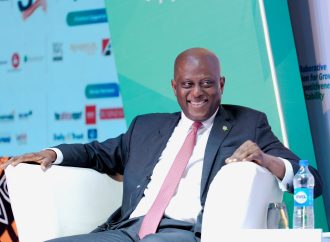
The Presidency has pushed back against comments made by the President of the African Development Bank (AfDB), Dr. Akinwumi Adesina, over his recent critique of Nigeria’s economic trajectory under President Bola Tinubu’s administration. In a sharply worded statement, the Special Adviser to the President on Information and Strategy, Bayo Onanuga, dismissed Adesina’s remarks as political rhetoric and likened them to statements made by Labour Party’s presidential candidate, Peter Obi.
Adesina had raised concerns over the declining economic well-being of Nigerians, asserting that citizens were “poorer today than they were in the 1960s.” He also questioned the effectiveness of current economic policies, which he implied were worsening poverty and inflation rather than reversing them. The statement, which quickly made headlines across Nigerian media, sparked mixed reactions from economists, politicians, and the general public.
 blob:https://www.image2url.com/6b1201f1-93ee-44f9-bbeb-45816585e575
Akpabio Withdraws From Presidential Panel Probing Sexual Harassment Allegations
Adesina’s Critique Triggers Fierce Response from the Presidency
Bayo Onanuga initially responded by labeling Adesina’s claims as “false,” but without referencing Peter Obi. However, in a follow-up statement tagged “correction,” Onanuga drew a direct comparison between Adesina’s remarks and the political style of Obi, accusing both of promoting unverified narratives.
“Adesina spoke like a politician, in the mould of Peter Obi, and did not do due diligence before making his unverifiable statement,” Onanuga stated. He argued that Nigeria’s Gross Domestic Product (GDP) has grown exponentially since independence and that the country has made undeniable progress over the past six decades.
“No objective observer can claim that Nigeria has not made progress since 1960. Today, as we await the National Bureau of Statistics’ recalibration of our GDP, we can comfortably say without contradiction that it is at least 50 times, if not 100 times, more than it was at Independence,” the statement read.
This rebuttal came amid growing scrutiny of Tinubu’s economic policies, particularly the removal of fuel subsidies and unification of the exchange rate—decisions that have caused inflation to surge and purchasing power to drop among ordinary Nigerians.
Comparisons with Peter Obi Stir Political Undercurrents
The mention of Peter Obi, who remains a vocal critic of the Tinubu administration, added a political dimension to the economic debate. Obi’s campaign for the presidency in 2023 was marked by repeated calls for transparency, accountability, and a shift in economic priorities to favor production over consumption.
By aligning Adesina’s comments with Obi’s style, the Presidency signaled its view that the AfDB President’s analysis was not merely technocratic but politically charged. However, many observers argue that Adesina, an internationally respected economist and former Nigerian Minister of Agriculture, was speaking from a place of economic concern rather than political ambition.
Adesina’s statement had emphasized the need for inclusive economic growth and questioned why a country so rich in human and natural resources continues to face staggering levels of poverty. His critics within government circles, however, saw the remarks as undermining Nigeria’s global image and the current administration’s reform efforts.
Economic Realities and Public Sentiment
While the Presidency defends its economic policies as necessary reforms, the reality on the ground remains challenging for many Nigerians. Food prices have soared, transportation costs have doubled in several cities, and small businesses continue to struggle under the weight of rising energy costs and unstable foreign exchange rates.
Data from the National Bureau of Statistics (NBS) has consistently shown inflation rates hovering above 30% in early 2025, with food inflation being the most severe. For many households, the economic growth touted by officials does not reflect in their daily experiences.
Adesina’s comments likely resonate with this public sentiment. His remarks echoed frustrations shared by many Nigerians who feel that the promised dividends of democracy and reforms have yet to reach them. In contrast, the Presidency’s defense leans heavily on macroeconomic indicators and projections, arguing that long-term gains will outweigh current hardships.
Facts, Feelings, and Political Frictions
The debate between facts and perceptions is not new in Nigeria’s political economy. While statistical growth may indicate national progress, the lived experience of millions remains rooted in economic struggle. Adesina’s critique, whether political or not, has drawn attention to this gap and reignited conversations around the impact of leadership decisions.
As President Tinubu’s government continues to defend its policies and push back against critics, the challenge will be to bridge the divide between economic theory and economic reality. The mention of Peter Obi underscores the political stakes involved in these debates, especially as the next electoral cycle begins to loom on the horizon.
The clash between the Presidency and Adesina reflects more than a disagreement over numbers—it is a reflection of broader anxieties about Nigeria’s path forward, the credibility of its leadership, and the trust of its citizens in public institutions.
















Leave a Comment
Your email address will not be published. Required fields are marked with *