
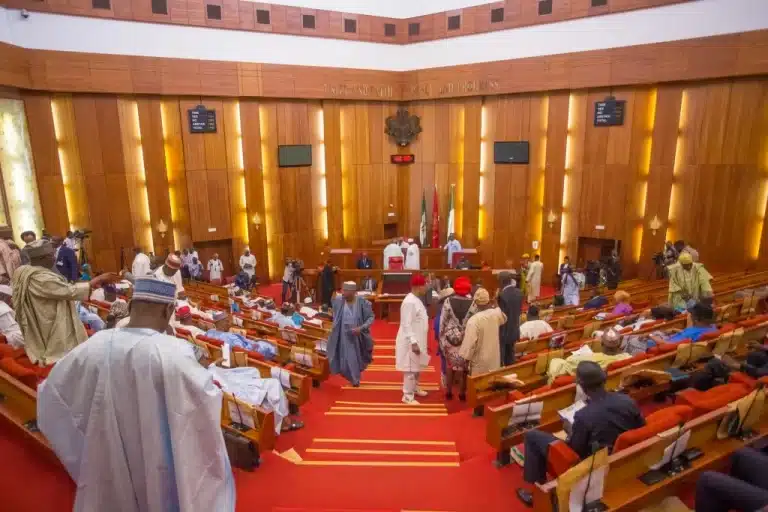
The Senate has explained that the Federal Capital Territory (FCT) was excluded from the proposed state police arrangement because it does not possess the constitutional structures required of a state, including an elected governor and a House of Assembly. Chairman of the Senate Committee on Media and Publicity, Senator Yemi Adaramodu, made the clarification on
The Senate has explained that the Federal Capital Territory (FCT) was excluded from the proposed state police arrangement because it does not possess the constitutional structures required of a state, including an elected governor and a House of Assembly. Chairman of the Senate Committee on Media and Publicity, Senator Yemi Adaramodu, made the clarification on Friday, stating that the FCT remains under the direct administration of the Federal Government and is therefore constitutionally distinct from Nigeria’s 36 states.
Ayra Starr Denied Visa Over Inappropriate Certificate – S’African Envoy
Adaramodu noted that the FCT is administered by a minister who serves under the Federal Executive Council (FEC) rather than an elected governor. He further explained that the National Assembly performs legislative functions for the territory since it has no state legislature. Consequently, policing in the FCT remains the responsibility of the Nigeria Police Force, unlike the proposed arrangement under which states would establish, fund and oversee their own police formations through laws passed by their respective Houses of Assembly.
 blob:https://www.image2url.com/6b1201f1-93ee-44f9-bbeb-45816585e575
The clarification comes as the Federal Government advances plans to decentralise policing through a constitutional amendment and the proposed Executive National Policing Bill, which President Bola Tinubu is expected to receive on September 3. Under the proposed framework, states will bear primary responsibility for funding their police services, while federal grants may be provided on the recommendation of the National Police Council and with the approval of the National Assembly. However, the FCT will remain under federal policing because its administration and legislative authority continue to reside with the Federal Government.





















Leave a Comment
Your email address will not be published. Required fields are marked with *