
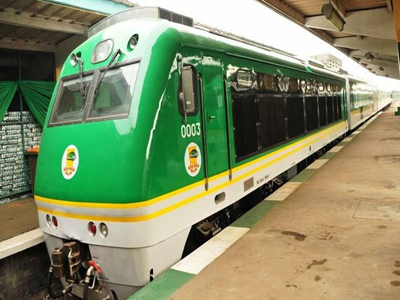
The South West Development Commission (SWDC) has taken a major step toward reshaping transportation and logistics in Nigeria’s southwest region after securing a provisional rail operating and track access licence from the Nigerian Railway Corporation (NRC). The approval allows the commission to operate passenger and freight rail services across existing railway corridors spanning key states
The South West Development Commission (SWDC) has taken a major step toward reshaping transportation and logistics in Nigeria’s southwest region after securing a provisional rail operating and track access licence from the Nigerian Railway Corporation (NRC). The approval allows the commission to operate passenger and freight rail services across existing railway corridors spanning key states in the region.
The development is being described as a shift from planning to implementation in efforts to modernise regional infrastructure and improve economic connectivity across Lagos, Ogun, Oyo, Osun, Ondo, and Ekiti states. Importantly, the licence does not authorise the construction of new rail lines but focuses on operating services on already established rail infrastructure.
According to SWDC leadership, the initiative is designed to unlock the region’s economic potential by making transportation of goods and people more efficient, cost-effective, and integrated with key industrial and agricultural hubs.
 blob:https://www.image2url.com/6b1201f1-93ee-44f9-bbeb-45816585e575
Igbos Not Looking For 4-Year President – Ikonne Fires Peter Obi
The Managing Director and Chief Executive Officer of the South West Development Commission, Dr. Charles ‘Diji’ Akinola, described the approval as a landmark moment in the region’s economic transformation agenda.
He explained that the commission’s partnership with the Nigerian Railway Corporation represents a practical move toward revitalising rail infrastructure as a backbone for regional commerce.
According to him, the new rail initiative—known as the South-West Rail, Agro-Industrial & Logistics (SW-RAIL) Platform—is designed to integrate freight transport, agro-logistics systems, industrial parks, inland logistics hubs, cold-chain facilities, and port connectivity networks into a unified economic corridor.
“This licence is not just a document. It is the green light to rebuild the Southwest’s economic spine on rail,” Akinola said. “We are moving from plans to tracks, from talk to trains.”
The SWDC noted that the Southwest remains Nigeria’s largest economic bloc, yet continues to face challenges such as high logistics costs, traffic congestion, and inefficient supply chains. The new rail operations are expected to address these bottlenecks by offering a more reliable alternative to road transport.
Officials say the SW-RAIL platform will support movement of agricultural produce, manufactured goods, and industrial materials between production zones, markets, warehouses, and export terminals. It is also expected to strengthen connectivity to Apapa and Tin Can Island ports, which are critical to Nigeria’s import and export activities.
By operating directly on NRC corridors, the SWDC aims to reduce pressure on major highways while improving freight efficiency and passenger mobility across the region. The model is also expected to support small and medium enterprises, agro-processors, exporters, and logistics operators by lowering transportation costs.
Beyond logistics, the initiative is projected to stimulate broader economic development through the creation of transit-oriented developments, industrial clusters, and job opportunities along rail corridors.
 Dr. Akinola further explained that the project will operate on a partnership-driven model, welcoming collaboration from state governments, private investors, logistics companies, and international infrastructure partners to ensure sustainability and scalability.
The rail programme is also linked to SWDC’s broader regional transformation strategy, including its TransComs initiative, which focuses on turning rural communities into integrated economic hubs through agriculture, housing, enterprise development, and youth employment.
Together, these initiatives reflect a long-term vision of building a more connected and economically integrated Southwest, positioning the region as a competitive industrial and logistics hub within Nigeria and across West Africa.



















Leave a Comment
Your email address will not be published. Required fields are marked with *