
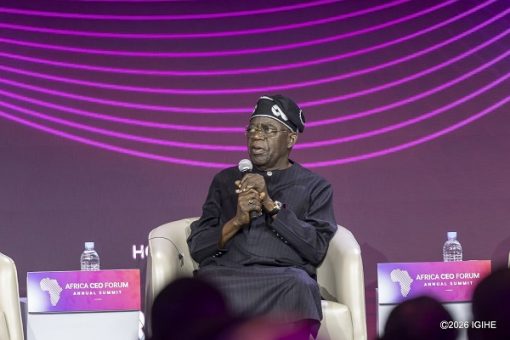
President Bola Ahmed Tinubu has announced that Nigeria has attracted nearly $20 billion in foreign direct investment this year, attributing the inflow to improved efficiency, transparency, and a more business-friendly economic environment. He made the remarks while speaking on Nigeria’s economic direction and Africa’s broader development challenges, stressing that the country is repositioning itself to
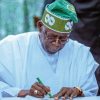
President Bola Ahmed Tinubu has announced that Nigeria has attracted nearly $20 billion in foreign direct investment this year, attributing the inflow to improved efficiency, transparency, and a more business-friendly economic environment.
He made the remarks while speaking on Nigeria’s economic direction and Africa’s broader development challenges, stressing that the country is repositioning itself to become a hub for industrial production, value addition, and regional trade.
According to him, Nigeria is no longer content with exporting raw materials without processing, insisting that local value addition must become central to the country’s economic strategy.
 blob:https://www.image2url.com/6b1201f1-93ee-44f9-bbeb-45816585e575
Southwest Secures Rail Licence To Transform Regional Trade And Transport
President Tinubu emphasized that Nigeria has the capacity to process its natural resources into high-value products, including electric vehicle batteries, rather than exporting them in raw form.
He said private investors are essential to driving industrial growth, but government must play a key role in reducing risks and creating a stable environment for investment.
“With our metals, we can produce batteries for cars. The private sector brings capital and expertise, but government must de-risk and create the enabling environment,” he said.
Tinubu also renewed calls for stronger implementation of the African Continental Free Trade Area (AfCFTA), urging African countries to move beyond policy declarations and embrace real economic integration.
He argued that Africa must adopt an “Africa First” approach that prioritizes local processing, manufacturing, and intra-continental trade over raw exports and external dependency.
Tinubu Highlights Dangote Refinery, Digital Expansion
The President cited the Dangote Group refinery as an example of Africa’s capacity to execute large-scale industrial projects when supported by appropriate policy frameworks.
He noted that Nigeria has reduced dependence on imported petroleum products following increased domestic refining capacity, adding that the refinery now supplies aviation fuel within Africa and beyond.
On trade systems, Tinubu questioned Africa’s reliance on foreign currencies for intra-continental transactions, suggesting that African countries should trade more in local currencies to reduce cost and instability.
“If you produce in Nigeria, you can trade in naira. Why should African trade depend on dollars?” he said.
He also proposed the creation of an African commodity exchange to facilitate direct trade among African nations.
Push for Investment Stability and Digital Infrastructure
Tinubu stressed the importance of stable policies and legal frameworks in attracting long-term capital, noting that “capital is cowardly” and requires predictability to thrive.
He further called for the establishment of an African credit rating agency, arguing that global rating institutions do not fully understand African economic realities.
In the digital sector, he disclosed that Nigeria is laying about 19,000 kilometres of fibre optic cables to expand connectivity and support digital transformation.
He said the infrastructure would improve education, financial inclusion, commerce, and communication across the country, while laying the foundation for artificial intelligence and e-commerce development.
“We need to fund Africa’s shift from basic telecoms to AI and e-commerce,” he said.
Broader Call for African Unity
The President concluded by urging African leaders to strengthen regional cooperation and deepen integration to withstand global economic shocks.
He warned against continued fragmentation in African economies and emphasized the need for unity in policy direction and economic planning.
“Pan-Africanism can’t remain a slogan. It has to be lived,” he said, adding that Africa possesses sufficient resources to achieve prosperity if properly harnessed.
He also cautioned against irregular migration driven by economic hardship, stressing that coordinated development across African countries would reduce the need for citizens to seek opportunities abroad under dangerous conditions.















Leave a Comment
Your email address will not be published. Required fields are marked with *