
States Rally Behind Enugu’s Tariff Slash as Electricity Sector Enters Decentralized Era The move by the Enugu State Electricity Regulatory Commission (EERC) to cut electricity tariffs for Band A customers from ₦209/kWh to ₦160/kWh has triggered a sweeping policy ripple across Nigeria. Following the bold action, several states—most notably Plateau, Lagos, and Ondo—have declared intentions
States Rally Behind Enugu’s Tariff Slash as Electricity Sector Enters Decentralized Era
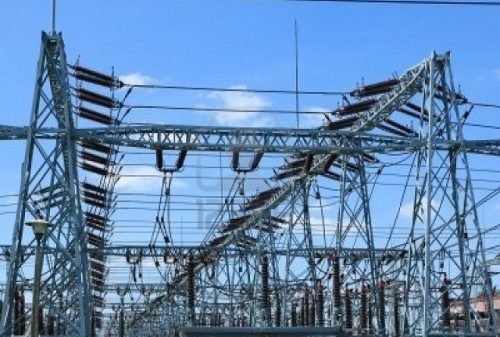
The move by the Enugu State Electricity Regulatory Commission (EERC) to cut electricity tariffs for Band A customers from ₦209/kWh to ₦160/kWh has triggered a sweeping policy ripple across Nigeria. Following the bold action, several states—most notably Plateau, Lagos, and Ondo—have declared intentions to follow suit, aiming to make electricity more affordable for their citizens under newly decentralized power market frameworks.
This sweeping wave of interest comes just days after Enugu’s decision was publicly opposed by power generation companies (GenCos) and distribution companies (DisCos), who warned that the tariff cut, based on flawed subsidy assumptions, could plunge the already strained electricity sector into deeper crisis. However, Enugu insists its plan is grounded in regulatory rigor and backed by a federal subsidy on power generation—though this claim remains hotly contested.
 blob:https://www.image2url.com/6b1201f1-93ee-44f9-bbeb-45816585e575
Akwa Ibom Lawmaker Esset Mark Udo Dumps PDP For APC Amid Party Crisis
Plateau State was the first to throw its support behind the tariff reduction initiative. Bagudu Hirse, Chairman of the Plateau State Electricity Regulatory Commission, told The PUNCH that his commission would prioritize lowering electricity tariffs as soon as operations commence.
“We are working towards making life better for the citizens of Plateau State, and we will bring down the electricity tariff for our people,” Hirse said, confirming that reforms would begin shortly following Governor Caleb Mutfwang’s July 15 inauguration of the regulatory commission and the transfer of authority from the Nigerian Electricity Regulatory Commission (NERC).
Lagos State also signaled movement, albeit with caution. Energy Commissioner Biodun Ogunleye said the state is reviewing Enugu’s model before rolling out its own tariff structure. “We are studying what they have released. Lagos is 50% of national electricity consumption, so our approach must be both strategic and secure,” Ogunleye explained.
Ondo State asserted it had already taken similar steps quietly. Energy Commissioner Johnson Alabi said the state had begun determining its own tariffs as it prepares to finalize power purchase agreements with potential investors. “We are already determining tariffs for would-be investors. What is happening in Enugu is already happening here,” he added.
Meanwhile, Ekiti State took a more conservative approach. Commissioner for Infrastructures, Prof. Bolaji Aluko, said the state would stick with the national Multi-Year Tariff Order (MYTO) for now, preferring to wait until other states complete their transitions. “We are still in a transition period. When you set your own MYTO, you must also be prepared to provide the subsidy,” Aluko cautioned.
Despite growing support from state regulators, DisCos and GenCos have fiercely resisted the changes. An anonymous DisCo official criticized the Enugu plan as “unrealistic” and a threat to private investment, asking who would bear the ₦49/kWh shortfall if the actual cost of generation exceeds ₦200/kWh. “No businessman will invest if he can’t recover his cost. Enugu just shot itself in the foot,” the official said.
The core of the industry’s concern lies in subsidy management. Since Band A tariffs were officially unsubsidized as of April 1, 2024, many stakeholders argue that Enugu’s assumption of a federal subsidy contradicts policy. “If Enugu wants to subsidize power, it must pay the difference itself, not expect the Federal Government to shoulder it,” the official added.
EERC Chairman Chijioke Okonkwo, however, defended the decision on national television, insisting that the Band A tariff was the result of a six-month regulatory process. According to him, MainPower Electricity Distribution Limited, a local Enugu utility, submitted extensive financials and customer data to justify the new rate, which was calculated using a transparent cost-based model.
“The current tariff we approved is heavily subsidized at the generation end by the Federal Government,” Okonkwo explained, stating that the average cost of power delivery with the subsidy stood at ₦94/kWh. Without the subsidy, he warned, the rate would surge to ₦112/kWh—possibly even higher than the current ₦160/kWh for Band A.
But experts like Tayo Adegbenle, founder of PowerUp Nigeria, raised questions about Enugu’s data integrity. “I don’t believe they have the right data. Their assumption that the FG will continue subsidies is far-reaching,” he said, adding that if states want full regulatory autonomy, they must also bear the liabilities.
Another power sector analyst, Bode Fadipe, suggested the policy could be part of a larger strategy. “The issues are still unfolding. It may be too early to talk, but EERC may be achieving exactly what it intends,” Fadipe said.
While regulatory bodies like NERC and NBET have yet to respond officially, industry watchers expect a clarification or even intervention in the coming weeks. The debate is likely to intensify as more states finalize power purchase deals and attempt to set localized tariffs under the powers granted by the Electricity Act 2023.
For now, Enugu remains the test case in a landmark experiment—balancing affordability, investor confidence, and regulatory independence. As more states prepare to join the fray, Nigeria’s power sector may be on the brink of a structural revolution, for better or worse.









Leave a Comment
Your email address will not be published. Required fields are marked with *