
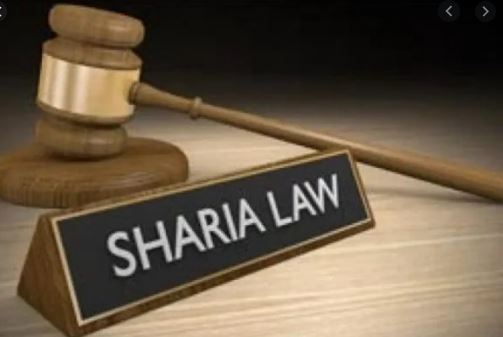
Certain Islamic leaders in South-West Nigeria have pledged to oppose and vote against politicians who resist the creation of Sharia courts in the region. They have also warned of legal action against any governor who obstructs the implementation of Sharia, asserting that such resistance violates Muslims' religious rights. Several Islamic groups, such as the Supreme
Certain Islamic leaders in South-West Nigeria have pledged to oppose and vote against politicians who resist the creation of Sharia courts in the region. They have also warned of legal action against any governor who obstructs the implementation of Sharia, asserting that such resistance violates Muslims’ religious rights.
Several Islamic groups, such as the Supreme Council for Shari’ah in Nigeria and the Concerned Yoruba Muslim Scholars in Nigeria, have advocated for the establishment of Sharia courts in Ogun, Oyo, Osun, Ondo, Ekiti, and Lagos states to address personal law and community disputes. Supporters argue that these courts would serve the needs of Muslim residents, particularly in matters of personal and family law, without affecting the rights of others.
The campaign for Sharia courts gained traction in October 2024 when the Supreme Council for Islamic Affairs launched an independent Sharia Arbitration Panel in Ekiti State. Led by three Kadhis—Imam Abdullahi Abdul-Mutolib, Imam Abdulraheem Junaid-Bamigbola, and Dr. Ibrahim Aminullahi-Ogunrinde—the panel aims to offer arbitration based on Islamic principles.
However, the initiative has sparked controversy. Some Yoruba nation activists and agitators have rejected the proposal, arguing that the region, with its mix of Christians, Muslims, and traditionalists, cannot accommodate Sharia courts. Ogun State Governor Dapo Abiodun has also opposed the idea, stating that the state’s legal framework does not recognize such a system. He emphasized, “No Sharia court is permitted to function in Ogun State. The only courts authorized to resolve disputes are those established under the Nigerian Constitution or state laws, such as Magistrates’ Courts, High Courts, Customary Courts, Customary Court of Appeal, Federal High Court, National Industrial Court, Court of Appeal, and Supreme Court. No legislation in Ogun State establishes a Sharia court, and Sharia law is not part of the legal structure governing the state.”
In contrast, Prof. Is-haq Oloyede, Secretary-General of the Nigerian Supreme Council for Islamic Affairs and Registrar of the Joint Admissions and Matriculation Board, argued that Sharia panels would promote peace in the region. He stated, “For lasting peace, there is no issue with Muslims having Sharia courts in the South-West.”
Sheikh Ridwan Jamiu, Chief Imam of Lekki Central Mosque, also supported the initiative, urging Muslims to demand a formal commitment from politicians seeking their votes. During a Jumu’ah sermon, he called on South-West Muslims to ensure that governorship candidates in the 2027 elections pledge to establish Sharia courts exclusively for Muslims. He said, “As elections near, any candidate seeking your support for governor must commit to establishing Sharia courts. If they refuse to sign an agreement with the Muslim community, do not vote for them.”
 blob:https://www.image2url.com/6b1201f1-93ee-44f9-bbeb-45816585e575
Other prominent Islamic clerics echoed Jamiu’s position, encouraging Muslims to reject politicians who oppose Sharia courts. Sheikh Daood Imran, National President of Jama’at Ta’awunil Muslimeen, described it as a sin for any Muslim to support or vote for a politician against Sharia law. He urged Islamic leaders to rally Muslims against such politicians, stating, “We will appeal to political leaders to understand why Sharia law is essential for Muslims in the South-West. If they still refuse after our appeals and explanations, Islamic leaders should direct Muslims in those areas not to vote for them. No Muslim should support a politician who opposes Sharia—it’s a sin against God and a denial of their religious rights.”
Imran added, “Why is the government opposing Sharia now that we are demanding it? Sharia does not harm anyone or any religion; it does not impose Islam on others. It is not binding on non-Muslims and does not supersede federal or state laws. We are simply asking to practice our religion as it should be. If the government refuses to listen, we will vote against them.”
Similarly, Tajudeen Adewunmi, Secretary-General of the League of Imams and Alfas in Ogun State, encouraged political leaders to seek understanding of Sharia before deciding. He remarked, “Sharia is the essence of Islam—everything we do as Muslims is guided by it. Politicians should consult Islamic leaders to determine if Sharia benefits society and whether it conflicts with the law.”
Sheikh Abdurrasheed Mayaleeke, Chairman of the Concerned Yoruba Muslim Scholars in Nigeria, affirmed that Muslims are prepared to use all legal avenues to secure government approval for Sharia courts. He said, “If democracy is for the people, South-West Muslims will use their rights to achieve what benefits us without infringing on others.”
Sheikh Kamal Olohungbebe, Founder of Al-Haqu Islamic Study and Prayer Group of Nigeria, emphasized that Muslim support for politicians hinges on their backing of Sharia. He warned, “Muslims will only vote for those who support Sharia. If South-West governors refuse, we will take them to court.”
Dr. Uthman Siddiq, an associate member of the Nigerian Association for the Study of Religions, argued that blocking Sharia practice violates Muslims’ rights. He clarified, “Sharia panels are not about severe punishments; they are mediation centers for devout Muslims. The government should stop misrepresenting them.”




















Leave a Comment
Your email address will not be published. Required fields are marked with *