
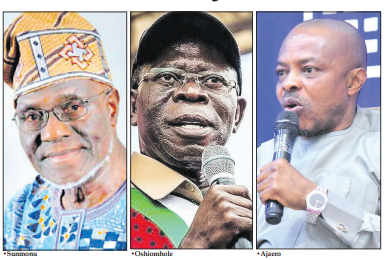
Two prominent labour voices, former Edo State Governor and ex–Nigeria Labour Congress (NLC) President, Adams Oshiomhole, and current NLC President, Joe Ajaero, have expressed sharply differing views on the impact of Nigeria’s tax laws on workers. Oshiomhole argues that recent tax reforms, if properly implemented, could help stabilize the economy and ultimately benefit workers
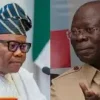
Two prominent labour voices, former Edo State Governor and ex–Nigeria Labour Congress (NLC) President, Adams Oshiomhole, and current NLC President, Joe Ajaero, have expressed sharply differing views on the impact of Nigeria’s tax laws on workers.
Oshiomhole argues that recent tax reforms, if properly implemented, could help stabilize the economy and ultimately benefit workers through improved public services and infrastructure. He maintains that a broadened tax base and stricter compliance are necessary to reduce government borrowing and inflationary pressures, which he says have eroded workers’ real incomes. According to him, the focus should be on efficiency and accountability in tax administration rather than outright opposition to reforms.
 blob:https://www.image2url.com/6b1201f1-93ee-44f9-bbeb-45816585e575
Patrice Lumumba: Congo’s First Prime Minister Silenced For Defending His Nation’s Wealth
In contrast, Ajaero insists that existing and proposed tax policies are placing an unfair burden on Nigerian workers already grappling with high living costs. He contends that workers are being overtaxed while large corporations and wealthy individuals often escape their fair share. The NLC president warns that without wage adjustments, strong social protections, and visible relief measures, tax increases could further impoverish workers and widen inequality.
Ajaero also emphasizes that workers’ trust in tax reforms depends on transparency and tangible benefits. He argues that workers are willing to contribute, but only when government demonstrates prudent use of public funds and prioritizes education, healthcare, and job creation.
The differing positions highlight an ongoing debate within Nigeria’s labour and political space: whether tax reforms should be pushed aggressively to shore up government revenue or recalibrated to shield workers from additional economic strain. As discussions continue, labour unions and policymakers are expected to engage further to find a balance between fiscal sustainability and workers’ welfare.


















Leave a Comment
Your email address will not be published. Required fields are marked with *