
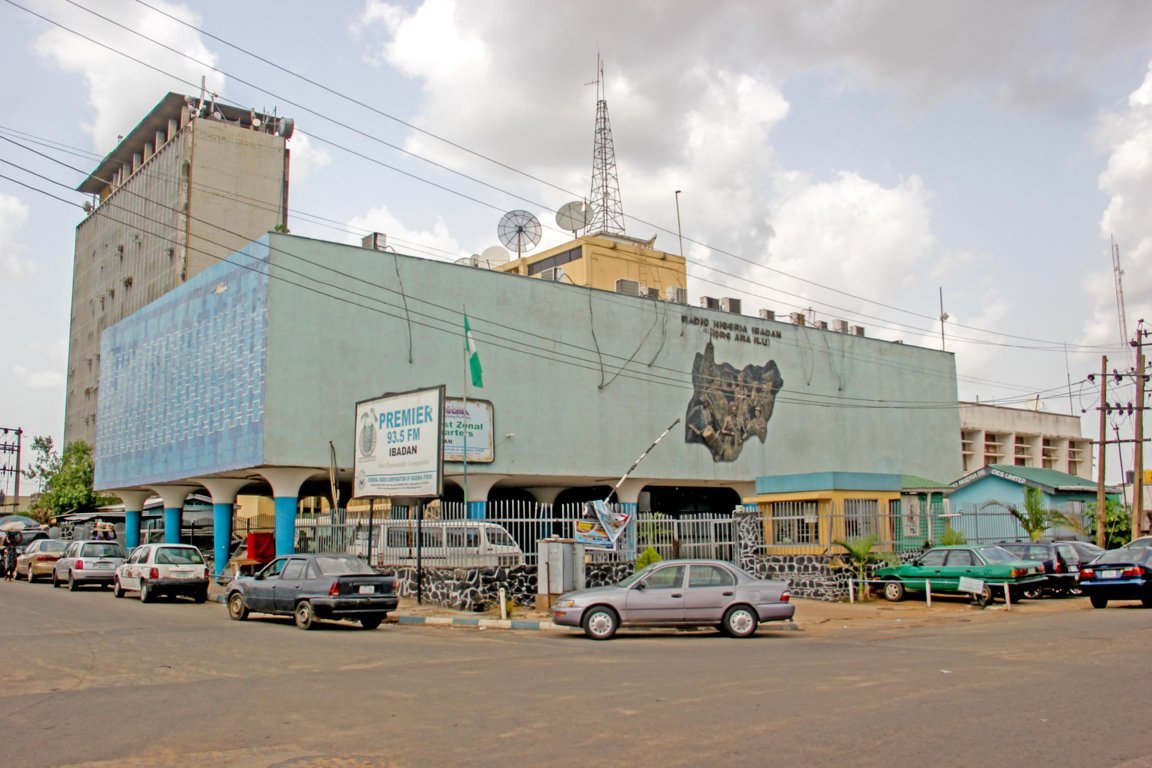
By Henryrich Ojo. Shame on all of you—the Federal Government, the Ministry of Information, and the entire Radio Nigeria leadership. How do you celebrate 75 years of such a historic institution while leaving its buildings in decay and its structure looking forgotten? What exactly are you celebrating—neglect? It’s both shameful and deeply disappointing that a
By Henryrich Ojo.
Shame on all of you—the Federal Government, the Ministry of Information, and the entire Radio Nigeria leadership.
How do you celebrate 75 years of such a historic institution while leaving its buildings in decay and its structure looking forgotten? What exactly are you celebrating—neglect?
It’s both shameful and deeply disappointing that a station widely regarded as one of Nigeria’s earliest broadcasting achievements has been reduced to this state. At 75, Radio Nigeria Ibadan should be shining, modernized, and proudly representing the country’s media legacy—not standing as a symbol of abandonment.
The reality is hard to ignore: the same government that should be preserving one of its first major national assets has seemingly turned its back on it. No meaningful renovation, no visible upgrade—just an old, worn-out image marking a milestone that deserves far better.
This isn’t just neglect; it’s a failure to respect history, professionals, and national pride. A 75th anniversary should reflect growth and progress, not decay and indifference.
 blob:https://www.image2url.com/6b1201f1-93ee-44f9-bbeb-45816585e575
Radio Nigeria Ibadan isn’t just another broadcasting station—it’s a living piece of African history. For decades, it has stood as a symbol of communication, culture, and national identity. As it marks its 7l
5th anniversary, you’d expect celebration, pride, and perhaps even a grand reinvention. Instead, what we see tells a different story—one of neglect, fading glory, and missed opportunities.
Think about it for a second: how often do institutions survive for over seven decades and still remain relevant in people’s memories? That’s no small feat. Radio Nigeria Ibadan has managed to do just that, shaping narratives, informing citizens, and entertaining millions across generations. Yet, behind the legacy lies a troubling reality that many would rather ignore.
The station that once stood tall as a pioneer in African broadcasting and frist radio station in Africa now struggles to maintain even basic standards. The contrast is striking. On one hand, you have a proud history filled with innovation and influence; on the other, a present riddled with decay and indifference. a
But here’s the irony: while the milestone is worth celebrating, the current condition of the station makes the celebration feel bittersweet. Imagine throwing a birthday party in a collapsing building—it doesn’t quite sit right. The anniversary should be a time of pride, yet it also highlights the urgent need for intervention and renewal.
So yes, 75 years is worth celebrating. But it’s also a wake-up call—a reminder that history alone isn’t enough. Without action, even the most iconic institutions can fade away.
At that time, the idea of a fully operational radio station in Africa was groundbreaking. Infrastructure was limited, resources were scarce, and expertise was still developing. Yet, Radio Nigeria Ibadan rose above these challenges and became a beacon of progress. It showed that Africa could not only participate in global broadcasting but also lead in its own unique way.
The station quickly became a hub for innovation and creativity. Programs were tailored to reflect local cultures, languages, and traditions, making it deeply relatable to its audience. Unlike imported content, which often felt distant, Radio Nigeria Ibadan spoke directly to the people—it sounded like them, understood them, and represented them.
And yet, here’s the painful part: something that was once so advanced and visionary is now struggling to keep up with even basic modern standards. The same institution that led the way is now being left behind.
5 notable personalities produced by Radio Nigeria Ibadan
Chief Yemi Sonde – A respected broadcaster and media entrepreneur who built a strong reputation in Nigerian radio and television.
Bisi Olatilo – Popular for The Bisi Olatilo Show, he has roots in traditional broadcasting and benefited from institutions like Radio Nigeria.
Chief Anike Agbaje-Williams – One of Nigeria’s pioneering broadcasters, often linked with early Western Nigerian broadcasting, closely tied to Ibadan’s media history.
Adebayo Faleti – A legendary Yoruba broadcaster, actor, and writer who played a major role in indigenous language broadcasting.
Tola Adeniyi – A veteran journalist and writer who contributed significantly to Nigerian media and had connections with early broadcasting institutions.
Deteriorating Infrastructure
Walking into the premises of Radio Nigeria Ibadan today tells a story that words alone can hardly capture. The buildings, once symbols of pride and innovation, now show clear signs of wear and neglect. Walls are aging, facilities are outdated, and the overall environment reflects years of insufficient maintenance.
There’s also the issue of perception. Visitors, stakeholders, and even potential partners judge an institution by its physical condition. A deteriorating building sends the wrong message. It suggests decline, lack of care, and missed priorities.
For a station with such a rich history, this situation feels particularly disheartening. It’s not just about fixing buildings—it’s about restoring dignity and preserving a legacy that deserves better.
Lack of Modern Equipment
In today’s fast-paced media environment, technology is everything. Broadcasting has evolved significantly, with digital tools, automation, and high-quality production standards becoming the norm. Unfortunately, Radio Nigeria Ibadan appears to be lagging behind in this critical area.
Many of the tools required for modern broadcasting—advanced audio equipment, digital editing software, reliable transmission systems—are either outdated or insufficient. This creates a significant gap between the station and its contemporaries who have embraced technological advancement.
Staff members are also affected. Working with outdated equipment can be frustrating, especially for younger professionals who are trained in modern techniques. It creates a disconnect between their skills and the tools available to them, leading to reduced job satisfaction.
Yet, despite these challenges, many staff members remain dedicated. Their resilience speaks volumes about their passion for the profession and their belief in the station’s legacy. But resilience shouldn’t be taken for granted. Without proper support, even the most committed individuals can reach their limit.
The Negative Impact of Federal Government Neglect on Radio Nigeria
Radio Nigeria Ibadan is left to deteriorate, it reflects more than just poor maintenance—it reveals a deeper issue of government neglect and misplaced priorities. The federal government, which is responsible for funding and sustaining such public assets, appears to have gradually withdrawn meaningful attention from the station.
One of the most damaging consequences of this abandonment is the collapse of standards. Without consistent funding and oversight, it becomes nearly impossible to maintain quality broadcasting. Equipment becomes outdated, facilities degrade, and innovation slows down.
There’s also the issue of lost opportunities. Radio Nigeria Ibadan once had the potential to remain a continental leader in broadcasting, but that potential is being wasted. Instead of building on its legacy, the station is now fighting to stay relevant. This isn’t just a loss for the organization—it’s a loss for the country as a whole. A strong national broadcaster can promote culture, educate citizens, and strengthen democracy. Neglecting it weakens all of these functions.
When the government ignores such a historic institution, it signals a lack of respect for heritage, expertise, and national pride.
The Silence and Inaction of the Ministry of Information
If the federal government holds the ultimate responsibility, then the Ministry of Information should be the driving force behind solutions. Unfortunately, its role in the situation has been largely defined by silence and inaction. For an institution tasked with overseeing media development in the country, this lack of visible engagement raises serious concerns.
The ministry is expected to provide direction, policy support, and advocacy for government-owned media organizations. Yet, in the case of Radio Nigeria Ibadan, there is little evidence of strategic intervention or meaningful reform efforts. This absence of leadership has allowed the station’s problems to persist—and in many cases, worsen.
Another major issue is the lack of accountability and urgency. Challenges such as poor infrastructure, outdated equipment, and declining staff morale have been evident for years. These are not hidden problems; they are visible and well-known. The continued failure to address them suggests either a disconnect from reality or a lack of prioritization.
This inaction also affects public trust. People expect the Ministry of Information to protect and promote national media institutions. When it fails to do so, confidence in public systems begins to erode. It raises uncomfortable questions: If such a historic station can be ignored, what does that say about the future of other public institutions?















Leave a Comment
Your email address will not be published. Required fields are marked with *